


Voice Search Optimisation for Digital Marketing Agencies in 2026
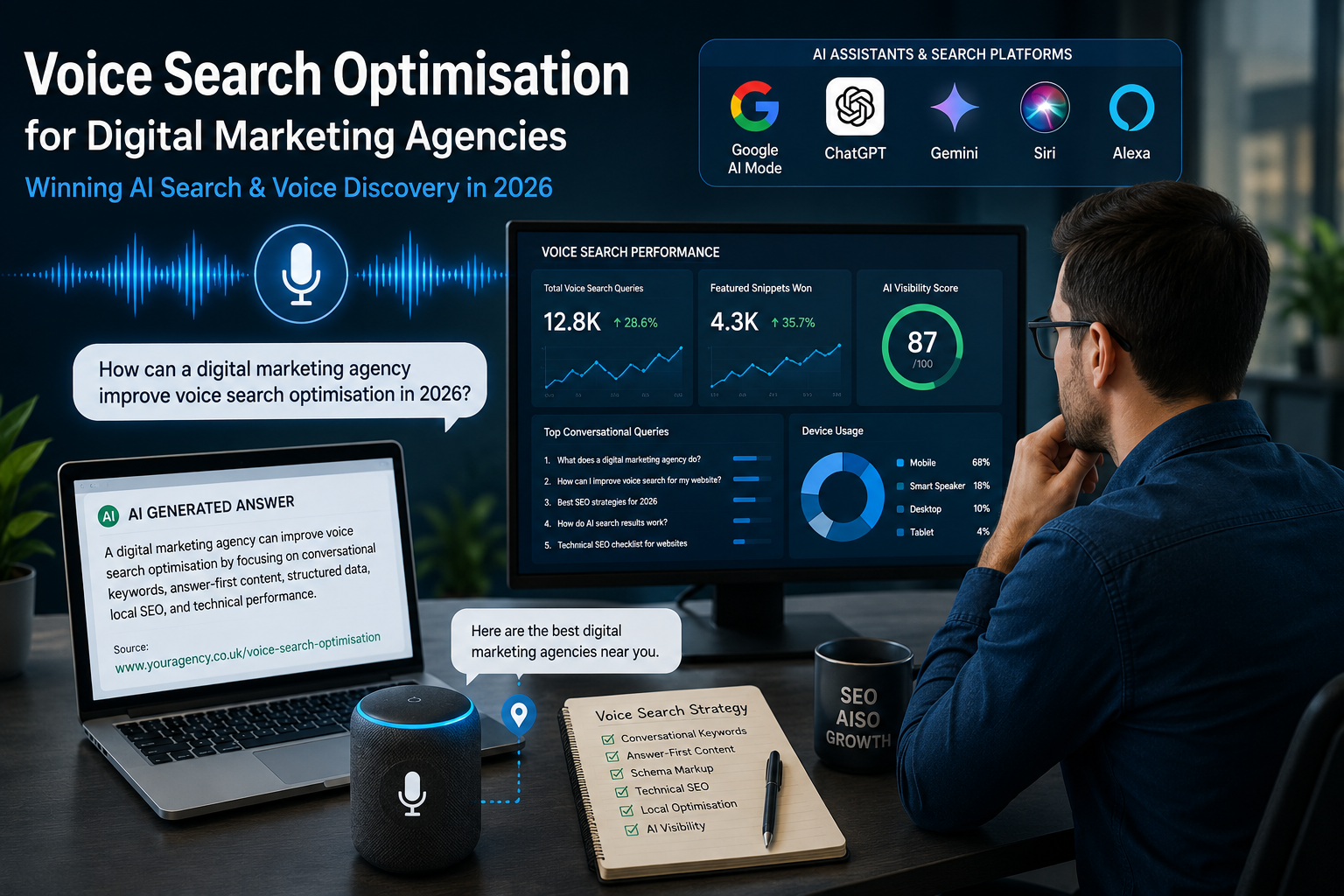
Voice Search Optimisation for Digital Marketing Agencies: Winning AI Search and Voice Discovery in 2026
Introduction
Voice search optimisation has evolved far beyond improving visibility for smart speakers. In 2026, people use AI assistants such as ChatGPT, Google AI Mode, Gemini, Siri, and Alexa to ask detailed questions, compare services, and discover businesses through natural conversations. Instead of typing short keywords, users expect complete answers that understand context and intent.
This shift is changing how search engines and AI systems retrieve information. Content that is clear, well-structured, and supported by strong technical SEO is more likely to appear in AI-generated answers and voice search results.
For digital marketing agencies, voice search optimisation is becoming an essential part of AI Search Optimisation (AISO). Agencies that adapt their SEO strategies to conversational search can improve visibility across traditional search engines and AI-powered discovery platforms.
Quick Summary
Voice search optimisation helps websites become easier for AI assistants and search engines to understand and retrieve. In 2026, success depends on creating conversational content, using structured data, improving technical SEO, strengthening entity relationships, and answering user questions clearly. Digital marketing agencies that combine these elements can improve visibility in voice search, featured snippets, AI-generated answers, and local search results.
Why Voice Search Matters More in the AI Search Era
Voice search is no longer limited to smart speakers. Millions of people now ask AI assistants for recommendations, explanations, product comparisons, and local business information using natural language.
Unlike traditional search, AI assistants interpret complete questions instead of matching individual keywords. They analyse context, previous interactions, and user intent before generating an answer. This creates new opportunities for agencies that publish well-structured, trustworthy content.
Several trends continue to increase the importance of voice search optimisation:
-
AI-powered assistants answer increasingly complex questions.
-
Conversational search replaces short keyword searches.
-
Local and commercial searches often begin with voice.
-
AI-generated summaries reduce the number of traditional search clicks.
-
Users expect immediate, accurate answers rather than lists of web pages.
As AI search continues to develop, voice search optimisation becomes part of a broader strategy focused on making content understandable for both search engines and AI systems.
How Voice Search Queries Differ From Traditional SEO Searches
Traditional SEO often targets short keyword phrases such as "SEO agency London" or "technical SEO services."
Voice searches sound very different. People speak naturally and ask complete questions such as:
"How can a digital marketing agency improve voice search optimisation in 2026?"
These conversational searches contain more context and reveal clearer user intent.
Key differences include:
Natural Language Queries
Users speak naturally instead of entering fragmented keywords. Content should reflect how people actually ask questions.
Long Conversational Questions
Voice searches often include several related ideas within a single query. Comprehensive answers perform better than isolated keyword targeting.
Context-Aware Searches
Modern AI assistants remember previous questions within the same conversation, making search journeys more connected than traditional browsing.
Intent-Focused Search Behaviour
Rather than matching keywords alone, AI systems evaluate whether a page completely answers the user's question.
Multi-Step Search Journeys
Voice search frequently involves follow-up questions. A user may first ask about voice search optimisation before requesting implementation methods or technical recommendations.
Content organised around related questions helps support these longer conversational journeys.
Voice Search Optimisation Techniques That Agencies Should Prioritise
Successful voice search optimisation requires more than inserting conversational keywords. Agencies should build content that answers questions clearly while helping AI systems understand relationships between topics.
Conversational Keyword Research
Research should focus on real questions instead of isolated keyword phrases. Sources such as Google's "People Also Ask," Search Console, customer support conversations, and industry forums reveal how people naturally phrase their searches.
Question-First Content Creation
Every major section should answer a specific question directly before providing supporting details. This approach improves readability and increases the likelihood of appearing in featured snippets and AI-generated responses.
Short, Direct Answers
Opening each section with a concise explanation allows AI assistants to identify the primary answer quickly before expanding into additional detail.
Topic Clusters
Rather than creating isolated articles, agencies should organise related content into topic clusters. Supporting articles strengthen topical authority and help search engines understand subject relationships.
Entity-Based SEO
Modern search engines recognise entities such as businesses, products, technologies, and locations. Clearly identifying these entities throughout content helps AI systems establish accurate connections between topics.
Internal Linking
Internal links should connect closely related resources that deepen the same search intent. This improves website structure while helping search engines discover supporting content.
AI-Friendly Content Structure
Clear headings, descriptive subheadings, logical paragraphs, bullet lists, and consistent formatting make content easier for both readers and AI retrieval systems to process.
Readability Improvements
Simple language, concise sentences, and logical organisation improve accessibility while increasing the likelihood that AI assistants select content for spoken responses.
Technical SEO Factors That Improve Voice Search Visibility
High-quality content alone is not enough. Technical SEO ensures search engines can efficiently crawl, interpret, and retrieve information for voice search results.
The most important technical factors include:
-
Schema markup that clearly describes page content.
-
FAQ Schema for question-based sections.
-
Organization Schema that identifies the business.
-
Local Business Schema for location-specific services.
-
Mobile-first optimisation across all devices.
-
Strong Core Web Vitals performance.
-
Fast-loading pages.
-
Efficient crawling and indexation.
-
HTTPS security.
-
A consistent heading hierarchy that supports semantic understanding.
These technical improvements provide the foundation for stronger visibility across both traditional search engines and AI-powered answer systems.
Building Content That AI Assistants Can Easily Retrieve
AI assistants are designed to provide users with clear, reliable answers rather than simply displaying a list of web pages. This means content should be structured so that both search engines and AI systems can identify the most relevant information quickly.
Answer-First Writing
Begin each section by answering the main question directly. Supporting details can then explain the topic further. This structure improves readability and increases the likelihood of appearing in AI-generated responses.
Featured Snippet Optimisation
Many voice search answers originate from featured snippets. Providing concise definitions, numbered steps and short lists makes content easier for search engines to extract.
Semantic SEO and Entity Optimisation
Instead of repeating the same keyword, use related terms that help search engines understand the topic. Connecting entities such as AI assistants, search engines, schema markup and digital marketing agencies strengthens topical relevance.
Building Topical Authority
Publishing several high-quality articles around voice search, technical SEO and AI search optimisation demonstrates subject expertise. Internal links between related resources help search engines understand these relationships.
AI Citation Readiness
AI assistants prefer trustworthy sources with accurate information, logical structure and reliable references. Content that explains concepts clearly is more likely to be cited in AI-generated answers.
Local Voice Search Optimisation for Agency Clients
Many voice searches have local intent. Users commonly ask questions such as, "Which digital marketing agency is near me?" or "Who offers SEO services nearby?"
Agencies should help clients improve local visibility by focusing on:
Google Business Profile
Maintain a complete and regularly updated Google Business Profile with accurate business details, categories and opening hours.
NAP Consistency
Ensure the business name, address and phone number remain consistent across directories, social platforms and the company website.
Location Pages
Create dedicated pages for each service area. Each page should provide unique, helpful information rather than duplicated content.
Customer Reviews
Positive reviews contribute to trust and often influence local search visibility. Encourage genuine customer feedback and respond professionally where appropriate.
Local Schema
Implement Local Business Schema to help search engines understand location-specific information and improve local search relevance.
Voice Search Analytics and Performance Tracking in 2026
Measuring voice search success requires looking beyond traditional keyword rankings.
Useful performance indicators include:
-
Growth in conversational search queries.
-
Question-based keyword impressions.
-
Featured snippet visibility.
-
AI-generated citation frequency.
-
Zero-click search performance.
-
Organic conversions from informational content.
-
Branded search growth.
-
Search Console performance trends.
Reviewing these metrics regularly helps agencies refine their voice search strategy and identify opportunities for further optimisation.
Common Voice Search Optimisation Mistakes Agencies Should Avoid
Several common mistakes can limit visibility in voice search results.
These include:
-
Treating voice search as identical to traditional SEO.
-
Ignoring conversational search intent.
-
Missing or incorrect structured data.
-
Overusing exact-match keywords.
-
Publishing weak FAQ sections that do not answer real questions.
-
Poor mobile performance.
-
Neglecting entity optimisation.
-
Publishing thin AI-generated content without adding original value.
-
Failing to build topical authority across related subjects.
Avoiding these issues helps improve both search engine understanding and user experience.
Voice Search Trends That Will Shape Digital Marketing Beyond 2026
Voice search will continue evolving as AI technology becomes more capable.
Several developments are expected to influence future search behaviour:
-
AI-powered search experiences that generate personalised answers.
-
Greater use of multimodal search combining voice, images and text.
-
Increased adoption of screenless search through wearable devices.
-
Personal AI assistants capable of managing longer conversations.
-
Predictive search that anticipates user needs.
-
Growth of conversational commerce.
-
More AI-generated search summaries.
-
Hyper-personalised search experiences based on user preferences.
-
Increased voice-driven local discovery for nearby businesses and services.
Digital marketing agencies that prepare for these developments will be better positioned to support long-term organic visibility.
Conclusion
Voice search optimisation is no longer a specialist SEO activity. It is becoming an essential component of AI Search Optimisation (AISO) as users increasingly rely on conversational search and AI assistants to discover information.
Agencies should focus on creating clear, question-led content supported by strong technical SEO, structured data, entity optimisation and topical authority. These foundations improve visibility across voice search, AI-generated answers and traditional organic search.
As AI search continues to develop, organisations that adapt their SEO strategy today will be better prepared for future changes in search behaviour.
To learn more about building a future-ready SEO strategy, explore the services offered by Skoma Digital Marketing Agency, where voice search optimisation, technical SEO and AI-ready content strategies are developed to support long-term organic growth.
Frequently Asked Questions
What is voice search optimisation, and why is it important in 2026?
Voice search optimisation improves how websites perform when users search using AI assistants or voice-enabled devices. In 2026, it also supports visibility within AI-generated search results.
How does voice search affect SEO for digital marketing agencies?
Voice search encourages agencies to create conversational content, improve technical SEO, strengthen entity relationships and answer user questions more effectively.
Which content formats perform best for voice search results?
Question-and-answer content, FAQ pages, concise explanations, structured headings and featured snippet-friendly formats generally perform well.
How can agencies measure the success of voice search optimisation?
Monitor conversational keyword performance, featured snippets, Search Console insights, AI visibility, zero-click searches and conversion-focused metrics.
Does schema markup improve voice search visibility?
Schema markup helps search engines understand page content more accurately, which may improve eligibility for rich results and AI-generated responses.
What are the biggest voice search trends agencies should prepare for?
Important trends include conversational AI, multimodal search, AI-generated summaries, entity-based SEO, predictive search, local voice discovery and personalised AI assistants.

