


Train Logistics Services Company: When Rail Freight Makes More Business Sense
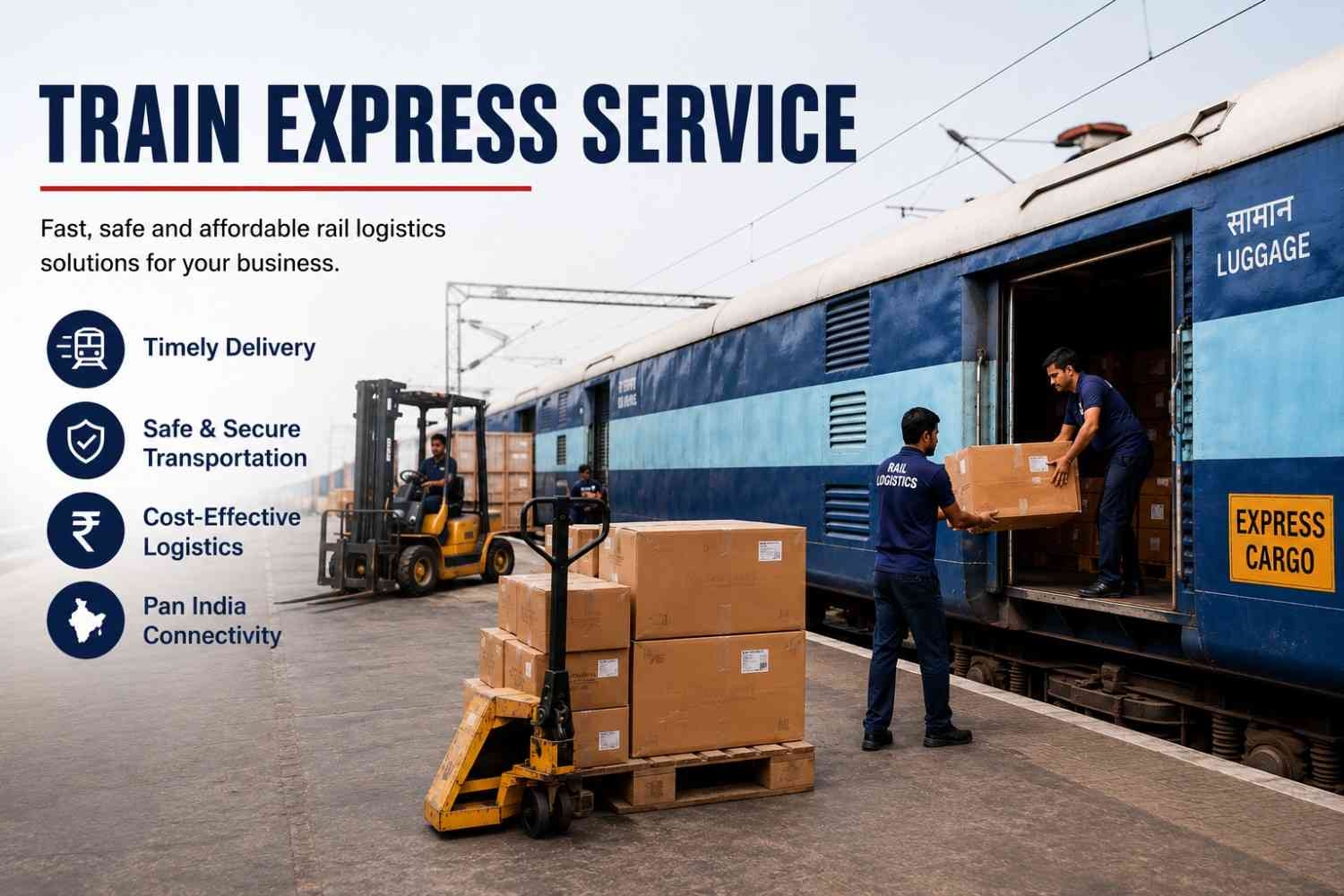
A train logistics services company can offer businesses something road transportation cannot always provide: a practical way to move large volumes over long distances without putting the entire shipment strategy on trucks. Yet rail freight is often misunderstood. Some businesses assume it is automatically cheaper, while others avoid it because they believe rail is too slow or complicated.
In reality, the decision is more nuanced.
Rail works particularly well when shipment volumes are predictable, distances are long, and delivery schedules can be planned in advance. It becomes less attractive when every order is urgent, destinations are difficult to access, or cargo requires constant route flexibility.
The real skill lies in knowing where rail fits into the supply chain. A good logistics provider does not recommend trains simply because they are available. It looks at distance, cargo characteristics, delivery windows, loading points, unloading arrangements, and the first and last-mile requirements before deciding whether rail actually makes commercial sense.
Why Rail Logistics Is Getting More Attention
The economics of transportation have changed. Fuel costs, driver availability, road congestion, toll expenses, and increasing shipment volumes have made long-distance trucking more complicated for many businesses.
For a manufacturer moving substantial quantities between northern and southern India, for example, sending every shipment by road may provide flexibility, but that flexibility comes with a cost. When the same type of cargo moves repeatedly between established locations, rail can become an attractive alternative.
This is where most businesses initially make the wrong comparison. They compare the transit time of a train with the transit time promised by a truck and stop there.
That misses the bigger picture.
A shipment that takes slightly longer but moves at a lower cost, with fewer capacity concerns and better suitability for large volumes, may be more useful to the business overall. The objective is not always to find the fastest transportation mode. It is to find the mode that works reliably within the company's operating model.
What a Train Logistics Services Company Actually Brings to the Supply Chain
The role of a train logistics services company extends beyond booking rail capacity. Rail freight requires coordination between several moving parts, and that coordination is where practical experience matters.
Cargo has to reach the appropriate rail terminal, be loaded according to requirements, move through the rail network, and then be collected and transported to the final destination. If the first-mile or last-mile process is poorly managed, the theoretical advantage of rail can disappear.
Consider a business moving bulk packaged goods from one industrial region to another. The rail journey may be efficient, but if the cargo waits two days before reaching the terminal or remains at the destination because no vehicle is available for final delivery, the overall supply chain has gained very little.
Good rail planning therefore considers the entire movement, not just the railway segment.
This is also why businesses should be cautious about providers that present rail freight as a simple point-to-point service. In practice, the handoffs matter just as much as the main journey.
Rail Logistics Company in India: Where the Model Works Best
A rail logistics company in India can be particularly useful for businesses dealing with consistent long-distance movements.
Manufacturers, distributors, automotive suppliers, industrial goods companies, and businesses handling large shipment volumes can benefit when their routes are predictable. Rail becomes even more interesting when shipments move between major industrial and commercial centers where terminal infrastructure and connecting road networks are available.
However, not every shipment belongs on a train.
If a customer needs delivery tomorrow and the cargo has to be collected from a remote location, a direct road movement may be the more sensible option. Trying to force that shipment onto rail simply because the freight rate appears attractive can create unnecessary handling and delays.
Honestly speaking, the strongest logistics strategies rarely depend on one transportation mode. They use road, rail, and sometimes air according to the requirements of individual shipments.
The Economics Behind Affordable Train Shipment Services
The attraction of affordable train shipment services is usually associated with lower long-distance transportation costs. But businesses should avoid treating the quoted rail rate as the complete cost.
There are other elements to consider: local transportation to the terminal, loading and unloading, handling, storage if applicable, documentation, and final-mile transportation.
This does not make rail less attractive. It simply means the comparison needs to be made correctly.
A road quotation and a rail quotation should be compared on a door-to-door basis. Otherwise, businesses may select what appears to be the cheaper option and later discover that additional handling costs have changed the calculation.
One practical approach is to examine the total landed logistics cost per shipment or per unit rather than the transportation charge alone.
Over a large number of shipments, even a modest reduction in the cost per unit can become significant.
Long-Distance Rail Logistics Solutions Require Better Planning
The strongest use case for long-distance rail logistics solutions is predictable freight.
Imagine a company that regularly moves a large quantity of products from a manufacturing facility in Maharashtra to a distribution network in eastern India. If volumes remain relatively stable, the business can plan dispatches around rail schedules and organize pickup and delivery arrangements in advance.
That predictability is valuable.
It allows warehouse teams to prepare cargo ahead of dispatch. Transport teams can arrange first-mile movement. Receiving warehouses can schedule unloading. Inventory planners can work with more dependable replenishment cycles.
Compare that with constantly booking individual trucks at short notice. It offers flexibility, but it also creates more opportunities for price fluctuations, vehicle shortages, and last-minute coordination problems.
Rail doesn't eliminate planning. It rewards it.
Train Cargo Services Are Not Just for Bulk Commodities
There is a common perception that train cargo services are primarily useful for extremely heavy or low-value commodities. That view is becoming too narrow.
The suitability of rail depends on the characteristics of the cargo, route, handling requirements, and service availability.
Packaged industrial goods, consumer products, automotive components, machinery, and other commercial cargo can potentially fit into rail-based supply chains when the movement is structured correctly.
The important question is not simply, "Can this product travel by train?"
The better question is, "Can this product move through a rail-based network without creating additional handling problems or unacceptable delivery uncertainty?"
That distinction changes the conversation from transportation mode to supply chain design.
Road vs Rail: The Better Choice Depends on the Shipment
Road transportation still has one major advantage: flexibility.
A truck can collect cargo directly from a factory, take a route based on the delivery requirement, and reach a location that may have no convenient rail connection. For urgent or fragmented shipments, that flexibility is extremely valuable.
Rail, on the other hand, becomes stronger when distance and volume increase and shipment patterns become predictable.
A business sending small shipments to different destinations every day may gain little from rail. Another company sending consistent volumes along established corridors may find rail highly effective.
The smartest approach is often a hybrid model. Rail can handle the long-distance portion while road transportation manages first-mile and last-mile connectivity.
This arrangement can deliver a useful balance between cost and flexibility.
Choosing a Cost-Effective Train Shipment Delivery Partner
A provider should be evaluated based on how well it manages the complete shipment cycle rather than how attractive its initial quotation looks.
Businesses should ask practical questions about terminal access, cargo handling, tracking, first-mile and last-mile coordination, documentation, contingency planning, and exception management.
It is also worth asking how the provider handles disruptions. Rail schedules can be affected by operational constraints, congestion, weather, or other network conditions. A capable logistics partner should have a plan for communicating such events and managing the resulting shipment impact.
Before finalizing a provider, evaluate:
-
Route suitability, total door-to-door cost, shipment frequency, cargo handling requirements, terminal connectivity, tracking capability, delivery commitments, and backup transportation arrangements.
-
Actual operational experience matters too. Ask how similar shipments are currently managed rather than relying only on general service descriptions.
A provider that understands the complete movement will usually give a more useful answer than one focused solely on rail booking.
Technology Is Changing How Businesses Use Rail Freight
Rail logistics is becoming more visible as technology improves shipment tracking and planning.
Businesses increasingly want shipment status, estimated arrival information, digital documentation, and better coordination between warehouses and transportation teams. This visibility becomes particularly important when rail is one part of a larger multimodal movement.
Technology also helps businesses analyze historical shipment patterns. If a company can identify which routes consistently carry high volumes and which shipments experience repeated delays, it can make better decisions about where rail should replace or complement road transportation.
But technology has limits.
A tracking dashboard cannot solve poor planning. It cannot make an unsuitable route practical. It cannot compensate for weak first-mile coordination.
The strongest results come when technology supports experienced logistics teams rather than attempting to replace operational judgment.
What Will Change in Rail Logistics in 2026 and Beyond?
The role of rail in India's logistics ecosystem is likely to become more important as businesses look for ways to manage growing freight volumes while controlling transportation costs.
Multimodal logistics will continue gaining attention. Instead of treating road and rail as competing options, businesses are increasingly likely to combine them within the same shipment strategy.
Better tracking, improved terminal connectivity, digital documentation, and data-driven planning should make rail easier for businesses that previously considered it too complicated.
There is also a broader shift in how companies evaluate transportation. Cost remains important, but resilience and predictability are becoming equally valuable.
A supply chain that depends entirely on one transportation mode can become vulnerable when capacity tightens or operating costs rise. A balanced network gives businesses more options.
That is probably the most practical way to look at rail freight going forward.
Conclusion
A train logistics services company can play an important role in long-distance freight movement, but rail should not be selected simply because it appears cheaper than road transportation.
The right decision depends on volume, distance, route availability, cargo requirements, delivery expectations, and the quality of first-mile and last-mile coordination.
For businesses with predictable long-distance freight, rail can offer a valuable combination of cost efficiency and capacity. For urgent, fragmented, or highly flexible movements, road may remain the better choice.
The real opportunity lies in combining the two intelligently.
Businesses that stop asking, "Which transportation mode is cheapest?" and start asking, "Which transportation model gives us the best total supply chain outcome?" are more likely to build logistics operations that remain efficient as volumes grow.
Frequently Asked Questions
1. What does a train logistics services company do?
Ans. A train logistics services company coordinates rail-based freight movement along with the supporting first-mile and last-mile transportation. Its role can include route planning, terminal coordination, cargo handling, tracking, documentation, and delivery management.
2. Is rail freight cheaper than road transportation in India?
Ans. Rail can be more cost-effective for suitable long-distance and high-volume shipments, but the comparison should include the complete door-to-door cost. First-mile transportation, terminal handling, and final delivery can affect the actual economics.
3. Which businesses can benefit from long-distance rail logistics solutions?
Ans. Businesses with predictable shipment volumes and established long-distance routes are generally better suited to rail. Manufacturing, industrial goods, automotive, distribution, and other high-volume operations can benefit when terminal connectivity and delivery schedules align.
4. Are train cargo services suitable for small businesses?
Ans. They can be, but suitability depends on shipment volume, route, cargo type, and frequency. Small businesses may benefit from rail when they can consolidate shipments or use a logistics provider that manages multimodal transportation efficiently.
5. How can businesses achieve cost-effective train shipment delivery?
Ans. Start by evaluating the complete door-to-door cost rather than the rail freight rate alone. Consolidating predictable shipments, planning dispatches in advance, and coordinating first-mile and last-mile transportation can improve the overall economics.

