


Best Architecture Coursework Topics for UK University Students
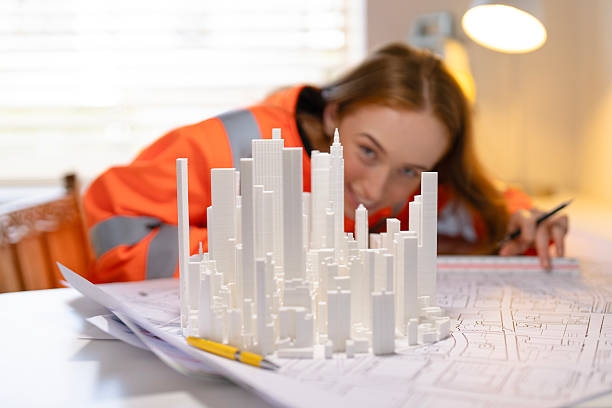
Finding a good architecture coursework topic is harder than it looks. There are thousands of buildings, theories, materials and design movements you could write about but not every interesting idea makes a strong university assignment.
The most workable topics give you a genuine question to investigate, not one you can answer with a few definitions and examples. "Sustainable architecture" on its own is far too broad. Narrow it to something like the effectiveness of passive design in UK schools, and the direction becomes obvious almost immediately.
That distinction matters because architecture coursework isn't really about describing buildings. Tutors want research, comparison, interpretation and a reasoned judgement at the end of it.
UK architectural education reflects this. The Architects Registration Board (ARB) places weight on architectural knowledge, design, research and evaluation, management, leadership, and professional practice. Architects Registration Board
If you're stuck on where to start or want a second pair of eyes once you've drafted a question uk architecture coursework help is worth bookmarking alongside the topic list below.
What Makes a Good Architecture Coursework Topic?
Before committing to a title, run it through a few simple checks.
Can you find reliable evidence? A topic might sound fascinating, but if the only material available is blogs and unsourced websites, building a convincing university-level argument becomes an uphill fight.
Can you actually analyse it, rather than just describe it? A title that only invites description tends to produce a weak argument no matter how well it's written.
And is it manageable? You don't need to solve the UK's housing crisis in 2,000 words. A focused question paired with one or two well-chosen case studies will usually take you further than a sprawling topic ever could.
20 Architecture Coursework Topics Worth Considering
1. How Can Retrofitting Existing Buildings Reduce Carbon Emissions?
Retrofit connects architectural design directly to an environmental problem, which makes it one of the more productive subjects to write about.
Insulation, glazing, airtightness, ventilation, heating systems, changes to the building envelope all of it is fair game. Victorian terraces, post-war housing and older public buildings all make workable case studies.
A tighter version of the question might read: How effective are retrofit measures at reducing the operational carbon emissions of existing UK housing?
This also opens the door to embodied carbon. The UK Green Building Council notes that embodied carbon arises from the materials and processes tied to construction, maintenance, refurbishment and eventual demolition. UK Green Building Council
2. Sustainable Architecture and the Challenge of Net Zero
Sustainability is an obvious choice for architecture students, which is exactly why it needs handling carefully. A general essay on "green buildings" won't stand out. Pick one strategy or building type instead:
- Can passive design cut energy consumption in UK homes?
- How should architects address whole-life carbon?
- What role can low-carbon materials play in new construction?
- Is net-zero design achievable without sacrificing occupant comfort?
The RIBA 2030 Climate Challenge offers useful professional context, covering operational energy, embodied carbon and water use. RIBA 2030 Climate Challenge
3. How Building Regulations Influence Architectural Design
For a topic with a strong technical and professional angle, building regulations deliver. Look at how requirements around energy efficiency, ventilation, fire safety or accessibility shape architectural decisions for instance: To what extent do energy-efficiency requirements influence the design of new residential buildings in England?
Define your geographical scope early. The UK doesn't run one uniform building-regulation system, so findings about England shouldn't be presented as automatically true for Scotland, Wales and Northern Ireland.
Current Approved Documents are published on GOV.UK. GOV.UK Approved Documents
4. Biodiversity Net Gain and Architectural Design
Biodiversity Net Gain sits at the intersection of architecture, planning and ecology. In England, applicable developments are generally expected to deliver a 10% increase in biodiversity value, subject to the relevant rules and exemptions.
Ask how architectural and landscape design can contribute to biodiversity net gain in residential developments green roofs, planting, habitat creation, sustainable drainage, and the relationship between buildings and open space all give you material to work with.
GOV.UK's current guidance is a sensible starting point for the regulatory framework. GOV.UK Biodiversity Net Gain guidance
5. Adaptive Reuse of Historic Buildings
What happens when an old building no longer serves its original purpose? Adaptive reuse pulls together conservation, sustainability and contemporary design in a way few other topics manage.
An industrial building converted into housing, a church turned community facility, an old commercial property reimagined as a cultural venue any of these work as a case study for the question: How can historic buildings be adapted for contemporary use without losing their architectural significance?
Historic England publishes guidance on altering heritage assets, including additions and repairs. Historic England
A strong case study gives you something concrete: what was kept, what changed, why those calls were made, and whether the result actually works.
6. Contemporary Architecture in Conservation Areas
Conservation areas create real tension between protecting existing character and letting cities evolve which is exactly what makes them useful to write about. Should new buildings in these areas imitate historic architecture, or deliberately contrast with it?
Compare two developments on materials, scale, proportions, street frontage, roof forms and their relationship with neighbouring buildings. The advantage here is that you're not boxed into a simple old-versus-new argument; you can genuinely ask whether contemporary intervention strengthens a historic area rather than undermining it.
7. Affordable Housing and Architectural Quality
Housing is an obvious UK topic, but it gets much stronger once you focus on the design problem rather than the housing shortage in general terms: How can architects balance affordability, density and residential quality in UK housing developments?
Worth investigating: internal space, daylight, private outdoor areas, communal spaces, mixed-tenure housing, building density, and adaptable layouts. Comparing actual developments rather than relying purely on theory is what separates a strong version of this topic from a generic one.
8. Brownfield Regeneration and Urban Design
Former industrial sites hand architects a genuinely difficult brief: contamination, heritage constraints, unusual site conditions, infrastructure limits, and pressure to deliver more housing, often all at once.
Does brownfield regeneration actually produce more sustainable urban development? A strong case study considers what existed on the site before, what the redevelopment proposes, and how the resulting neighbourhood performs environmentally, socially and architecturally.
9. Artificial Intelligence and the Future of Architectural Design
AI is tempting as a subject because it's current but "AI is changing architecture" alone won't get you very far. Pick a specific angle: generative design, AI image generation, architectural visualisation, design optimisation, authorship, intellectual property, bias, or AI's role in architectural education.
One genuinely interesting question: does AI improve architectural creativity, or simply let designers explore more options faster? Weighing that against concerns over originality, accuracy and professional responsibility gives you a balanced, defensible argument.
10. BIM and Collaboration in Architectural Practice
Building Information Modelling suits students who want a technical topic. Try: How does BIM affect collaboration between architects, engineers and contractors?
Coordination, information sharing, clash detection, project management, the handoff from design to construction pick one stage of the project rather than trying to cover the whole BIM process, or the assignment will sprawl.
11. Modular Construction and the UK Housing Challenge
Modular and off-site construction gets pitched constantly as the fix for UK construction efficiency. Rather than accepting that claim, test it against conventional construction on:
- Construction time and cost
- Quality and waste
- Transportation logistics
- Design flexibility
- Embodied carbon
A workable question: To what extent can modular construction contribute to higher-quality and more efficient UK housing delivery? The strongest assignments acknowledge the drawbacks alongside the benefits.
12. Designing Homes for an Ageing Population
Architecture has to work across an entire lifespan, which makes ageing and inclusive housing a genuinely useful subject whether you're looking at adaptable homes, retirement housing, or community-based accommodation.
Consider accessibility, circulation, lighting, acoustics, wayfinding, adaptable bathrooms and kitchens, social interaction, and access to outdoor space. It's also worth asking whether designing separately for older people is preferable to building genuinely adaptable homes that work for a wider range of residents throughout their lives.
13. Biophilic Design and Wellbeing
Biophilic design looks at how people relate to natural elements within the built environment daylight, vegetation, natural materials, views, outdoor space, natural ventilation.
Rather than assuming biophilic architecture automatically improves wellbeing, test the claim against the evidence: To what extent can biophilic design contribute to wellbeing in UK educational buildings? Restricting yourself to one building type makes the research far easier to control.
14. Climate-Resilient Architecture in UK Cities
Climate change raises a different question from carbon reduction alone: how do buildings and urban areas cope with changing environmental conditions?
Overheating, flooding, urban heat islands, extreme rainfall, drought, green infrastructure, resilient public spaces compare two cities or two projects and examine how their architectural and landscape decisions respond to specific climate risks.
15. Designing Net-Zero Schools
Schools are useful case studies because the buildings have to support learning while meeting environmental and practical demands simultaneously.
Orientation, daylight, ventilation, insulation, materials and energy systems all influence how well a school performs. A focused question: How can passive design strategies reduce energy demand in UK school buildings? Comparing two schools lets you check whether the claimed benefits actually show up in practice.
16. Community Participation in Architectural Design
Architecture affects communities directly, so it's fair to ask who should actually have a say in the design process: Does community participation lead to better architectural outcomes?
There's plenty of room for balance here. Community involvement can surface local knowledge that professionals miss but consultation also brings conflicting expectations, political pressure and practical constraints.
The NPPF folds community engagement into its approach to achieving well-designed places in England. National Planning Policy Framework
17. High-Rise Housing and Urban Density
High-rise buildings involve far more than height: housing density, public space, daylight, wind, transport, fire safety, social interaction, views, affordability.
Rather than deciding upfront whether tall buildings are good or bad, compare real examples and work out the circumstances under which high-density development actually succeeds. Building safety adds a genuinely contemporary dimension GOV.UK publishes current information on building regulations and the Building Safety Regulator. Building Safety guidance
18. Waterfront Regeneration and Urban Architecture
Former docks, canals and industrial waterfronts have become key regeneration sites across UK cities, giving you plenty of scope to study how architecture, public space and economic development interact.
Flood risk, heritage, public access, biodiversity, housing, commercial development, transport, local identity the real question is whether regeneration genuinely benefits the wider area, not just whether the waterfront photographs well.
19. Embodied Carbon and Architectural Material Selection
If construction technology interests you, material choice offers a tightly focused topic. Compare concrete, steel, timber and reclaimed materials on their environmental implications: How should architects consider embodied carbon when selecting structural materials?
Be wary of blanket claims like "timber is always sustainable." Environmental performance depends on sourcing, manufacturing, transportation, durability, reuse and the building's wider life cycle and that complexity is exactly what makes the topic worth writing about.
20. Do Design Codes Improve Architectural Quality?
Design codes sit right at the meeting point of architecture and planning. The UK's National Model Design Code covers context, identity, built form, movement, nature, public space, homes and buildings, resources and lifespan. National Model Design Code
Do design codes encourage better architecture, or restrict creativity? Credible arguments exist on both sides, which is what makes this a strong topic for a critical essay.
How to Turn an Idea into a Coursework Question
The biggest mistake in architecture assignments is starting from a theme instead of a research question.
Take "sustainable architecture in the UK." It sounds relevant, but it points in far too many directions at once. Narrowed down, it becomes: How effective are passive design strategies in reducing energy demand in UK schools?
That version tells you exactly what to investigate a specific design approach, a building type, a geographical context, a measurable outcome. Almost any architecture topic can be narrowed the same way.
A Simple Five-Step Method
- Pick a broad subject housing, sustainability, heritage, technology, materials, urban design.
- Choose a specific context schools, high-rise housing, conservation areas, brownfield developments.
- Identify a problem what's difficult, controversial or changing within that context?
- Turn the problem into a question "how," "why" and "to what extent" are usually the most productive openers.
- Find a real case study an actual building or development gives you evidence you can genuinely analyse.
For example: heritage (theme) → conservation areas (context) → accommodating contemporary development (problem) → To what extent can contemporary architecture enhance rather than undermine the character of UK conservation areas? (question) → two contrasting UK case studies (evidence).
That's a far more manageable brief than simply writing about "modern architecture and heritage."
How to Make Your Coursework More Credible
A long reference list alone doesn't make an architecture assignment convincing. Build your research around three types of evidence instead.
Academic sources books, journal articles and peer-reviewed research for architectural theory and established academic arguments.
Professional and government sources for UK-specific questions, go directly to organisations like ARB, RIBA, Historic England and the relevant government departments.
Real-world evidence this is where the coursework gets genuinely interesting. Study an actual building. Look at planning documents, drawings, photographs, design statements and environmental information where you can find them, then ask what the evidence actually tells you.
That combination lets you demonstrate research and evaluation, rather than just repeating what a handful of websites already say.
Which Topics Suit Different Students?
If you enjoy sustainability, look at retrofit, embodied carbon, net-zero buildings or climate resilience.
If you're drawn to history and theory, adaptive reuse and conservation areas are strong starting points.
If you enjoy technology, BIM, AI, modular construction and building-performance systems all offer real depth.
If urban design interests you, brownfield regeneration, high-rise housing and waterfront redevelopment give you plenty to work with.
And if you prefer human-centred architecture, ageing, accessibility, wellbeing or community participation are worth exploring.
The best topic is usually the one that matches what you actually find interesting about architecture. That alone tends to make the research less of a chore and the resulting argument stronger, because you're invested in the problem rather than just completing an assignment.
Frequently Asked Questions
What makes an architecture coursework topic too broad? If you can only describe the subject rather than investigate it "sustainable architecture" or "modern housing," for instance it's too broad. Narrow it to a specific building type, location and measurable question.
How many case studies do I need? One or two, chosen carefully, will usually take you further than several examples covered superficially. Depth beats breadth in most UK architecture coursework briefs.
Can I write about a building outside the UK? Yes, but check your module's requirements first. Many UK architecture briefs expect you to engage with UK-specific regulation, planning policy or context, so an international case study may need extra framing to stay relevant.
Where can I get feedback on my topic before I start writing? A tutor, module leader or a source like architecture coursework service in uk can help you stress-test a question before you commit significant time to research.
Final Thoughts
There's no single "perfect" architecture coursework topic. A fashionable subject can still produce a weak assignment if the question stays too broad. An ordinary building, properly investigated, can produce excellent coursework if the argument is clear and well-evidenced.
For UK architecture students, strong ground includes retrofit, embodied carbon, biodiversity net gain, housing, adaptive reuse, climate resilience, AI, building regulations and urban regeneration all areas that connect architectural education to issues currently shaping the built environment.
Above all, don't pick a title and start writing immediately. Ask what you actually want to find out first, identify the evidence you'll need, choose a manageable case study, and build the argument around what that evidence actually shows. That's a far more reliable route from an interesting idea to strong university coursework.

