


Common Ergonomics Dissertation Mistakes and How to Avoid Them
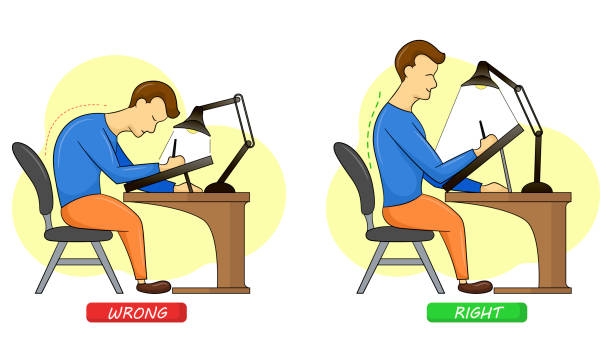
An ergonomics dissertation can seem easy at first. You choose a workplace problem, collect some data, analyse it and write up what you found. In practice, things are rarely that simple.
The difficulty usually starts when you try to connect the research problem with a clear question, an appropriate methodology and conclusions that are actually supported by your evidence. A dissertation can contain plenty of research and still be weakened by a poorly focused question, an unsuitable assessment method or conclusions that go further than the data allows.
Ergonomics itself is a broad field. It considers how people interact with the tasks, equipment, environment and organisational systems around them. Physical demands matter, but so can workload, fatigue, work organisation and psychosocial factors. The National Institute for Occupational Safety and Health (NIOSH) takes this broader approach in its ergonomics guidance. (cdc.gov)
With that in mind, here are some of the most common mistakes I would try to avoid when planning and writing an ergonomics dissertation.
1. Starting With a Topic That Is Too Broad
One of the easiest mistakes is choosing a subject that sounds interesting but is far too large for a dissertation.
“Workplace ergonomics” is a field of study. It is not a manageable research question.
If you try to cover posture, manual handling, repetitive movements, fatigue, workstation design and musculoskeletal disorders across several industries, you will probably end up discussing everything without investigating anything in enough depth.
A better approach is to narrow your topic around a particular group, problem, setting and outcome.
For example, instead of asking:
How does ergonomics affect office workers?
you could ask:
Is prolonged sitting associated with self-reported neck and shoulder discomfort among administrative employees at a university?
The second question gives you something specific to investigate.
Before settling on your topic, ask yourself four questions:
-
Who exactly am I studying?
-
What ergonomic issue am I investigating?
-
In what environment does it occur?
-
What outcome am I trying to measure or understand?
This kind of focus also fits the systems-based approach described in ISO 6385, which considers people, equipment, the working environment and organisational factors together. (iso.org)
Students who need specialist academic guidance with planning, methodology or structuring an ergonomics project may also find an Ergonomics dissertation service useful. Any external support should complement your own research and understanding rather than replace them.
2. Choosing a Method That Cannot Answer Your Question
Your research question should determine your methodology—not the other way around.
This sounds obvious, but it is a common problem in student research. A student may find an interesting questionnaire or ergonomic assessment tool and then build a research project around it, even though the tool does not really answer the original question.
Imagine that your research question asks whether an ergonomic intervention reduces back pain. If you only collect data once, after the intervention, you cannot confidently demonstrate that the intervention caused the change.
The same applies to qualitative research. Interviews can tell you a great deal about workers' experiences, perceptions and concerns, but a small interview study cannot automatically establish how common a problem is across an entire workforce.
A useful check is to map your dissertation like this:
Research question → study design → data collection → analysis → conclusion
Each part should lead naturally to the next.
If you are conducting an observational study, the STROBE guidance can help you check whether important aspects of the research have been reported clearly. (equator-network.org)
For qualitative interviews or focus groups, the COREQ checklist is another useful reporting resource. (equator-network.org)
These frameworks are reporting aids, though. They do not compensate for a research design that does not fit the question.
3. Picking an Assessment Tool Simply Because It Is Popular
Ergonomics offers plenty of established assessment methods, including RULA, REBA and the NIOSH Lifting Equation.
The mistake is assuming that because a method is widely used, it must automatically be appropriate for your project.
Before selecting an assessment method, find out exactly what it was designed to assess.
Ask yourself:
-
What type of task is the tool intended for?
-
What risk factors does it consider?
-
What does its final score actually tell me?
-
What does it leave out?
-
Is it suitable for the population and workplace I am studying?
-
Do I need another measurement method to support it?
For example, the Revised NIOSH Lifting Equation is designed for assessing the risk associated with two-handed lifting tasks. It should not be presented as a universal test of every form of ergonomic risk. (cdc.gov)
Your methodology should explain not just which tool you used, but why you used it.
That small distinction can make the research design much more convincing.
4. Treating an Assessment Score Like a Medical Diagnosis
A numerical ergonomic score can make a results chapter look precise. But precision in presentation does not mean that the score tells you everything about a person's health.
An observational assessment may identify awkward postures or other potential risk factors. It does not necessarily establish that a worker will develop a particular musculoskeletal disorder.
Work-related musculoskeletal problems can involve several factors. NIOSH, for example, discusses physical exposures such as force, repetition, vibration and awkward postures alongside other contributing factors. (cdc.gov)
So be careful with statements such as:
“The assessment proves that these workers will develop back pain.”
A more appropriate interpretation might be:
“The assessment identified elevated exposure to postural risk, suggesting that the task warrants further investigation and possible intervention.”
The second statement recognises what the assessment can tell you without turning it into something it was never designed to do.
5. Depending Entirely on a Convenient Sample
Getting participants can be one of the hardest parts of a dissertation. When time is limited, it is tempting to recruit whoever is easiest to reach.
That may be practical, but it creates limitations that you need to recognise.
Suppose you investigate office ergonomics using only students or employees from one department. Even if you collect a respectable number of responses, you cannot automatically claim that your results represent office workers generally.
Be clear about:
-
your target population;
-
eligibility criteria;
-
how participants were recruited;
-
your sampling approach;
-
the size of the sample; and
-
possible selection bias.
You do not need to pretend that a small sample is representative when it is not.
A clearly defined sample, accompanied by an honest discussion of its limitations, is more credible than a large sample with a vague recruitment process.
6. Collecting Data Inconsistently
Ergonomics research can involve observations, questionnaires, interviews, video recordings, environmental measurements, wearable technology and other forms of data collection.
That variety creates another potential weakness: inconsistent measurement.
If you are observing workers, for example, are you assessing everyone while they perform comparable tasks? Are the observation conditions reasonably consistent? If video is being used, are recordings taken from suitable and comparable viewpoints?
Questionnaires need similar attention.
If you use a validated instrument, explain what it measures and why it is appropriate. If you create your own questionnaire, explain how the questions were developed and what steps you took to make the instrument suitable for your study.
Small details about data collection can have a significant effect on the credibility of your results.
7. Forgetting About Confounding Variables
Finding an association does not automatically explain why it exists.
For instance, suppose your study finds that employees who spend longer periods sitting report more back discomfort. It would be tempting to conclude that sitting caused the discomfort.
But other factors might also matter.
Age, previous injuries, physical activity, workload, stress, sleep and job characteristics could all potentially influence the outcome.
You do not necessarily need to measure every possible variable. You should, however, identify the important factors and explain how you dealt with them.
This is particularly important in ergonomics because workplace problems rarely have one simple cause. A task may involve physical demands while the worker is simultaneously dealing with time pressure, insufficient breaks or limited control over how the work is performed.
8. Turning the Literature Review Into a List of Studies
A literature review should do more than demonstrate that you have read a lot.
One weak approach is to write:
Study A found this. Study B found that. Study C reported something else.
The reader then has to work out why those studies have been discussed and what they collectively tell us.
A stronger literature review compares the evidence.
You might examine differences in:
-
study population;
-
workplace setting;
-
exposure;
-
research design;
-
ergonomic assessment method;
-
outcome measures;
-
sample size; and
-
study limitations.
Then ask the important question:
What is still unknown?
That gap should help justify your own research.
If you are conducting a systematic review, use a recognised reporting framework rather than treating the process like an ordinary literature review. PRISMA 2020 provides guidance for transparent reporting of systematic reviews and meta-analyses.
9. Claiming That One Factor Caused an Outcome
This is particularly easy to get wrong in the discussion chapter.
If your research design can only demonstrate an association, your language needs to reflect that.
For example:
Overstated:
“Poor workstation design causes neck pain.”
More defensible:
“Poor workstation characteristics were associated with higher levels of self-reported neck discomfort in the study sample.”
The second version may sound less impressive, but it is actually more academically responsible.
The same principle applies to recommendations. If your dissertation did not test an intervention, avoid claiming that your proposed solution will definitely prevent injuries.
Instead, explain what your findings suggest and what future research should investigate.
10. Treating Ethics as an Administrative Requirement
Ethics should be considered when you design the research, not added as an afterthought.
If your dissertation involves employees or other human participants, you may need approval from your university's ethics committee before beginning recruitment or data collection.
Participants should understand what they are being asked to do, what information will be collected, how their data will be handled and that participation is voluntary. Guidance from the U.S. Department of Health and Human Services emphasises informed consent as an important protection for research participants. (hhs.gov)
There is another issue worth considering in workplace research: the relationship between managers and employees.
If a manager invites staff to participate, employees may feel that they are expected to take part even when participation is officially voluntary.
Your methodology should therefore explain how you protected participants from pressure and how confidentiality and anonymity were maintained.
11. Assuming Statistical Significance Means the Finding Is Important
Statistics can tell you whether a result meets a particular statistical criterion. They do not automatically tell you whether the finding matters in practice.
Imagine that your analysis identifies a statistically significant difference in discomfort between two groups.
You should still ask:
-
How large was the difference?
-
Is it practically meaningful?
-
How precise is the estimate?
-
Could the finding have other explanations?
-
What does it actually mean for the workplace?
A good discussion connects statistical results with the real ergonomic problem.
That is much more informative than simply reporting that a result was “significant.”
12. Making Claims That Are Bigger Than the Study
A dissertation does not have to transform the entire field of ergonomics.
If you studied 40 employees in one organisation, your findings may provide useful evidence about that particular group. They cannot automatically be applied to every worker in the industry.
This is why limitations matter.
You might need to discuss:
-
sample size;
-
recruitment method;
-
self-reported information;
-
measurement limitations;
-
observer effects;
-
study duration;
-
single-site research; and
-
generalisability.
A limitations section should not read like an apology. Instead, explain what the limitations mean for interpreting your findings and how future studies could address them.
13. Giving Generic Recommendations
“Employers should improve workplace ergonomics” is not a particularly useful recommendation.
Your recommendations should come from your findings.
A practical way to develop them is to ask:
-
What specific problem did my research identify?
-
What could reasonably reduce that problem?
-
Who would need to implement the change?
-
What resources or workplace changes might be required?
-
How could the effectiveness of the intervention be evaluated?
This approach is consistent with established ergonomics programmes, where identifying hazards is followed by selecting controls and evaluating whether those controls actually work. NIOSH provides guidance on developing ergonomics programmes using this type of process. (cdc.gov)
UK students can also refer to Health and Safety Executive guidance on manual handling and musculoskeletal risks when relevant to their research topic. (hse.gov.uk)
14. Repeating the Results Instead of Discussing Them
Your results chapter answers one question:
What did I find?
The discussion needs to tackle another:
What do those findings mean?
One useful way to structure each major finding is:
Finding → comparison with previous research → possible explanation → practical meaning → limitation
Suppose participants report higher shoulder discomfort during a repetitive task. Do not simply repeat the percentage from your results chapter.
Compare the finding with earlier research. Consider whether repetition, force, posture or another factor might explain it. Discuss alternative explanations and then consider what the result could mean for the workplace.
That is where your own critical thinking becomes visible.
15. Failing to Connect the Chapters
Perhaps the most frustrating dissertation problem is when individual chapters look reasonable but do not work together.
A strong dissertation should follow a recognisable line of reasoning:
Research problem → literature gap → research question → objectives → methodology → results → discussion → conclusion
If those parts do not connect, the weaknesses become obvious.
Try this simple test before submission.
Read your research question and then your conclusion.
Does the conclusion actually answer the question?
Next, compare your objectives with your results.
Has each objective been addressed?
Finally, look at your recommendations.
Can you trace each major recommendation back to your findings or supporting evidence?
If you cannot, something probably needs revising.
A Final Dissertation Checklist
Before submitting your ergonomics dissertation, work through the following list:
-
Is the research problem clearly defined?
-
Is the research question narrow enough to investigate?
-
Do the objectives directly support the research question?
-
Have you justified your chosen ergonomic assessment method?
-
Is your sampling approach clearly explained?
-
Are your data collection procedures consistent?
-
Have you considered relevant confounding factors?
-
Have you dealt with ethical approval and informed consent?
-
Does your analysis match your data and research design?
-
Have you avoided unsupported causal claims?
-
Are your conclusions limited to what the evidence can demonstrate?
-
Have you discussed the important limitations?
-
Are your recommendations specific and realistic?
-
Does the conclusion answer the original research question?
If several answers are “no,” that does not mean the dissertation is beyond repair. It simply shows you where your remaining effort is likely to have the greatest impact.
Final Thoughts
A strong ergonomics dissertation does not need to be unnecessarily complicated.
What matters is that the research makes sense from beginning to end.
Start with a focused problem. Turn that problem into a question you can realistically answer. Select a method that fits the question, collect your data carefully and resist the temptation to make your findings sound more certain than they are.
Most importantly, remember that ergonomics is not simply about finding an uncomfortable posture and assigning it a score. People work within systems, and those systems include tasks, equipment, environments, schedules and organisational conditions.
That broader perspective is reflected in ISO 6385, which considers human, social and technical requirements when designing work systems. (iso.org)
If you keep that perspective throughout your dissertation, question your own assumptions and make sure your conclusions remain tied to the evidence, you will avoid many of the problems that make otherwise promising ergonomics research less convincing.

