


SOC Audit: Essential Security Checks for Indian Healthcare
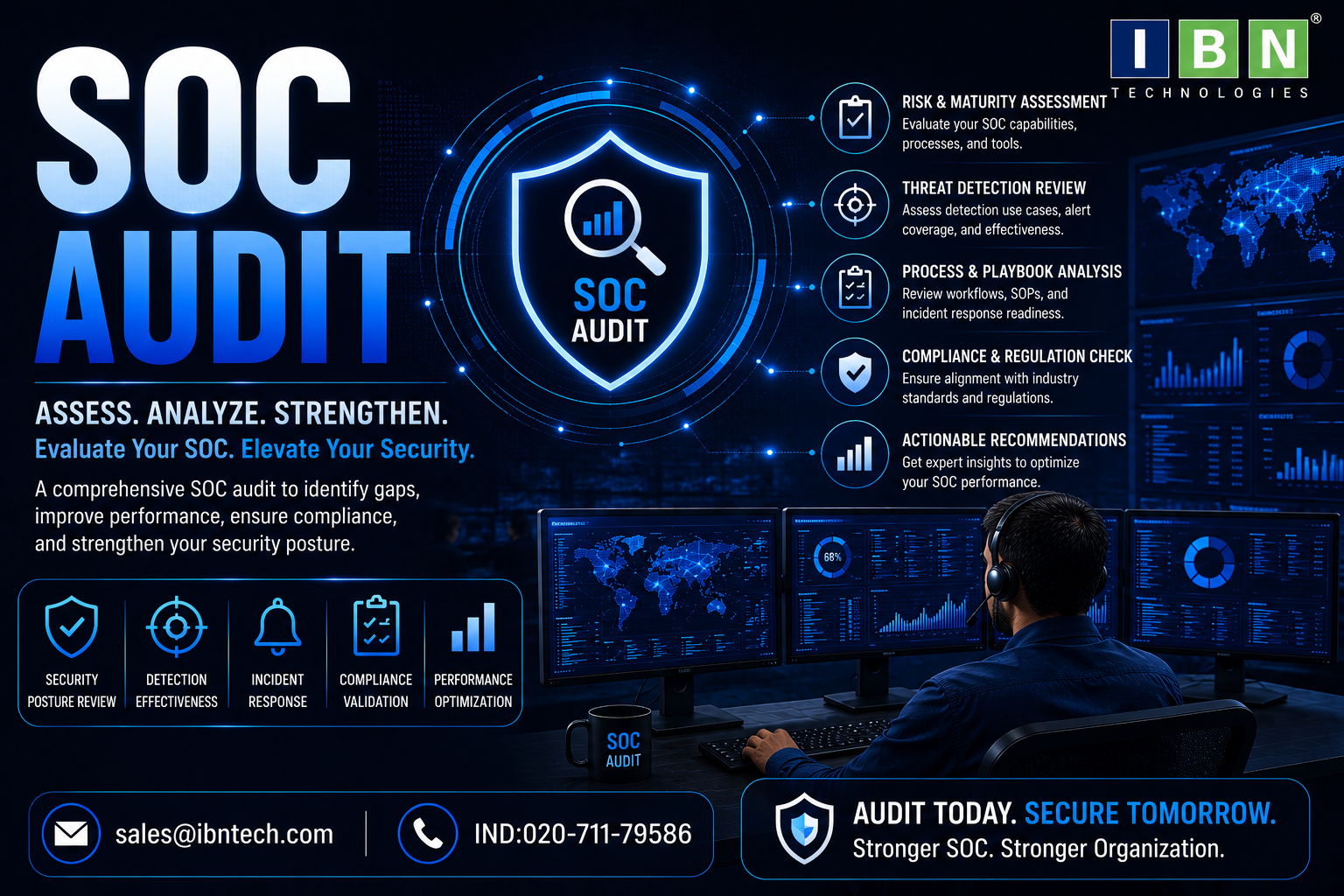
Why Healthcare Security Needs Continuous Attention
For healthcare organizations, soc audit preparation can provide a structured way to examine whether security controls remain effective as systems, users, applications, and digital services change.
Healthcare environments increasingly depend on interconnected technology. Clinical applications, administrative systems, cloud platforms, employee accounts, and digital services all create security considerations that cannot be managed effectively through isolated checks.
An audit can help bring those areas into one view. More importantly, it can reveal whether security processes actually work in day-to-day operations or simply exist as documented policies.
For Indian healthcare organizations, this distinction matters because a security weakness can affect operational continuity, sensitive information, and confidence among patients, partners, and business stakeholders.
What Should a SOC Audit Establish in Healthcare?
A SOC audit examines whether relevant controls are appropriately designed and, depending on the scope, whether they operate effectively over a defined period.
In a healthcare environment, this can involve access management, security monitoring, incident response, risk management, change control, data protection, logging, and evidence management.
The objective is not to examine every technology component equally. Instead, organizations should understand which systems and processes are important to their operations and whether appropriate security controls are protecting them.
Why Security Evidence Deserves More Attention
A control is difficult to defend during an assessment if the organization cannot demonstrate that it was consistently performed.
For example, an access policy may require periodic reviews. The organization should also be able to show evidence that those reviews occurred and that inappropriate access was addressed.
The same principle applies to incident management, monitoring, remediation, and other important controls.
Evidence should therefore be generated through normal security operations rather than recreated immediately before an audit.
Where a SOC Managed Service Can Strengthen Healthcare Monitoring
A soc managed service can support healthcare organizations that need continuous security monitoring and response capabilities but do not want to build every operational function internally.
The model can provide structured processes around event monitoring, alert analysis, investigation, escalation, and reporting.
IBN Technologies provides managed SOC and SIEM services that include security monitoring, threat detection, incident response, centralized log management, threat intelligence, and compliance-oriented reporting.
For healthcare organizations, the value lies in establishing a consistent operational process around security events. Internal technology teams can continue managing their systems while a managed security operation provides additional monitoring and response capabilities based on the agreed service model.
Why Security Technology Alone Does Not Close Healthcare Gaps
Healthcare organizations can deploy several security technologies and still have operational weaknesses.
An endpoint security platform may detect suspicious activity, but someone must determine whether the alert requires investigation.
A logging platform may retain events, but the organization needs a process for identifying meaningful activity.
An incident response policy may define responsibilities, but staff need to know how those responsibilities work when an actual event occurs.
These gaps often become visible during a security assessment because the review connects individual controls with evidence of operational performance.
The following warning signs deserve attention:
-
Important security alerts have no clear owner
-
Monitoring responsibilities are divided across several teams
-
Incident escalation depends on individual knowledge
-
Security evidence is stored inconsistently
-
Access reviews are performed irregularly
-
Remediation actions lack accountable owners
-
Security findings remain open for extended periods
-
Compliance documentation is maintained separately from security operations
The issue is not always a lack of investment. Often, the underlying problem is a lack of coordination.
A More Practical Way to Turn Findings Into Remediation
An audit finding becomes useful when it can be converted into a specific improvement.
Instead of recording that "monitoring needs improvement," a healthcare organization can identify the systems affected, determine the business risk, assign an owner, define the remediation action, and establish evidence that will demonstrate completion.
A practical remediation cycle looks like this:
Identify → Assess → Assign → Remediate → Validate → Monitor
Identification establishes the weakness.
Assessment determines why it matters and how it affects the organization.
Assignment gives the issue a clear owner.
Remediation addresses the underlying control gap.
Validation confirms that the change has been implemented appropriately.
Monitoring determines whether the improved control continues to operate as intended.
This approach prevents audit findings from becoming static items in a compliance report.
The Healthcare Use Case: Fragmented Security Visibility
Consider an Indian healthcare organization operating several digital systems.
The infrastructure team manages core technology. Application teams support business and clinical platforms. Another group manages employee access, while security personnel review alerts from multiple tools.
Each team may be performing its responsibilities correctly, yet the overall security picture remains fragmented.
An unusual login may be visible to the identity team. A related endpoint event may be recorded elsewhere. Network activity may provide another piece of the picture.
Without a coordinated monitoring process, connecting these signals can take time.
A structured security assessment can identify this visibility problem and help the organization determine whether centralized monitoring, improved escalation procedures, or additional operational support would be appropriate.
Connecting Compliance With Everyday Security
Compliance should not become a separate activity performed only when an assessment is approaching.
IBN Technologies provides cybersecurity audit and compliance services that include security audits, gap and risk analysis, continuous compliance monitoring, and audit-ready documentation. Its compliance support covers areas such as HIPAA, SOC 2, ISO 27001, GDPR, and DPDPA where relevant to the engagement.
Healthcare organizations should determine applicable requirements according to their specific services, data environment, contractual relationships, and regulatory obligations.
The practical objective is to connect those requirements with everyday controls.
For example, if a requirement relates to access management, the organization should understand which systems are affected, who owns the control, how access is reviewed, and what evidence demonstrates that the process is working.
That creates a defensible connection between compliance expectations and operational security.
Building a Healthcare Security Review Checklist
-
Identify systems that are critical to healthcare operations
-
Review user and privileged access controls
-
Confirm security monitoring coverage
-
Establish ownership for important alerts
-
Test incident escalation procedures
-
Review how security evidence is retained
-
Track findings through remediation
-
Validate completed corrective actions
-
Review monitoring after major technology changes
-
Map applicable compliance requirements to relevant controls
The checklist should be adapted to the organization's actual technology environment and applicable obligations.
Questions Healthcare Leaders Should Ask
Before an audit or managed security engagement, leadership should ask whether the organization can answer a few straightforward questions.
Which systems require the strongest security oversight?
Who is responsible when suspicious activity is detected?
How quickly can an important event be escalated?
Can the organization demonstrate how a previous security incident was handled?
Are security findings assigned to specific owners?
Can evidence supporting important controls be retrieved without extensive manual effort?
These questions help expose the difference between having security processes on paper and operating them consistently.
Make the Audit a Starting Point for Improvement
Healthcare security cannot remain static. Systems change, users change, technology environments expand, and new business requirements emerge.
That makes periodic assessment valuable, but the real objective should be continuous improvement.
A well-managed soc audit can help an Indian healthcare organization identify
{
"@context": "https://schema.org",
"@type": "BlogPosting",
"headline": "SOC Audit: Essential Security Checks for Indian Healthcare",
"description": "<div class="OutlineElement Ltr SCXW144717739 BCX8">
<p class="Paragraph SCXW144717739 BCX8"><span class="NormalTextRun SCXW144717739 BCX8">Why...",
"image": "https://makemyfriends.com/content/uploads/photos/2026/08/mmf_eb839ea41a23130285afdc7e241ccd71.png",
"author": {
"@type": "Person",
"name": "Ajay Patil",
"url": "https://makemyfriends.com/Dannypatil"
},
"publisher": {
"@type": "Organization",
"name": "MakeMyFriends",
"url": "https://makemyfriends.com"
},
"datePublished": "2026-08-20 12:05:49",
"dateModified": "2026-08-20 12:05:49",
"mainEntityOfPage": {
"@type": "WebPage",
"@id": "https://makemyfriends.com/blogs/35160/SOC-Audit-Essential-Security-Checks-for-Indian-Healthcare"
},
"url": "https://makemyfriends.com/blogs/35160/SOC-Audit-Essential-Security-Checks-for-Indian-Healthcare",
"articleSection": "Health",
"keywords": "SOC_Audit, Healthcare_Cybersecurity, SOC_Managed_Service, Security_Monitoring, HIPAA, India_Healthcare",
"wordCount": "65535",
"commentCount": "",
"interactionStatistic": [{
"@type": "InteractionCounter",
"interactionType": "https://schema.org/CommentAction",
"userInteractionCount": ""
},
{
"@type": "InteractionCounter",
"interactionType": "https://schema.org/ViewAction",
"userInteractionCount": ""
}
]
}

