


How Surface Treatment Supports Baking Efficiency
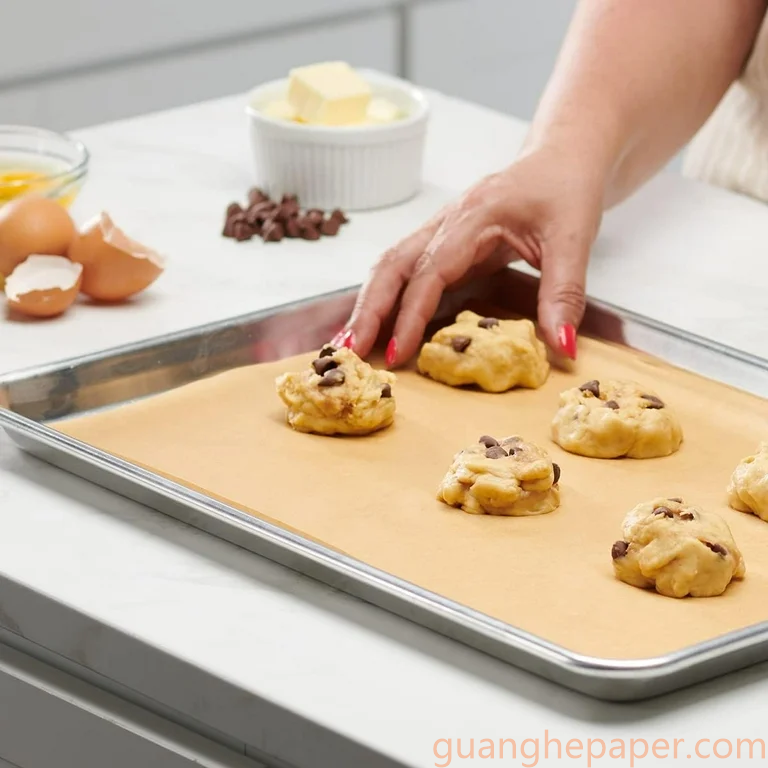
In commercial kitchens and food-processing environments, Baking Paper serves as a practical material for separating food from baking surfaces and supporting cleaner preparation workflows. Its performance depends on the relationship between the paper substrate, surface treatment, converting quality, and intended application. Understanding these factors can help businesses make more informed material decisions.
The paper substrate provides the basic structure of the product. Its surface properties and fiber characteristics can influence flexibility, folding, cutting, winding, and coating compatibility. Food-related paper needs to be selected according to its intended use so that the material can provide appropriate handling characteristics throughout preparation and production.
Surface coating adds functional value to the substrate. Silicone treatment is widely used because it can create a release surface that helps reduce adhesion between food and paper. This property is useful for many baking applications involving dough, pastries, cookies, bread, and prepared foods. Depending on the formulation, the surface can also help manage grease and moisture during food preparation.
Manufacturing consistency is important because commercial users need predictable material behavior. Coating application, drying, inspection, and material handling all need to work together. A controlled coating process can help maintain a more uniform surface, while appropriate inspection can identify potential variations before the material moves into converting and packaging.
Converting technology determines how the paper is presented to the end user. Rolls can be processed into practical sheet formats, while specialized converting can create liners and other application-specific products. Clean cutting, accurate slitting, and organized winding can improve usability. For high-volume operations, convenient formats can reduce unnecessary handling and help streamline preparation.
Food-contact safety should be considered throughout the supply chain. Manufacturers need appropriate controls for raw materials, production environments, storage, and packaging. Buyers should also evaluate the intended food-contact application and relevant requirements in their target market. Documentation and clear communication are particularly important when materials are purchased internationally.
Different users can have very different operational requirements. A small bakery may need easy-to-handle sheets for manual preparation, while a large food manufacturer may require rolls suitable for continuous processing. Restaurants, catering companies, and distributors can have additional needs related to storage, packaging, and daily handling. Matching the material format to the workflow can improve overall efficiency.
Automation is becoming increasingly common in food production, making consistent material behavior more valuable. Automated systems may handle food preparation, filling, baking, cooling, portioning, and packaging. When paper is introduced into these processes, reliable feeding and handling can help minimize interruptions. Converting choices should therefore consider how the material will interact with equipment and downstream processes.
Storage conditions also influence the practical value of food paper. Material should be protected from excessive moisture, contamination, and physical damage before use. Suitable packaging can help maintain product condition during transportation and warehouse storage. For distributors and international buyers, effective packaging also supports more organized inventory management.
Sustainability is increasingly considered alongside performance when businesses select food materials. Buyers may review paper sourcing, packaging efficiency, material consumption, and available substrate options according to their own procurement objectives. A balanced evaluation can help businesses consider environmental priorities without overlooking food-contact requirements or production practicality.
From substrate selection to surface treatment and converting, Baking Paper reflects a combination of material science and manufacturing technology. Businesses should evaluate the complete product lifecycle and its intended application rather than focusing on one characteristic alone. For food-grade paper products and converting solutions, Zhejiang Guanghe New Materials Co., Ltd. provides further information at https://www.guanghepaper.com/product/.

