


Quality Control in Industrial Fastener Manufacturing
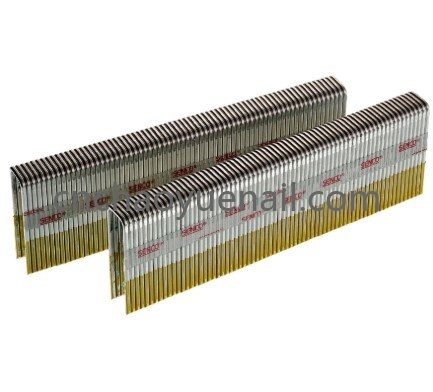
Reliable fastening begins with the relationship between material properties and manufacturing precision. In applications where 90K Staples are used for repeated fastening operations, consistency in steel wire preparation and forming can influence installation efficiency and finished assembly quality. Manufacturers therefore need to consider the entire production process, from raw material selection through forming, surface treatment, inspection, and final packaging.
Steel wire is commonly selected for staple production because it provides a useful combination of strength and formability. Yet the quality of the finished fastener depends on more than simply choosing steel as the raw material. Wire cleanliness, chemical consistency, internal structure, and processing stability all contribute to how the material behaves during manufacturing. A carefully controlled raw-material supply can reduce variations and create a more dependable production foundation.
Wire drawing can refine the material and prepare it for accurate downstream processing. During this operation, manufacturers must maintain controlled conditions so the wire remains consistent along its length. If material characteristics fluctuate significantly, cutting and forming operations may become less predictable. Stable wire preparation therefore supports better control over the geometry of the final fastener.
Forming technology converts prepared wire into the finished fastening structure. Automated machinery can perform feeding, cutting, bending, and shaping in a coordinated sequence. The benefit is not simply higher production speed; automation can also improve repeatability. When production conditions remain stable, manufacturers can reduce variation between individual pieces and maintain more consistent results across larger manufacturing batches.
Tooling quality is closely connected to forming accuracy. Production tooling must withstand repeated mechanical operations while maintaining its intended geometry. Wear can gradually influence the shape of formed components, which makes preventive maintenance and process monitoring important. Manufacturers that integrate regular tooling inspection into their quality systems can identify potential deviations before they affect a significant volume of products.
Surface treatment provides another layer of protection for steel fasteners. Exposure to moisture, storage conditions, and transportation environments can affect untreated steel over time. Appropriate surface engineering can help improve resistance to environmental deterioration while supporting the appearance and handling characteristics expected by professional buyers. The choice of treatment should be connected to the intended application rather than applied as a universal solution.
Quality inspection is increasingly supported by automated technologies. Vision systems and other inspection methods can evaluate product shape and identify manufacturing deviations at different stages. These systems are especially useful in continuous production because they can monitor large quantities of fasteners more consistently than occasional manual checks. Human quality personnel remain important for process analysis, but automated inspection can provide an additional layer of production control.
Fastening equipment compatibility is another important consideration. Industrial users often depend on automated or semi-automated tools to maintain productivity. If fasteners vary in geometry, feeding and driving operations may become less stable. Consistent manufacturing helps ensure that products behave predictably within the intended fastening system, reducing avoidable interruptions during assembly.
Different industries also create different material requirements. Packaging applications may emphasize clean feeding and secure closure, while furniture manufacturing can focus on dependable attachment between components. General industrial assembly may require consistent forming and suitable surface characteristics for the working environment. By connecting product design with application conditions, manufacturers can make more appropriate decisions regarding steel processing and production technology.
For international B2B procurement, quality management should extend beyond production itself. Proper packaging can protect fasteners from moisture, contamination, and physical damage during storage and transportation. Clear batch management and inspection records can also support supply-chain traceability. These practices are particularly valuable when products move through multiple distributors or are supplied to different manufacturing facilities.
Efficient manufacturing can also contribute to more responsible resource use. Accurate wire feeding, optimized forming processes, and effective inspection help reduce material waste caused by rejected or incorrectly formed products. Since steel can enter established recycling streams, responsible production and material management can further support sustainability goals without compromising the functional requirements of industrial fastening.
The reliability of 90K Staples ultimately depends on a combination of steel quality, forming technology, tooling management, surface engineering, and inspection discipline. A manufacturer that integrates these elements into one controlled production system can provide more consistent fastening solutions for professional applications. Companies seeking additional information about steel fastening products and manufacturing capabilities can visit https://www.cnchaoyuenail.com/product for further product references.

