


Engineering Support for Fluid Management Systems
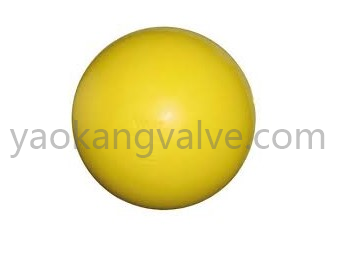
Industrial liquid-level systems depend on mechanical components that can respond consistently to changes in fluid height. When evaluating a Float Ball Manufacturer, equipment companies should examine material selection, forming accuracy, connection quality, inspection procedures, and the supplier's ability to support the requirements of the complete fluid-control assembly.
The basic working principle relies on buoyancy. As the liquid rises or falls, the floating component changes position and transfers movement through a lever, stem, linkage, or similar mechanism. This movement can regulate a connected valve and provide a practical approach to liquid-level management in tanks, storage equipment, water systems, and industrial process machinery.
Material selection should be based on the actual operating environment. Different fluids can create different requirements for corrosion resistance, mechanical stability, surface condition, and cleaning compatibility. Water, treated liquids, chemical processes, and marine applications should not automatically be treated as identical environments.
Stainless steel is often considered when resistance to moisture and corrosion is important, although the appropriate grade depends on the application. Engineers should evaluate liquid composition, temperature, cleaning methods, and surrounding materials before establishing a material specification.
The component's geometry also affects its operation. Buoyancy is influenced by physical volume and mass, meaning manufacturing variation can affect movement. Controlled forming processes help maintain consistent geometry and reduce unwanted deformation between production batches.
Machining may be required for threaded sections, mounting areas, or other connection features. These interfaces should correspond accurately with the valve or mechanical assembly. Consistent dimensions can simplify installation and reduce adjustment during equipment production, especially when components are used repeatedly in OEM systems.
Joining processes can introduce additional manufacturing considerations. When a design contains multiple sections, welding or another joining method may be required. Controlled joining can help maintain structural integrity and reduce deformation. Surface finishing around joined areas can then be performed according to the intended application.
Surface quality is also relevant when components operate in liquid environments. Appropriate finishing and cleaning procedures can help control manufacturing residues and maintain a suitable surface condition. This becomes particularly important when equipment has specific cleanliness, maintenance, or corrosion-resistance requirements.
Quality control should be integrated into the complete manufacturing workflow. Incoming materials can be checked before production. During forming and machining, dimensional inspection can monitor important features. Final checks may include visual inspection, connection verification, and functional evaluation according to the application.
For repeat orders, production consistency is especially valuable. A Float Ball Manufacturer supplying industrial equipment companies should maintain stable processes so that components from different production batches remain compatible with established assemblies. Clear technical drawings, documented procedures, and consistent inspection practices can support this objective.
Application compatibility should be considered before the final design is confirmed. Liquid density, installation space, movement range, connection structure, and surrounding components can all influence the suitable configuration. Evaluating these factors together gives engineers a better understanding of how the component will perform within the complete system.
Automation further increases the importance of predictable mechanical movement. Floating mechanisms may interact with valves, switches, sensors, and other control devices. Consistent movement can help connected components respond in a more predictable manner, supporting the integration of mechanical level control into automated fluid-management equipment.
Customization may be necessary when standard configurations do not match a customer's equipment. OEM projects can involve different materials, connection arrangements, shapes, or mounting structures. Detailed technical drawings and application information allow manufacturing and engineering teams to evaluate these requirements before production begins.
For international B2B buyers, supplier assessment should cover more than production capacity. Material management, process control, quality inspection, engineering communication, customization experience, and understanding of fluid-control applications can provide a broader basis for evaluating a potential supplier.
A coordinated production approach connects material selection, forming, machining, joining, inspection, and application analysis. This helps provide consistent components for industrial liquid-level systems while supporting repeat production and equipment integration. Companies researching related fluid-control products can explore the available range at https://www.yaokangvalve.com/product/ as part of their sourcing process.

