


Chemical Formula of Aluminum Sulfide: A Simple Guide
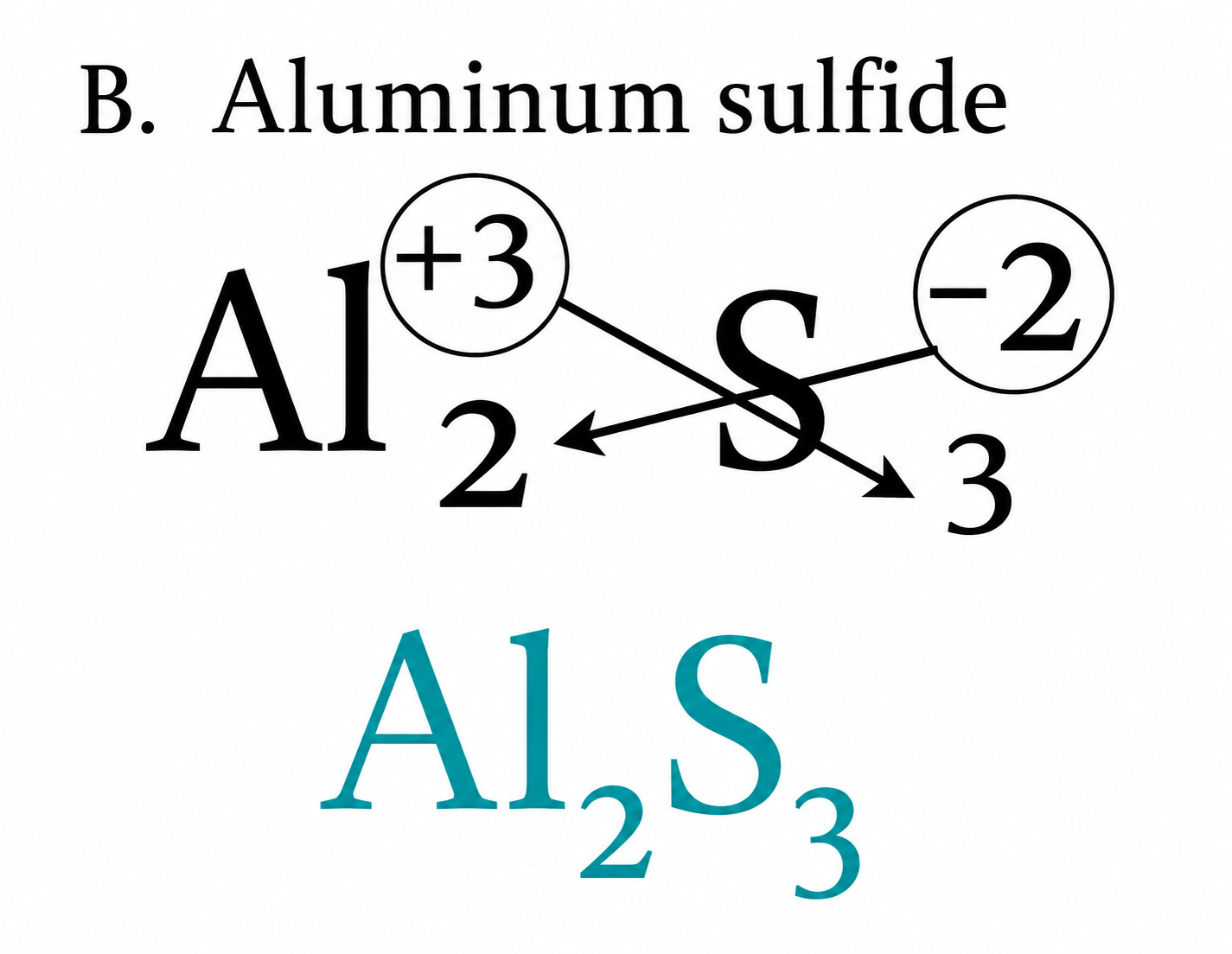
The chemical formula for aluminum sulfide is Al₂S₃. Aluminum sulfide is an inorganic compound formed when aluminum combines chemically with sulfur. It is commonly discussed in chemistry because it provides a clear example of how elements with different valencies combine to form a stable ionic compound. Understanding aluminum sulfide is useful for students, researchers, chemistry learners, and anyone interested in inorganic compounds and chemical reactions.
Aluminum sulfide has an important place in basic chemistry because its formation demonstrates the relationship between oxidation states, ions, and chemical formulas. Aluminum generally forms positively charged aluminum ions, while sulfur forms negatively charged sulfide ions. The chemical formula shows the proportion in which these ions combine to produce a neutral compound. Learning why this formula is written as Al₂S₃ rather than simply combining the element symbols can make ionic compound formation much easier to understand.
What Is Aluminum Sulfide?
Aluminum sulfide is a compound made from aluminum and sulfur. It belongs to the group of inorganic sulfide compounds and is generally described as an ionic or predominantly ionic material. In its pure form, aluminum sulfide is associated with a solid substance that can react with water and moisture.
The compound is represented chemically by Al₂S₃. The formula tells us that aluminum and sulfur are present in a specific ratio within the compound. This ratio is not arbitrary. It results from the electrical charges associated with aluminum and sulfide ions. When these ions combine, their total positive and negative charges must balance, producing an electrically neutral compound.
Aluminum sulfide is particularly useful as a chemistry example because it shows how a metal and a nonmetal can combine through ionic bonding. Aluminum provides the metallic component, while sulfur provides the nonmetallic sulfide component.
Chemical Formula for Aluminum Sulfide
The chemical formula for aluminum sulfide is Al₂S₃. This means that the compound contains two aluminum atoms for every three sulfur atoms in its simplest chemical representation.
The formula can be understood by looking at the usual charges of the ions involved. Aluminum commonly forms an ion with a positive three charge, while sulfur forms a sulfide ion with a negative two charge. To achieve an electrically neutral compound, the positive and negative charges need to balance.
Two aluminum ions provide a total positive six charge. Three sulfide ions provide a total negative six charge. When these charges are combined, the overall charge becomes neutral. This charge-balancing process explains why the formula is Al₂S₃.
This is an important principle when learning how to write formulas for ionic compounds. The subscripts in a chemical formula represent the simplest whole-number ratio of the atoms or ions present in the compound.
Why Is the Formula Written as Al₂S₃?
The formula of aluminum sulfide is determined by the charges of aluminum and sulfide ions. Aluminum commonly has an oxidation state of positive three, while sulfide has an oxidation state of negative two. Because the charges have different magnitudes, equal quantities of the ions would not produce a neutral compound.
The smallest combination that balances the charges contains two aluminum ions and three sulfide ions. The positive charge contributed by the aluminum ions is balanced by the negative charge contributed by the sulfide ions. This produces a neutral compound represented by Al₂S₃.
This charge-balancing method is useful beyond aluminum sulfide. It can be applied to many ionic compounds. By identifying the common charges of the positive and negative ions and finding a ratio that produces an overall neutral charge, students can determine the correct chemical formula.
How Aluminum Sulfide Is Formed
Aluminum sulfide can form through a chemical reaction between aluminum and sulfur. When aluminum reacts with sulfur under suitable conditions, the elements combine to produce aluminum sulfide.
The formation of aluminum sulfide is a synthesis reaction because multiple reactants combine to form a single chemical compound. This type of reaction is commonly used in introductory chemistry to demonstrate how elements can form new substances with properties that differ from those of the original elements.
During the reaction, aluminum undergoes oxidation while sulfur undergoes reduction. Aluminum loses electrons and sulfur gains electrons. The movement of electrons allows the ions to form and ultimately produces the chemical bonding associated with aluminum sulfide.
The resulting compound has properties that are different from elemental aluminum and elemental sulfur. This illustrates an important concept in chemistry: when elements undergo a chemical reaction, the resulting compound can have completely different physical and chemical characteristics.
Chemical Structure of Aluminum Sulfide
The structure of aluminum sulfide is related to the interaction between aluminum and sulfide ions. Aluminum is a metal that tends to lose electrons, while sulfur is a nonmetal that tends to gain electrons. This difference in electron behavior supports the formation of ionic bonding.
Aluminum sulfide is not best understood simply as individual aluminum and sulfur molecules in the same way that some covalent compounds are described. Instead, its structure involves an extended arrangement of ions within the solid material. The exact structural behavior can depend on the conditions and form of the compound.
For basic chemistry purposes, the most important point is that the aluminum and sulfur components are present in the ratio represented by Al₂S₃. The formula communicates the composition of the compound even though it does not provide a complete visual representation of its solid-state structure.
Physical Properties of Aluminum Sulfide
Aluminum sulfide is generally associated with a solid inorganic material. Its appearance and physical behavior can vary depending on factors such as purity, preparation method, and environmental conditions. Like many reactive sulfides, it should not be treated as an ordinary harmless solid.
One important characteristic of aluminum sulfide is its sensitivity to moisture. When exposed to water, it can undergo chemical decomposition and produce hydrogen sulfide along with aluminum-containing products. Hydrogen sulfide is a toxic gas with a characteristic unpleasant odor, making moisture exposure an important safety consideration.
Because of this reactivity, aluminum sulfide should be handled and stored under appropriate laboratory or industrial conditions. Proper chemical handling procedures are especially important when working with substances that can release hazardous gases during reactions.
Chemical Properties of Aluminum Sulfide
The chemical properties of aluminum sulfide are strongly influenced by the sulfide ion. One of its most notable reactions involves water. Aluminum sulfide can react with water to produce aluminum hydroxide and hydrogen sulfide.
This reaction demonstrates that aluminum sulfide is not stable in the presence of significant moisture. The sulfide component can react with hydrogen-containing species, resulting in the formation of hydrogen sulfide gas.
Aluminum sulfide can also participate in reactions with acids. Under acidic conditions, sulfide compounds can release hydrogen sulfide. Because hydrogen sulfide is hazardous, these reactions require careful control and appropriate ventilation.
The compound's chemical behavior makes it valuable for understanding sulfide chemistry, ionic compounds, decomposition reactions, and the relationship between chemical composition and reactivity.
Aluminum Sulfide and Water
The reaction between aluminum sulfide and water is one of its most important chemical characteristics. When aluminum sulfide comes into contact with water, it can undergo hydrolysis and form aluminum hydroxide together with hydrogen sulfide.
This reaction is significant because hydrogen sulfide is a poisonous gas. It can be particularly dangerous in enclosed or poorly ventilated environments. The production of this gas is one reason aluminum sulfide requires careful storage and handling.
The reaction also helps students understand why some ionic compounds cannot simply be mixed with water without undergoing chemical changes. Solubility and chemical stability are different concepts. A substance may interact chemically with water rather than merely dissolving in it.
Uses of Aluminum Sulfide
Aluminum sulfide has applications related to chemical preparation and inorganic chemistry, although it is not a common household chemical. Its ability to participate in chemical reactions makes it useful in certain laboratory and industrial contexts.
The compound may be encountered in chemical research, materials-related studies, and educational chemistry experiments. It can also serve as a chemical source of sulfide under controlled conditions.
Its uses are generally associated with specialized chemical processes rather than everyday consumer applications. Because of its reactivity and the potential release of hydrogen sulfide, its handling should be limited to appropriate environments with suitable safety controls.
Aluminum Sulfide in Chemistry Education
Aluminum sulfide is an excellent example for teaching the formation of ionic compounds. Students can use it to learn about oxidation states, ionic charges, electron transfer, and charge balancing.
When learning to write ionic formulas, students often make mistakes by assuming that the element symbols can simply be placed together. Aluminum sulfide demonstrates why the charges of the ions must be considered. Aluminum has a common positive three charge, while sulfide has a negative two charge. Balancing these charges produces the ratio shown in Al₂S₃.
This concept can then be applied to many other ionic compounds. Once students understand the relationship between ion charges and subscripts, writing chemical formulas becomes much more systematic.
Difference Between Aluminum and Aluminum Sulfide
Aluminum and aluminum sulfide are completely different substances. Aluminum is an elemental metal represented by the symbol Al, while aluminum sulfide is a compound containing aluminum and sulfur.
Elemental aluminum has metallic properties, including electrical conductivity and metallic luster. Aluminum sulfide, on the other hand, has properties associated with an inorganic sulfide compound. The chemical reaction between aluminum and sulfur changes the nature of the substances involved and creates a new material.
This difference highlights an essential principle of chemistry. A compound is not simply a physical mixture of its constituent elements. Chemical bonding creates a substance with its own chemical identity and properties.
Difference Between Sulfur and Sulfide
Sulfur and sulfide are related but should not be confused. Sulfur is a chemical element represented by the symbol S. Sulfide refers to the negatively charged sulfur ion that commonly has a negative two charge.
In aluminum sulfide, sulfur exists as part of the sulfide component of the compound. The term sulfide therefore describes the chemical form of sulfur involved in this ionic compound.
Understanding this distinction is especially useful when reading chemical formulas and chemical equations. The element sulfur and the sulfide ion have different chemical behaviors because their electronic states are different.
Is Aluminum Sulfide Safe?
Aluminum sulfide should be handled with caution because it can react with moisture and generate hydrogen sulfide. Hydrogen sulfide is toxic and can pose serious health risks when inhaled.
For this reason, aluminum sulfide is not a substance that should be casually handled outside an appropriate laboratory or industrial setting. Chemical safety procedures, suitable protective equipment, controlled storage, and proper ventilation are important when working with the compound.
Anyone working with aluminum sulfide should follow the safety information provided for the specific material and use established laboratory or workplace chemical-handling procedures. Avoiding unnecessary exposure to moisture is also important because water can initiate reactions that produce hazardous gases.
Why Is Aluminum Sulfide Important?
Aluminum sulfide is important because it provides a straightforward example of ionic compound formation and charge balancing. Its formula, Al₂S₃, demonstrates how chemical formulas communicate the relative amounts of different elements in a compound.
The compound also illustrates oxidation and reduction, electron transfer, hydrolysis, and the relationship between chemical structure and reactivity. These concepts are fundamental parts of inorganic chemistry.
For students, understanding aluminum sulfide can make it easier to learn how other metal sulfides and ionic compounds are formed. For chemistry professionals, its reactions and properties are relevant to specialized chemical processes and research.
Frequently Asked Questions
What is the chemical formula for aluminum sulfide?
The chemical formula for aluminum sulfide is Al₂S₃. It represents a compound containing aluminum and sulfur in a two-to-three atomic ratio. The formula results from balancing the common positive three charge of aluminum with the negative two charge of sulfide.
Why does aluminum sulfide have the formula Al₂S₃?
Aluminum commonly forms a positive three ion, while sulfur forms a negative two sulfide ion. Two aluminum ions provide a total positive six charge, while three sulfide ions provide a total negative six charge. The charges therefore balance, producing the neutral formula Al₂S₃.
Is aluminum sulfide ionic or covalent?
Aluminum sulfide is generally classified as an ionic compound because it consists of a metal and a nonmetal and involves electron transfer and ionic interactions. Its solid structure is more accurately understood as an extended arrangement of ions rather than as simple individual molecules.
What elements make up aluminum sulfide?
Aluminum sulfide contains two elements: aluminum and sulfur. Aluminum is the metallic component, while sulfur provides the sulfide component of the compound.
What happens when aluminum sulfide reacts with water?
Aluminum sulfide can react with water to produce aluminum hydroxide and hydrogen sulfide. The production of hydrogen sulfide is important from a safety perspective because the gas is toxic and requires appropriate handling and ventilation.
What is the charge of aluminum in aluminum sulfide?
Aluminum commonly has a positive three charge when forming ionic compounds. This charge plays a key role in determining the correct formula of aluminum sulfide.
What is the charge of sulfide in aluminum sulfide?
The sulfide ion commonly has a negative two charge. Its charge combines with the positive charge of aluminum to create the neutral aluminum sulfide compound.
Can aluminum sulfide be exposed to moisture?
Aluminum sulfide should not be casually exposed to moisture because it can react with water and release hydrogen sulfide. Proper storage and handling conditions are therefore important when working with this compound.
Where is aluminum sulfide used?
Aluminum sulfide is mainly encountered in specialized chemical, laboratory, research, and industrial applications. Its uses are connected with its chemical reactivity and its role as an inorganic sulfide compound.
Why is learning the formula of aluminum sulfide useful?
Learning the formula of aluminum sulfide helps students understand ionic charges, oxidation states, electron transfer, and charge balancing. These principles are useful for determining the formulas of many other ionic compounds.
Conclusion
The chemical formula for aluminum sulfide is Al₂S₃, and this formula represents the balanced combination of aluminum and sulfide ions. The compound forms because aluminum commonly carries a positive three charge while sulfide carries a negative two charge. Combining these ions in the appropriate ratio produces an electrically neutral compound.
Aluminum sulfide is more than just a formula to memorize. It provides an example of ionic bonding, charge balancing, oxidation and reduction, and chemical reactions involving water. Its ability to react with moisture and produce hydrogen sulfide also makes chemical safety an important part of understanding the compound.
For students and chemistry learners, understanding why aluminum sulfide has the formula Al₂S₃ is more valuable than memorizing the formula alone. Once the relationship between ionic charges and chemical formulas is clear, the same method can be applied to many other inorganic compounds.

