


Choosing Suitable Paper for Bakery Workflows
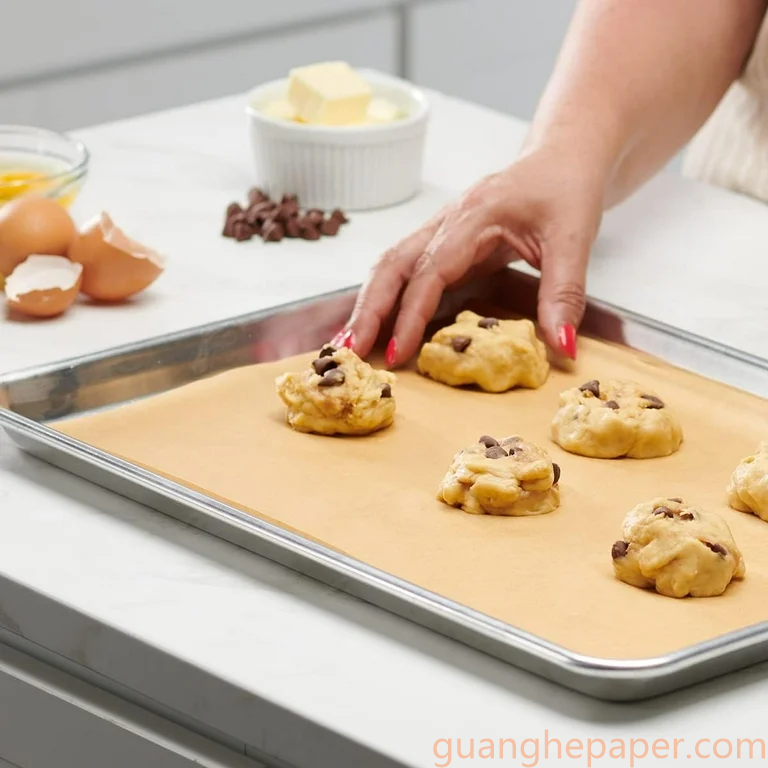
In baking environments, paper is often used as a practical interface between food and equipment, helping organize preparation and handling while supporting easier release after baking. Baking Paper is produced through a combination of substrate selection and surface treatment, and its practical characteristics depend on how these materials are processed. For bakeries, restaurants, food manufacturers, and distributors, understanding the production process can make product selection more informed.
The foundation is the paper substrate. A suitable substrate needs to balance strength and flexibility with a surface suitable for treatment. Consistency is particularly important because variations in the base material can influence subsequent coating and converting processes. Manufacturers therefore need to control raw material selection and inspect incoming materials before production begins.
Silicone coating is commonly used to provide a release surface. This treatment can help reduce adhesion between food and paper, making it useful when preparing dough, pastries, cookies, and other baked products. The effectiveness of the finished surface depends partly on coating consistency. Uniform application helps create a more predictable surface across the usable area of the paper.
The interaction between the coating and substrate is also relevant. The treated layer needs to remain appropriately attached while retaining the characteristics expected from the finished paper. Manufacturing conditions, equipment, material preparation, and inspection all contribute to this balance. A controlled coating process can help reduce surface variation and improve consistency across production batches.
Baking paper is available in different formats because users have different workflows. Pre-cut sheets can be convenient for tray preparation and repeated manual operations. Rolls can provide flexibility for businesses that prefer to cut material according to their own requirements. Other formats, including shaped liners, may be designed for specific cooking equipment or food preparation methods.
Converting plays an important role in producing these formats. Large coated rolls can be slit into different widths or cut into sheets with defined dimensions. Accurate converting supports predictable handling and can make paper easier to integrate into commercial workflows. Clean edges and consistent dimensions are useful when employees need to prepare many trays or portions during a busy production period.
Paper storage should also be considered. As a paper-based material, the product can be affected by environmental conditions such as excessive humidity, dust, compression, or improper handling. Packaging provides a protective barrier during transportation and storage. For distributors and importers, appropriate packaging can help maintain product condition throughout the logistics process.
Food-contact considerations should be evaluated according to the intended application and market. Different jurisdictions can have different requirements for materials that come into contact with food. Buyers should confirm the relevant documentation for the specific product rather than assuming that general food-contact statements apply universally. This approach provides clearer information for procurement and quality teams.
For commercial users, consistency can be just as important as individual product characteristics. A bakery that prepares hundreds of products each day benefits from materials that behave predictably across routine operations. Consistent dimensions, stable surface properties, and suitable packaging can reduce unnecessary changes to established preparation methods.
Manufacturing technology can support this consistency when it is combined with systematic quality management. Coating equipment, slitting machines, cutting systems, inspection procedures, and packaging operations each address a different stage of the production chain. Regular equipment maintenance and process monitoring can help keep these stages coordinated.
Customization is another consideration for professional buyers. Different applications may require specific sheet sizes, roll widths, packaging methods, or additional converting. Discussing these requirements with the production team before placing an order helps determine whether the requested format can be manufactured consistently within the available process.
A complete purchasing evaluation can therefore look at the material from several perspectives: substrate quality, surface treatment, release characteristics, dimensional accuracy, cleanliness, packaging, documentation, and manufacturing consistency. This approach allows buyers to connect technical characteristics with actual baking workflows and select paper based on practical requirements.
For businesses seeking food paper for bakery and food preparation applications, Guanghe provides silicone-coated paper products with integrated coating, slitting, cutting, inspection, and packaging processes. Buyers can explore the available product categories at https://www.guanghepaper.com/product/ and assess suitable formats according to their specific baking and food preparation needs.

