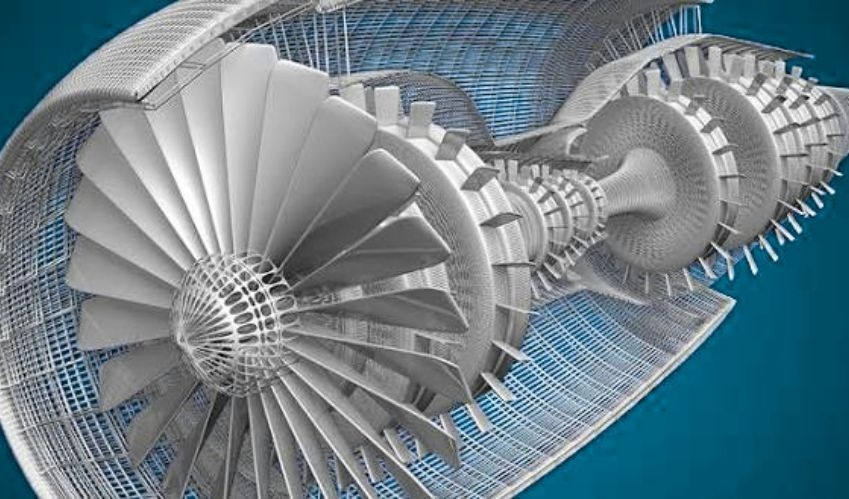
The aerospace industry is undergoing a significant transformation as manufacturers increasingly adopt advanced production methods and digital technologies to improve efficiency, reduce weight, and develop more sophisticated aircraft components. Among these technologies, three-dimensional (3D) printing has emerged as an important manufacturing approach, enabling companies to produce complex components with greater design flexibility and reduced material waste.
The global aerospace 3D printing market was valued at USD 4.53 Billion in 2025 and is expected to grow at a CAGR of 15.70% during the forecast period 2026-2035, reaching a value of USD 19.47 Billion by 2035. The strong expansion of the market reflects the growing adoption of additive manufacturing, alongside advances in digital design, simulation, automation, and material science.
The Growing Role of 3D Printing in Aerospace
Aerospace manufacturing requires components that meet demanding requirements related to strength, weight, precision, durability, and safety. Traditional manufacturing processes can involve multiple production stages and significant amounts of material, particularly when components have complex geometries.
3D printing provides an alternative approach by building components layer by layer from a digital design. This enables manufacturers to produce intricate structures that can be difficult or costly to manufacture using conventional techniques. Internal channels, lightweight lattice structures, and complex geometries can be incorporated directly into component designs.
The technology is being applied to a growing range of aerospace components, including brackets, ducts, engine components, structural parts, and cabin systems. Its ability to support design optimisation is particularly valuable as aerospace manufacturers seek to improve aircraft efficiency.
Lightweight Components and Fuel Efficiency
Reducing aircraft weight is one of the most important objectives for aerospace manufacturers because lighter aircraft can require less energy to operate. 3D printing can contribute to weight reduction by enabling engineers to redesign components and remove unnecessary material while maintaining required performance characteristics.
Generative design and topology optimisation can be used to identify efficient component structures based on specific engineering requirements. These designs can then be manufactured using additive processes that are capable of producing complex geometries.
Weight reduction can have broader benefits throughout the aircraft lifecycle. Lighter components can contribute to improved fuel efficiency for conventional aircraft and potentially increase range or energy efficiency in emerging electric and hybrid aerospace applications.
Digital Design and Simulation
The development of aerospace 3D printing is closely connected with digital engineering. Before a component reaches the production stage, engineers can create detailed digital models and use simulation technologies to evaluate their performance under different operating conditions.
Computer-aided design, computational simulation, and digital optimisation allow manufacturers to identify potential weaknesses and improve component designs before production. This digital approach can reduce the need for repeated physical prototypes and support faster development cycles.
Digital technologies also make it easier to modify component designs according to specific aircraft requirements. Instead of relying solely on standardised manufacturing processes, companies can develop customised components that are optimised for particular applications.
Advanced Materials for Aerospace 3D Printing
Material development is another major factor shaping the aerospace 3D printing market. Aerospace components must withstand demanding conditions, including high temperatures, mechanical stress, vibration, and exposure to different environments.
Metals such as titanium and aluminium alloys are widely relevant to aerospace additive manufacturing because of their combination of strength and relatively low weight. High-performance materials are also being developed for applications requiring greater thermal and mechanical resistance.
Polymer-based 3D printing is similarly important for selected interior and non-structural applications. Advances in material formulation are helping manufacturers improve the durability, consistency, and performance of printed components.
As material science progresses, aerospace manufacturers are expected to gain access to a wider range of materials suitable for different applications. This can expand the number of components that can be produced through additive manufacturing.
Improving Production Efficiency
A major advantage of 3D printing is its potential to simplify manufacturing processes. Traditional aerospace components may require machining, joining, and assembly across multiple stages. Additive manufacturing can consolidate certain components into a single printed structure, reducing the number of individual parts.
This can simplify assembly and potentially reduce manufacturing time. It may also reduce the number of joints and connection points within certain components, which can contribute to simpler designs and maintenance requirements.
3D printing can also reduce material waste because components are manufactured by adding material rather than removing large quantities from a larger block. This characteristic is particularly relevant when expensive aerospace-grade materials are used.
Digital Twins and Smart Manufacturing
The future of aerospace manufacturing is increasingly connected to digital twin technology. A digital twin is a virtual representation of a physical product or system that can be updated using operational and manufacturing data.
In aerospace production, digital twins can help manufacturers monitor components, analyse performance, and optimise manufacturing processes. When combined with 3D printing, digital models can create a connected workflow from design and simulation to production and lifecycle management.
Artificial intelligence and machine learning can further enhance these systems. Data generated during manufacturing can be analysed to identify patterns, detect potential production issues, and improve process parameters. These technologies can contribute to greater consistency and quality control.
Challenges and Opportunities
Despite its advantages, aerospace 3D printing faces several challenges. Aerospace components are subject to strict safety, quality, and certification requirements. Manufacturers must demonstrate that printed components meet appropriate performance and reliability standards before they can be used in critical applications.
Process consistency is another important consideration. Factors such as printing parameters, material properties, machine calibration, and post-processing can influence the final quality of a component. Manufacturers therefore need robust quality-control systems and reliable production processes.
At the same time, these challenges create opportunities for technological development. Improvements in printing equipment, process monitoring, material science, automation, and certification methods can help increase the adoption of additive manufacturing across aerospace applications.