


How Do You Choose a Reliable Website Development Agency?
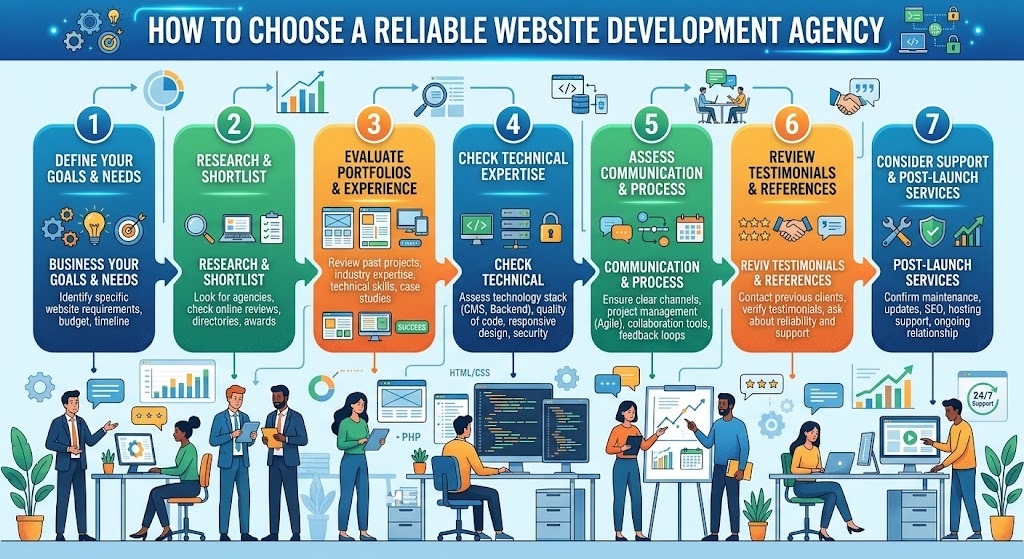
A business website is often the first place customers go when they want to learn about a company, check its services, or decide whether to make a purchase. That is why choosing the right website development agency is an important business decision. A professional agency does more than create attractive web pages. It builds a website that works smoothly, loads quickly, looks good on different devices, and supports your business goals. With so many agencies offering similar services, it can be difficult to know which one is genuinely suitable for your project. Looking at experience, previous work, technical skills, communication, pricing, and after-launch support can help you make a better choice.
Start With Your Website Requirements
Before contacting any website development agency, understand what you actually need. A simple company website, online store, real estate portal, booking platform, and custom web application all require different development approaches.
Think about the purpose of your website, the type of customers you want to reach, the pages you need, and any special functions required. You may need online payments, customer accounts, appointment booking, product filters, forms, live chat, or third-party integrations.
Having a clear idea of your requirements makes it easier to explain your project and compare agencies. It also reduces the chance of unexpected costs later.
Check the Agency's Previous Work
One of the easiest ways to judge a website development agency is by reviewing its portfolio. Look beyond screenshots and explore the websites they have actually built.
Check whether the websites work properly on desktop, tablet, and mobile devices. Test their navigation, forms, page speed, and overall usability. If possible, look at projects that are similar to your own business.
A strong portfolio should show different types of projects rather than several websites that all look the same. Previous work can also tell you whether the agency understands different industries and business requirements.
Look for Relevant Experience
General website development experience is useful, but relevant experience can be even more valuable. An agency that has worked on projects similar to yours may already understand common challenges in your industry.
For example, an ecommerce business may need product management, payment gateways, shipping integrations, and customer accounts. A real estate company may require property listings, search filters, inquiry forms, maps, and agent profiles.
Ask the agency about similar projects they have completed. Find out what technologies they used and what problems they solved. This gives you a better understanding of whether their experience matches your needs.
Review Their Technical Skills
A website needs more than an attractive design. The development behind it affects performance, security, scalability, and future maintenance.
Ask what technologies the agency normally works with. Depending on your project, this could include WordPress, Shopify, Laravel, PHP, React, Node.js, or other platforms and frameworks.
You do not necessarily need to choose an agency that uses the newest technology. The important thing is whether the technology is suitable for your website and whether the agency has enough experience to use it properly.
A reliable team should also understand responsive development, database management, website security, performance optimization, integrations, and basic SEO requirements.
Ask About Mobile Responsiveness
A large portion of website traffic comes from smartphones, so mobile responsiveness should not be treated as an optional feature.
Ask the agency how it handles mobile development. A responsive website should automatically adjust its layout, images, menus, buttons, and content to different screen sizes.
Before approving a project, test some of the agency's existing websites on your phone. Check whether the text is easy to read, menus are simple to use, and important buttons are easy to find.
A website that works well on mobile devices provides a better experience and helps visitors stay engaged.
Pay Attention to Website Speed
Slow websites can frustrate visitors and may lead people to leave before they find what they need. Performance should therefore be discussed during the development process rather than after the website is finished.
Ask the agency how it plans to improve loading speed. Image optimization, clean code, caching, suitable hosting, database optimization, and efficient scripts can all affect performance.
You can also test some websites from the agency's portfolio using common website speed-testing tools. This will give you an idea of how seriously the agency treats performance.
Understand Their SEO Approach
Website development and SEO are closely connected. A website can look excellent but still struggle to perform in search results if its technical foundation is poor.
Ask whether the agency follows SEO-friendly development practices. Important areas include clean URLs, proper heading structures, responsive design, fast loading times, image optimization, crawlable pages, metadata support, and a logical website structure.
If you already work with an SEO professional, make sure the development agency is willing to coordinate with them. This can prevent technical changes from creating unnecessary SEO problems.
Check Communication Before Signing
Good communication can make the entire development process much easier. From the first conversation, notice how clearly the agency responds to your questions.
A professional team should explain technical matters in simple language and keep you informed about project progress. You should know who will handle communication, how often you will receive updates, and how feedback will be managed.
Ask about meetings, project management tools, response times, and approval stages. Clear communication reduces misunderstandings and helps keep the project moving.
Ask for a Clear Project Timeline
Website projects can take different amounts of time depending on their size and complexity. A small business website may require considerably less development time than a custom ecommerce platform or web application.
Instead of accepting a vague promise such as “we will finish it quickly,” ask for a realistic project schedule. The timeline should ideally include important stages such as planning, design, development, testing, revisions, and launch.
Keep in mind that delays can sometimes happen when content, images, feedback, or approvals are provided late. A good agency should explain these dependencies from the beginning.
Compare Pricing Carefully
Price is an important factor, but the cheapest proposal is not always the most suitable option. Different agencies may quote different prices because their services, development methods, technologies, and support packages are not the same.
Ask for a detailed quotation that explains what is included. Check whether the price covers design, development, content integration, testing, hosting, domain setup, third-party integrations, revisions, and post-launch support.
Also ask about additional charges. Understanding the full cost before work begins can prevent unpleasant surprises later.
Read Reviews and Client Feedback
Client reviews can provide useful information about an agency's reliability, communication, quality of work, and support.
Do not focus only on the overall rating. Read individual reviews and look for comments about the actual development process. Pay attention to whether clients mention missed deadlines, poor communication, technical problems, or difficulty getting support after launch.
You can also ask the agency whether it can provide references or examples of long-term client relationships. A company that continues supporting its clients after launch may be more suitable for businesses that need ongoing website management.
Ask About Website Security
Security should be part of every professional website development project. This becomes even more important when a website collects customer information, accepts payments, or provides user accounts.
Ask the agency about SSL certificates, secure authentication, software updates, backups, access control, and protection against common website vulnerabilities.
If your website uses third-party plugins or integrations, ask how those components will be maintained. Regular updates and backups can help reduce the impact of technical problems.
Find Out What Happens After Launch
Launching a website is not necessarily the end of the project. Websites need updates, security checks, backups, bug fixes, and occasional improvements.
Before signing a contract, ask what type of support the agency provides after launch. Find out whether maintenance is included, offered through a monthly plan, or charged separately.
It is also useful to understand who owns the website, domain, hosting account, source code, and other important assets. Make sure you will have appropriate access to your own business website.
Don't Ignore the Contract
Once you have selected an agency, make sure all important details are written into the agreement.
The contract should clearly explain the project scope, deliverables, payment schedule, timeline, revision policy, ownership rights, maintenance arrangements, and responsibilities of both parties.
Avoid relying entirely on verbal promises. A written agreement gives both sides a clear understanding of what has been agreed upon and can help prevent disputes during development.
Choose an Agency That Understands Your Business
The right website development agency should understand more than coding. It should take the time to understand your business, customers, competitors, and goals.
During discussions, explain what you want your website to achieve. A good development team should be able to discuss how the website structure, features, user experience, and technology can support those goals.
You should feel comfortable asking questions and requesting clarification. If an agency listens carefully and provides practical solutions instead of simply selling a package, that can be a useful sign.
Final Thoughts
Choosing a reliable website development agency requires more than comparing prices or looking at attractive designs. You need to consider the agency's portfolio, relevant experience, technical capabilities, communication, security practices, development process, pricing, and long-term support.
Take time to discuss your requirements with several agencies and ask detailed questions before making a commitment. Review their previous work, understand exactly what is included in the proposal, and make sure important terms are documented in the contract.
A well-chosen agency can create a website that is not only visually appealing but also fast, secure, mobile-friendly, easy to manage, and prepared to support your business as it grows. The goal should be to find a development partner that understands your needs and can turn them into a practical, reliable website.

