


DHI Direct Hair Implant in Dubai: How Is Follicle Quality Checked?
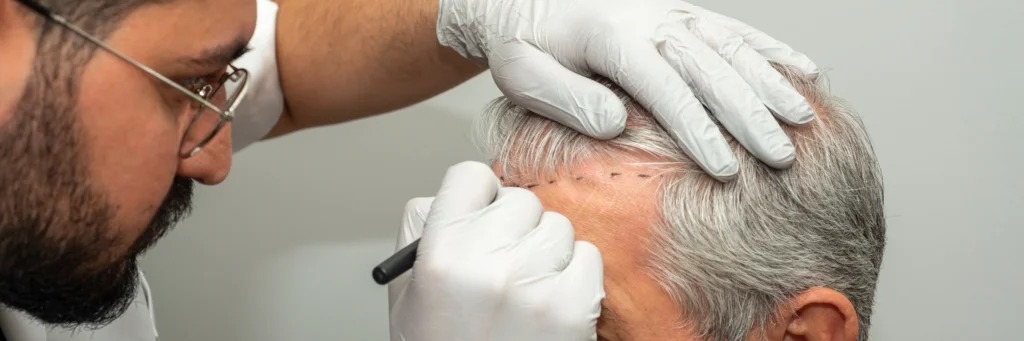
The quality of donor follicles plays an important role in planning a hair restoration procedure. While much attention is often given to implantation techniques, the condition of the follicles being harvested can influence their ability to survive, grow, and contribute to a natural-looking result. For this reason, a detailed assessment is generally performed before treatment begins.
During a consultation for DHI Direct Hair Implant in Dubai, a specialist may examine the donor and recipient areas to understand follicle density, hair calibre, growth patterns, scalp condition, and the availability of suitable grafts. The assessment is not simply about counting hairs. It also involves determining whether the donor region can provide enough healthy follicles without creating excessive thinning.
Follicular quality can vary between different parts of the scalp. Some follicles may contain multiple hairs, while others may produce finer or weaker strands. Previous hair loss, scalp conditions, medical history, and earlier procedures can also influence the characteristics of available grafts.
Modern assessment methods may combine physical examination, magnified scalp analysis, digital imaging, and measurements of hair density. These findings help specialists determine whether DHI is appropriate and how implantation could be planned according to the patient's individual pattern of hair loss.
Understanding how follicle quality is evaluated can help patients approach hair restoration with realistic expectations and a clearer understanding of why personalised treatment planning matters.
What Does Follicle Quality Mean in Hair Restoration?
Follicle quality refers to several characteristics that can affect the usefulness of a graft during transplantation. A healthy follicle should ideally be capable of producing a viable hair after being transferred to the recipient area.
Specialists may consider the thickness of the hair shaft, the number of hairs within each follicular unit, the condition of the surrounding scalp, and the overall strength of the donor region. Follicles that appear healthy and sufficiently robust may be considered more suitable for harvesting.
Hair calibre is particularly relevant when designing the hairline. Finer hairs can sometimes help create a softer transition at the front, while thicker grafts may provide greater coverage in areas requiring additional density.
How Is Follicle Quality Assessed Before DHI?
A consultation usually begins with a visual examination of the scalp. The specialist looks at the pattern of thinning, existing density, donor availability, and the condition of the skin.
Magnification can provide additional information that cannot always be identified by looking at the scalp normally. Trichoscopic or digital examination may help assess follicular units, hair shaft diameter, miniaturisation, and density.
The specialist may also compare different donor zones. This is important because not every area necessarily provides follicles with identical characteristics. The goal is to identify suitable grafts while preserving the appearance and density of the donor area.
Why Donor Area Assessment Matters
The donor area is usually the source of follicles used for transplantation. Because the supply is limited, harvesting needs to be planned carefully.
A specialist may evaluate whether the donor region has adequate density and whether the available follicles appear sufficiently stable. If excessive numbers of grafts are removed from a concentrated area, visible thinning may develop.
The assessment therefore considers both the quality and quantity of available follicles. A patient with a large number of weak or miniaturised follicles may require a different treatment strategy from someone with fewer but stronger grafts.
Does Hair Thickness Affect Follicle Selection?
Yes. Hair thickness can influence both graft selection and the visual density that may be achieved after transplantation.
Coarser hair can provide greater coverage because each strand occupies more visual space. Finer hair may require more careful placement to create an appearance of fullness. However, finer grafts are not necessarily unsuitable. They can have an important role in creating natural transitions, particularly around the frontal hairline.
Specialists may therefore consider hair calibre alongside graft composition rather than evaluating thickness as an isolated factor.
How Can Magnified Scalp Examination Help?
Magnified examination allows the specialist to inspect the scalp and follicular units in greater detail. It can reveal differences in hair diameter, follicular density, miniaturisation, and scalp condition.
This type of assessment may also help identify whether thinning is concentrated in particular areas. Such information can be useful when deciding where grafts should be taken from and how they should subsequently be distributed.
Digital documentation can also provide a baseline for treatment planning and future comparison. However, the equipment itself does not determine treatment suitability. Clinical interpretation by a qualified professional remains an important part of the assessment.
Why Graft Composition Is Important
A follicular unit may contain one, two, three, or more hairs. The composition of available grafts can affect how a transplant is designed.
Single-hair units may be useful near the front of the hairline because they can support a gradual transition from the forehead to denser areas. Multi-hair units can potentially contribute more coverage in regions where increased density is required.
For DHI procedures, understanding the composition of available grafts helps the treatment team plan implantation according to the patient's existing pattern rather than applying the same design to every individual.
Can Existing Hair Loss Affect Follicle Quality?
Existing hair loss can affect the appearance and characteristics of follicles. In androgenetic hair loss, for example, susceptible follicles may progressively become smaller and produce finer hairs.
A specialist may therefore look for signs of miniaturisation during the assessment. This is particularly relevant when deciding whether a particular area can reliably serve as a donor region.
The underlying cause and progression of hair loss should also be considered. A transplant addresses areas requiring restoration, but it does not necessarily stop future loss in untreated native hair. Appropriate medical or dermatological management may therefore form part of a broader hair restoration plan.
How Enfield Royal Clinic Approaches Follicle Assessment
At Enfield Royal Clinic, follicle assessment can form an important part of the consultation process for patients considering DHI Direct Hair Implant in Dubai. The evaluation focuses on the condition of the donor area, existing density, hair characteristics, and the pattern of thinning before an implantation strategy is considered.
A detailed assessment can help determine whether the available follicles are suitable for the patient's goals and whether the donor supply is sufficient for the proposed coverage. Factors such as hair calibre and follicular-unit composition may also be considered when planning placement.
The emphasis on individual assessment is important because two patients with similar-looking hair loss can have very different donor characteristics. A personalised evaluation allows the treatment plan to account for these differences rather than relying on a standard graft number or predetermined design.
How to Choose the Right Approach for DHI Direct Hair Implant in Dubai
Experience and Qualifications
Hair restoration should be planned and performed by appropriately qualified medical professionals with relevant experience. Patients should ask about the clinician's training, experience with hair transplantation, and approach to evaluating donor follicles.
Technology and Techniques
Modern scalp assessment tools can provide useful information about follicular density and hair characteristics. Patients can ask which diagnostic methods are used and how the findings influence treatment planning.
Safety Standards
The clinic should follow appropriate infection-control procedures, sterile practices, patient screening, and medical safety protocols. A thorough consultation should also consider relevant medical history and scalp health before treatment.
Consultation Process
A meaningful consultation should involve more than a quick visual examination. Patients should have an opportunity to discuss their pattern of hair loss, donor availability, expected density, recovery, and possible limitations.
Patient Experience
Clear communication is an important part of the treatment process. Patients should receive understandable information about preparation, the procedure, aftercare, and follow-up rather than being given unrealistic promises about the final outcome.
Expected Results
Hair restoration results develop gradually. Patients should understand that transplanted follicles require time to establish growth and that the final appearance depends on factors including graft quality, donor supply, scalp characteristics, healing, and ongoing native hair loss.
Frequently Asked Questions
How do specialists check follicle quality before DHI?
They may assess the donor area through physical examination, magnified scalp analysis, and digital imaging. Hair thickness, follicular density, miniaturisation, and graft composition can all be considered.
Is thicker hair always better for a DHI procedure?
Not necessarily. Thick hair can provide strong visual coverage, while finer follicles may be useful for creating softer and more natural transitions. The most appropriate grafts depend on their intended placement and the patient's overall hair characteristics.
Can weak follicles be used for transplantation?
Suitability depends on the condition of the follicles and the individual's circumstances. A specialist needs to assess whether the available grafts are sufficiently viable and whether harvesting them would be appropriate.
Does follicle quality determine the final result?
Follicle quality is one factor among several. Donor supply, implantation design, scalp health, surgical technique, healing, and the progression of native hair loss can also influence the eventual appearance.
Can follicle quality change over time?
Yes. Hair follicles affected by progressive hair loss can become increasingly miniaturised. This is why evaluating the underlying pattern of hair loss and considering long-term hair management can be important before transplantation.
Conclusion
Follicle quality is an important part of personalised hair restoration planning. Assessing donor density, hair calibre, follicular-unit composition, miniaturisation, and scalp condition can help determine which grafts may be appropriate and how they should be distributed.
For patients considering DHI Direct Hair Implant, a thorough consultation provides an opportunity to understand donor limitations, treatment suitability, and realistic expectations before proceeding. Rather than focusing only on the number of grafts, patients should consider the overall health and characteristics of the follicles available for transplantation. This comprehensive approach can support a treatment plan that is tailored to the individual's existing hair pattern and long-term restoration goals.

