


Fire Safety Upgrades Are Increasing the Role of Pump Systems in Argentina
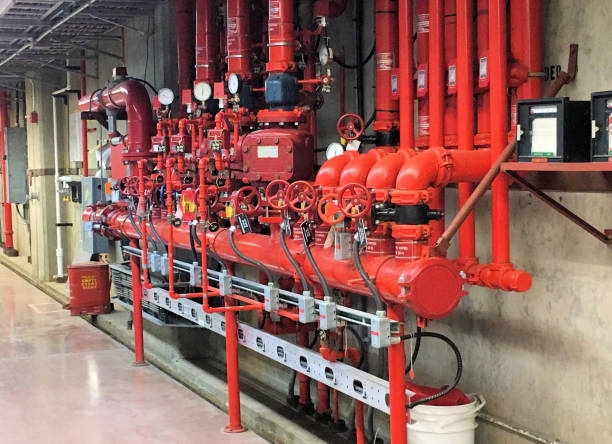
Fire pumps are becoming increasingly important across Argentina as industrial facilities, commercial buildings, residential developments, and infrastructure projects place greater emphasis on dependable fire-protection systems. A fire pump maintains the water pressure and flow needed by sprinklers, hydrants, and other suppression equipment when the normal water supply cannot meet system requirements. Argentina’s combination of urban development, industrial activity, and evolving safety requirements is therefore creating a stronger operational role for dedicated pumping equipment.
According to Vyansa Intelligence, Argentina’s fire pump sector was valued at USD 10 million in 2025 and is projected to reach USD 30 million by 2032, representing a 16.99% CAGR during 2026–2032. The Argentina fire pump market analysis identifies stricter fire-safety requirements, infrastructure development, smart-building integration, and increasing demand across industrial and residential applications as important influences on the sector.
Fire Protection Requirements Are Raising Equipment Expectations
Fire-protection systems depend on more than alarms and sprinklers. Where the available water source cannot deliver sufficient pressure, pumps become critical to ensuring that suppression systems operate as intended. This makes appropriate design, installation, testing, and maintenance essential across buildings where fire risks require fixed suppression infrastructure.
Argentina’s IRAM provides relevant national context through its work on fixed fire-fighting installations. The organization states that certification evaluates the quality-management system, technical capabilities, equipment, and field activities involved in the design, installation, and maintenance of these systems.
Centrifugal Pumps Support High-Flow Fire Protection
Centrifugal pumps occupy an important position because they can deliver the high flow rates and consistent pressure required by many fire-suppression applications. Their reliability, relatively straightforward maintenance, and suitability for industrial and commercial installations make them particularly relevant to facilities where fire-water availability cannot be compromised.
The latest market analysis also connects centrifugal technology with contemporary building automation. Compatibility with monitoring and control systems can help facility operators gain better visibility into equipment status while maintaining the core hydraulic performance expected from fire-protection infrastructure.
Industrial Facilities Remain a Critical Application Area
Manufacturing, petrochemical, mining, and other industrial operations can contain combustible materials, complex machinery, and processes that increase fire-protection requirements. Fire pumps consequently form part of broader risk-management strategies intended to protect employees, physical assets, production continuity, and surrounding infrastructure.
The Argentina fire pump industry report identifies industrial facilities as a major source of demand. Fire-pump selection in these environments depends on factors including required flow, pressure, water supply, facility configuration, fire hazards, and the characteristics of the connected suppression system.
Technical Evaluation Helps Maintain System Reliability
Installing fire-protection equipment is only the beginning of its operational life. Regular assessment is necessary because pumps, piping, valves, controls, and associated components need to remain functional when an emergency occurs.
IRAM’s technical evaluation service for fixed fire-fighting installations is based on IRAM 3619 and examines design, installation, conservation status, hydraulic calculations, technical documentation, and maintenance records. It also includes on-site testing. This provides a practical example of how Argentina’s fire-safety framework extends beyond equipment installation toward ongoing system reliability.
Smart Buildings Are Bringing Fire Systems Into Connected Infrastructure
Digitalisation is changing how fire-protection infrastructure can be monitored. The detailed market insights identify integration with smart-building technology as an important development in Argentina, including IoT-enabled equipment, building-management platforms, remote monitoring, and predictive approaches to fire safety.
Connected systems can provide facility teams with better visibility into equipment condition and system status. Fire pumps still perform a fundamentally mechanical function, but digital monitoring can help operators identify abnormal conditions, organize maintenance, and coordinate fire protection with wider building-management infrastructure.
Urban Development Creates More Protected Building Space
Argentina’s highly urbanised population creates continuing requirements for residential, commercial, institutional, and industrial buildings. New construction and redevelopment can increase the amount of floor space requiring appropriate fire-protection infrastructure, particularly in major urban centres such as Buenos Aires, Córdoba, and Rosario.
Broader industry analysis therefore needs to consider fire pumps as part of the complete built environment. Pump requirements emerge from building design, occupancy, water availability, suppression-system configuration, and applicable safety provisions rather than from construction activity alone.
Ageing Infrastructure Creates an Upgrade Challenge
Older buildings and industrial facilities can present a different challenge from new construction. Existing fire-protection installations may require modernisation, replacement equipment, improved controls, or hydraulic reassessment to align with contemporary operational expectations.
Economic constraints can complicate these upgrades. Currency pressures, project financing, construction conditions, and equipment procurement can influence when organisations undertake capital-intensive fire-protection improvements. The challenge is particularly relevant where ageing infrastructure requires substantial modification rather than straightforward equipment replacement.
Diesel and Electric Pumps Address Different Operating Requirements
Fire-pump installations can use electric or diesel-driven equipment depending on building conditions, power availability, system design, and reliability requirements. Electric pumps offer straightforward integration where dependable electrical infrastructure is available, while diesel-driven systems can provide an alternative source of motive power.
An Argentina fire pump market research report therefore needs to consider the complete installation rather than pump technology alone. Controllers, power arrangements, water sources, piping, maintenance procedures, and emergency operating conditions collectively influence whether a fire-water system can perform reliably.
Infrastructure Expansion Creates Diverse Applications
Transportation networks, utilities, energy projects, housing developments, warehouses, and commercial construction can all create requirements for fire-protection infrastructure. The specific pumping solution varies according to risk classification and the hydraulic demands of each facility.
Argentina’s national risk-management framework provides broader context for this emphasis on prevention. Law 27,287 created the National System for Comprehensive Risk Management and Civil Protection to coordinate national, provincial, municipal, and civil-society actions aimed at risk reduction, crisis management, and recovery.
Reliable Pumping Is Becoming More Important to Fire Protection
Argentina’s fire-pump landscape increasingly connects fixed fire-fighting installations with industrial safety, urban construction, infrastructure development, equipment maintenance, and digitally monitored buildings. Centrifugal pumps remain particularly relevant where dependable high-flow water delivery is required, while diesel and electric configurations provide options for different operating environments.
As fire-protection systems become more integrated with modern buildings and infrastructure, equipment reliability will remain fundamental. Appropriate hydraulic design, technical evaluation, maintenance, power availability, and system-level monitoring can help ensure that fire pumps perform their essential function when suppression systems are activated.

