


Why Mobility Matters in Industrial Lifting Solutions
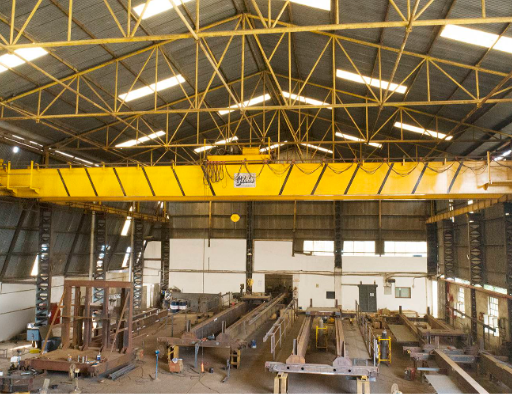
Industrial lifting is no longer limited to fixed cranes, stationary hoists, or permanent lifting stations. Modern workplaces are more dynamic, production layouts change frequently, and materials must move quickly between workstations, storage areas, loading bays, assembly lines, and maintenance zones. In this environment, mobility has become a defining feature of effective industrial lifting solutions.
Mobile lifting equipment combines lifting capability with the ability to travel, reposition, or operate across different areas of a facility. Examples include mobile gantry cranes, electric lifters, mobile scissor lifts, transportable hoists, forklift-mounted lifting attachments, vacuum lifters, and compact self-propelled platforms. These systems help companies improve productivity, use floor space more efficiently, reduce manual handling, and respond to changing operational demands.
Mobility does not simply mean adding wheels to a lifting device. It represents a broader approach to material handling: bringing the lifting solution to the load instead of repeatedly moving the load to a fixed lifting point. When designed, selected, and operated correctly, mobile lifting equipment can make industrial operations safer, faster, and more adaptable.
Improving Operational Flexibility
One of the clearest advantages of mobile lifting equipment is flexibility. A fixed lifting system is effective within a defined area, but its usefulness decreases when production requirements change. If a company introduces new machinery, rearranges its assembly line, expands its warehouse, or changes its product mix, permanent equipment may no longer serve the operation efficiently.
Mobile systems can be repositioned according to current needs. A mobile gantry crane, for example, can lift machinery in a maintenance bay, move to a production area, and later be used near a loading dock. A portable electric lifter can serve multiple workstations instead of requiring each workstation to have its own dedicated lifting device.
This flexibility is especially valuable in industries where work is project-based or production volumes fluctuate. Shipbuilding, aerospace, construction, automotive manufacturing, engineering workshops, and logistics operations often handle loads of different sizes and shapes in changing locations. Mobile equipment allows lifting capacity to follow the workflow.
Mobility also supports temporary operations. During plant shutdowns, equipment installation, facility renovations, or emergency repairs, workers may need to lift loads in areas that do not have permanent cranes. A mobile lifting solution can provide the necessary capacity without major structural modifications or lengthy installation work.
Reducing Manual Handling Risks
Manual handling remains a major source of workplace injuries. Workers may strain their backs while lifting heavy components, suffer shoulder or arm injuries from repetitive movements, or lose control of awkward loads. Even relatively light objects can become hazardous when handled frequently, at an uncomfortable height, or in a restricted space.
Mobile lifting equipment reduces the need for employees to carry, drag, push, or manually reposition loads. Instead of several workers attempting to move a heavy motor across a workshop, a mobile lifter can raise it, transport it, and position it accurately. This reduces physical strain and limits exposure to crush, pinch, and impact hazards.
The ergonomic benefits extend beyond heavy loads. Many industrial tasks involve repeated handling of boxes, tools, drums, batteries, molds, reels, and components. A mobile lifting device can be adjusted to the height and position required by the operator, helping maintain a more neutral working posture.
Guidance on the safe use of lifting equipment emphasizes the importance of considering ergonomic risks when selecting equipment. The right lifting system should not only have sufficient rated capacity; it should also match the frequency, reach, travel path, and posture demands of the task.
For example, a compact powered lifter may be more appropriate than a forklift for repeatedly moving small components between adjacent stations. It may provide better visibility, require less space, and allow more precise positioning.
Increasing Productivity and Throughput
Time spent moving materials to and from a fixed lifting point can quietly reduce productivity. Workers may wait for a crane, arrange temporary rigging, clear a route, or use additional vehicles to transport a load. These delays become significant when repeated throughout a shift.
Mobile lifting equipment can shorten the distance between the lifting device and the task. It can reduce setup time, eliminate unnecessary transfers, and allow workers to complete operations at the point of use. In a manufacturing environment, this can improve line-side replenishment, component installation, and tool handling.
Consider a maintenance team replacing a large pump. With a fixed overhead crane located several meters away, the team may need to move the pump to a specific position before lifting it. A mobile gantry or self-propelled lifting unit can be positioned directly over the pump. The result is a simpler sequence with fewer handling steps.
Mobility can also improve workflow continuity. If one area becomes congested, equipment can be moved to another location rather than interrupting the entire operation. In warehouses and distribution centers, mobile lifting systems can support changing order volumes and accommodate different storage configurations.
Productivity improvements are not achieved by speed alone. A well-designed mobile solution improves the complete material-handling process: lifting, transporting, positioning, and lowering. It can reduce the number of workers required for a task while also improving accuracy and control.
Making Better Use of Facility Space
Industrial floor space is expensive. Fixed cranes, lifting columns, platforms, and permanent storage systems can occupy valuable areas even when they are not in use. In smaller workshops, the presence of permanent structures may restrict vehicle movement, reduce storage capacity, or make future expansion difficult.
Mobile lifting systems offer a more efficient use of space because they can be stored, repositioned, or shared between departments. A folding mobile crane, for instance, can be moved out of a work area when it is not needed. A compact powered stacker can operate in narrow aisles where larger equipment would be impractical.
This is particularly important in older facilities that were not designed for modern lifting infrastructure. Installing an overhead crane may require structural reinforcement, electrical work, and significant downtime. A mobile alternative may provide adequate lifting capacity with a lower installation burden.
Mobility also supports multipurpose spaces. A workshop can be used for assembly in the morning, maintenance in the afternoon, and equipment staging later in the day. Rather than dedicating each area to one lifting function, portable equipment can be deployed as required.
However, space efficiency must be evaluated carefully. Mobile equipment needs sufficient clearance for travel, turning, load handling, and safe operator access. A device that technically fits into a narrow area may still be unsuitable if its load obstructs visibility or creates a collision risk.
Supporting Safer and More Controlled Lifting
Mobility can improve safety, but only when it is supported by appropriate design and operating procedures. Moving a loaded lifting device introduces additional risks, including instability, uneven floors, collisions, uncontrolled movement, and reduced visibility. These risks must be addressed during equipment selection and lift planning.
Important safety features may include:
- Braked or powered wheels.
- Outriggers or stabilizers.
- Load limit indicators.
- Emergency-stop controls.
- Mechanical guarding.
- Interlocked controls.
- Adjustable forks, hooks, or attachments.
- Audible and visual warning systems.
- Fail-safe lowering mechanisms.
- Clear visibility around the load.
The equipment must be suitable for the surface on which it will operate. Some mobile lifting tables and industrial scissor lifts are intended for firm, level surfaces, while other equipment is designed for rough terrain or outdoor use. ANSI MH29.1, for example, addresses industrial scissor lifts used for positioning, feeding, transferring, loading, or unloading materials and personnel in appropriate commercial applications.
A mobile crane or lifter should never be selected solely on the basis of maximum lifting capacity. The organization must also consider load center, reach, floor loading, gradient, turning radius, travel speed, environmental conditions, and the effect of movement on stability.
Where equipment lifts people, the safety requirements become even more demanding. The UK Health and Safety Executive notes that lifting equipment used to lift people must meet additional health and safety requirements because of the hazards associated with personnel lifting. Personnel-lifting equipment must therefore be designed, inspected, maintained, and operated under the applicable regulations and standards.
Improving Precision and Load Positioning
Industrial lifting often requires more than raising a load from the floor. Components may need to be aligned with bolt holes, placed inside machinery, positioned on a pallet, or installed at a precise height. Manual positioning can be difficult when the load is heavy, fragile, or has a high center of gravity.
Mobile lifting solutions can provide controlled movement in multiple directions. Some systems allow powered lifting, lowering, tilting, rotating, or lateral adjustment. These capabilities help operators place loads with greater accuracy and less physical effort.
Precision is valuable in assembly operations. A worker installing a battery pack, motor, control cabinet, or mold can use a mobile lifter to maintain control throughout the process. This reduces the chance of impact damage and helps protect both the product and surrounding equipment.
Controlled positioning also supports quality. If a component is repeatedly installed at the wrong height or angle, it may cause alignment problems, rework, or premature failure. A suitable mobile lifting system can make the process more repeatable.
Lowering the Total Cost of Ownership
The purchase price of mobile lifting equipment is only one part of the financial calculation. Businesses should assess labor requirements, installation costs, maintenance, downtime, equipment utilization, and future adaptability.
A single mobile lifting unit may support several departments, increasing its utilization compared with a fixed device that serves one workstation. It may also avoid construction costs associated with installing permanent lifting infrastructure. When production layouts change, mobile equipment can often be redeployed rather than replaced.
Maintenance and energy use also influence lifecycle costs. Electric mobile lifters may reduce emissions and noise compared with internal-combustion equipment, making them better suited to indoor facilities. Battery-powered equipment can also provide smoother movement and lower routine operating costs, although battery charging, replacement, and management must be included in the assessment.
The best financial result comes from matching the equipment to the actual task. Oversized equipment can increase purchase and operating costs, while undersized equipment may create unsafe conditions and fail prematurely. A thorough assessment should examine the loads handled, frequency of use, travel distances, operating environment, and expected future requirements.
Choosing the Right Mobile Solution
Selecting mobile lifting equipment should begin with a detailed task assessment. Key questions include:
- What is the maximum and typical load weight?
- What are the dimensions and center of gravity of the load?
- How often will the load be lifted?
- Does the equipment need to travel while loaded?
- What distance must it cover?
- Are floors level, smooth, sloped, or uneven?
- Is the operation indoors, outdoors, or in a hazardous environment?
- How much clearance is available?
- Does the load require rotation, tilting, or precise positioning?
- Will the equipment lift people or only materials?
- What training, inspection, and maintenance will be required?
The answers help determine whether the appropriate solution is a mobile gantry crane, powered pallet truck, stacker, scissor lift, vacuum lifter, hoist, crane attachment, or another specialized device.
Standards and regulations should be considered from the beginning, not after the equipment has been purchased. ISO classifies cranes and related systems — including mobile cranes, tower cranes, jib cranes, and bridge cranes — within its lifting-equipment framework. Depending on the country and application, organizations may also need to comply with machinery-safety rules, lifting-equipment inspection requirements, operator-training provisions, and workplace risk-assessment obligations.
Building Mobility Into the Future
Mobility is increasingly connected with automation and smart material handling. Autonomous mobile robots, guided lifting platforms, sensor-assisted forklifts, and digitally monitored cranes are changing how materials move through industrial facilities. These technologies can help organizations track equipment location, monitor load weight, identify maintenance needs, and optimize travel routes.
Even where full automation is not practical, semi-automated features can improve safety and consistency. Variable-speed controls, collision detection, remote operation, and digital diagnostics can reduce operator workload and provide better information during a lift.
The central principle remains simple: lifting equipment should adapt to the operation, not force the operation to adapt unnecessarily to the equipment. Mobile solutions provide that adaptability while supporting safer work, more efficient space utilization, and better responsiveness to change.
Conclusion
Mobility matters in industrial lifting because modern operations are rarely static. Materials move between processes, layouts evolve, maintenance requirements arise unexpectedly, and companies must achieve more with limited space and labor. Mobile lifting solutions address these realities by bringing lifting capability directly to the task.
Their benefits include reduced manual handling, improved ergonomics, faster workflows, precise load positioning, flexible use of space, and lower infrastructure requirements. Nevertheless, mobility must be paired with careful equipment selection, competent operators, appropriate inspections, and disciplined lift planning.
The most effective solution is not necessarily the largest or fastest machine. It is the one that provides the right capacity, control, maneuverability, and safety for the work being performed. When these factors are considered together, mobility becomes more than a convenience — it becomes a strategic advantage in industrial material handling.

