


Medical Centre Cleaning Services: A Practical Guide for Clinics
Medical Centre Cleaning Services: Maintaining a Clean and Hygienic Healthcare Environment
A medical centre is never quiet for long. Patients arrive with coughs, injuries and worries, doctors move between rooms, and receptionists handle a steady stream of visitors, pens and clipboards. Every one of those people touches something on the way through. That is why Medical Centre Cleaning Services are such an important part of running a clinic, not an afterthought squeezed in at closing time. A well-planned routine supports hygiene, helps patients feel at ease and gives the team a professional space to work in. This guide covers the areas that need the most attention, how cleaning and disinfection differ, and how to choose a provider.
Why Is Professional Cleaning Important in Medical Centres?
Patients often arrive feeling unwell or anxious. A tidy, fresh-smelling clinic helps them relax, while visible dust, sticky counters or a grubby washroom can leave them questioning the standard of care they are about to receive.
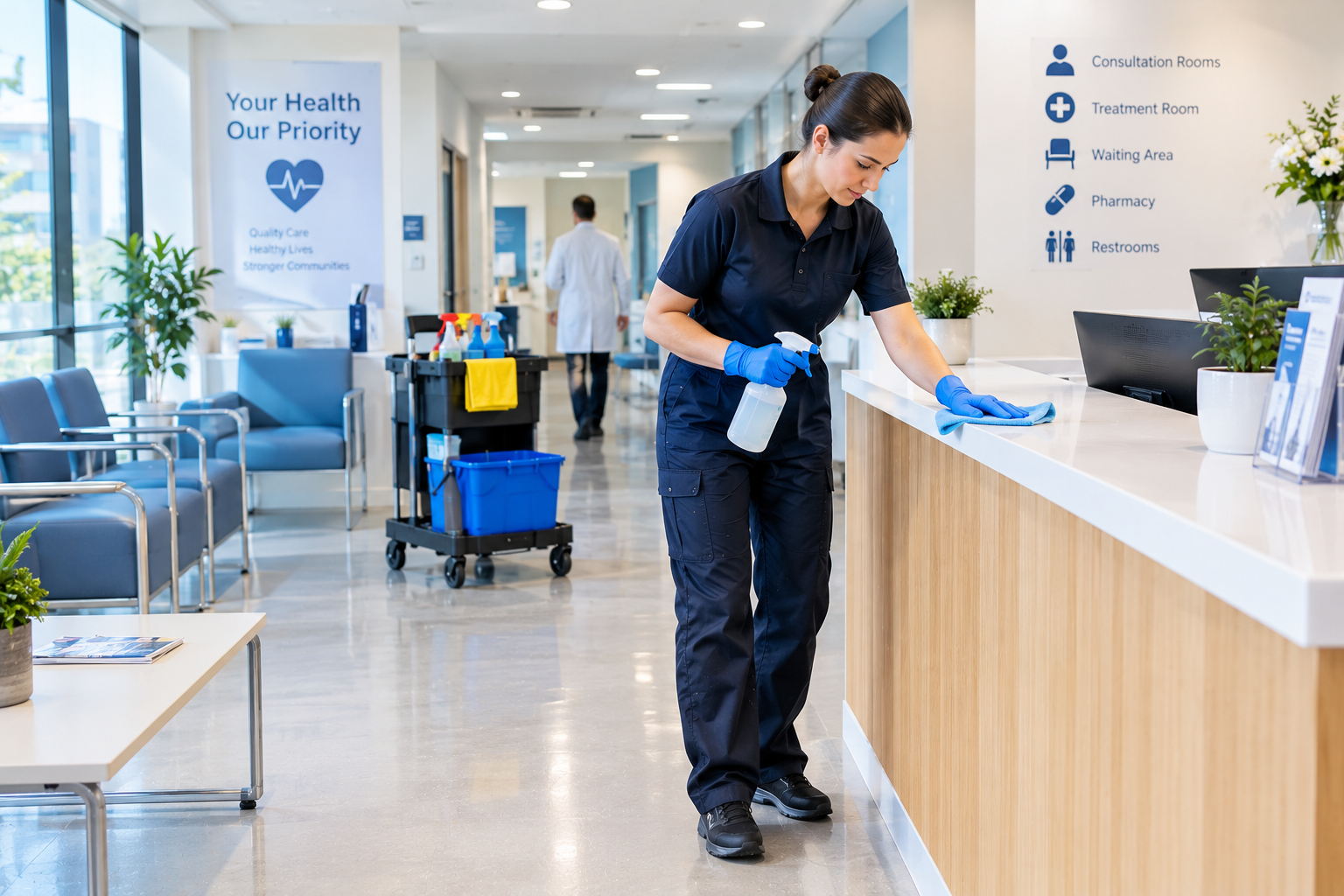
Medical centres also have a lot of frequently touched surfaces: door handles, reception counters, chair arms, taps, light switches and keypads. Because so many hands pass over them each day, they need regular, careful attention.
It is worth being clear about what cleaning can and cannot do. Good cleaning and disinfection help reduce contamination risks, but they do not replace other infection prevention measures such as hand hygiene, correct use of protective equipment and clinical protocols. Cleaning is one layer of a larger system, and it works best when everyone understands that.
Key Areas That Need Regular Medical Centre Cleaning
Different rooms in a clinic serve different purposes, so each calls for its own approach.
Reception and Waiting Room Cleaning
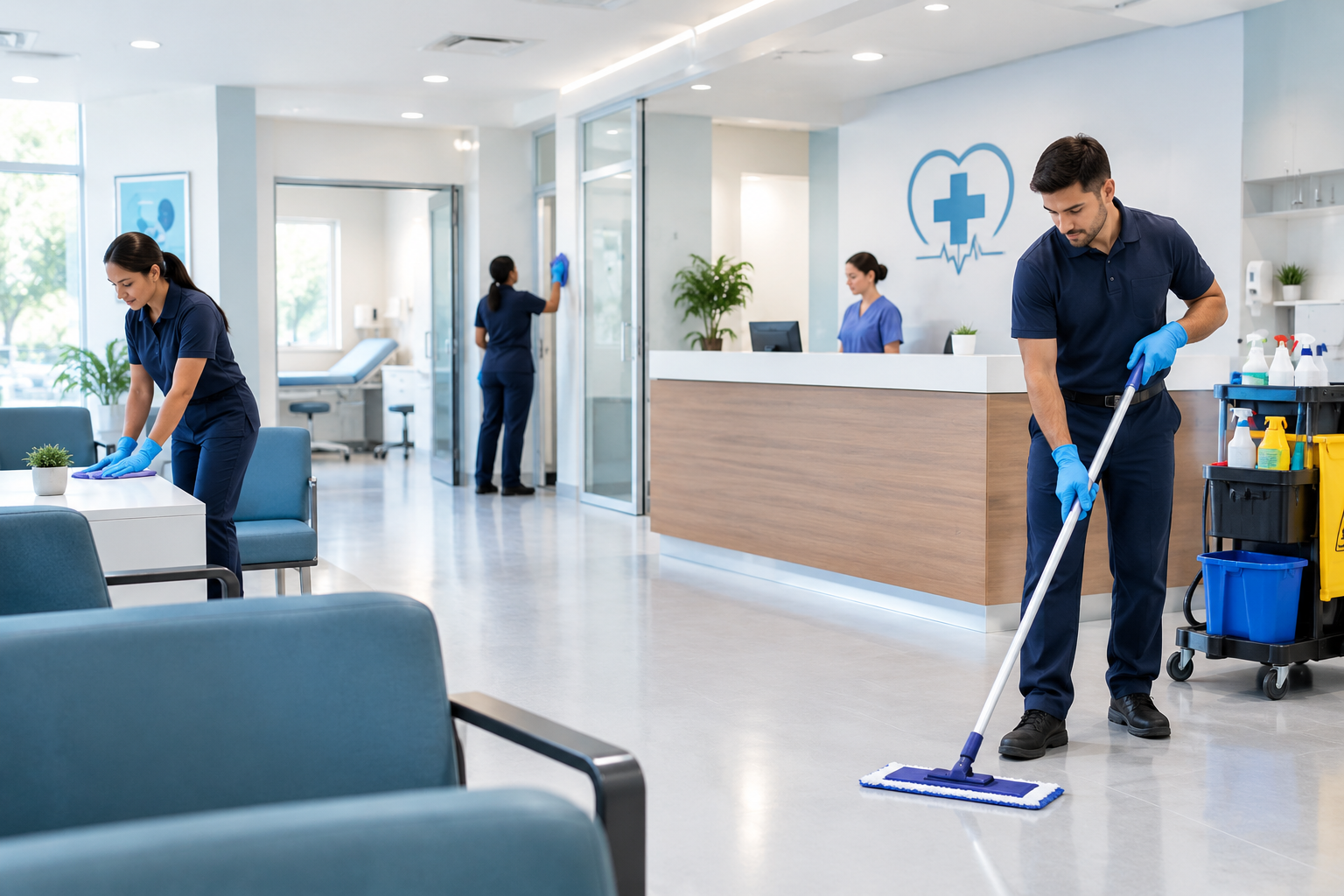
The front of the clinic is where patients form their first impression. Reception desks, waiting room chairs, counters, door handles, magazine tables and children’s play corners are touched all day. Floors collect dirt from the street, and bins fill quickly during busy sessions.
Wiping down hard surfaces, emptying rubbish and keeping floors tidy goes a long way. In waiting room cleaning, small checks during the day often matter more than one big clean at night.
Consultation and Examination Room Cleaning
Consult rooms need extra care because patients are examined and treated there. Examination beds, work surfaces, chairs, sinks and frequently touched points are usually cleaned between appointments, following the clinic’s own procedures.
Cleaners should always follow site instructions. They need to know which items to leave alone, especially medical equipment, instruments and clinical materials. Moving or wiping the wrong thing can cause real problems, so clear guidance from clinic staff is essential.
Washroom and Handwashing Area Hygiene
Washrooms are among the busiest and most scrutinised spaces in any healthcare setting. Toilets, taps, sinks, mirrors and floors need regular attention, along with waste removal. Soap, paper towels and toilet paper should be topped up before they run out, since good handwashing depends on those supplies being available.
Staff Rooms, Offices and Shared Areas
Healthcare workers need a clean place to take a break. Staff kitchens, office desks, meeting rooms and shared facilities should be part of the routine too. A comfortable, orderly back-of-house space helps teams reset between patients and keeps the whole centre running more smoothly.
Cleaning and Disinfection in Healthcare Environments
People often use these two words as if they mean the same thing, but they do not. Cleaning removes dirt, dust and grime from a surface. Disinfection uses suitable products to reduce germs on a surface that has already been cleaned. Skipping the first step can make the second less effective.
Products should be suited to the surface and the job. Labels explain how to dilute them and how long they need to stay wet, known as contact time. Wiping too soon can undo the effort.
Many facilities use colour-coded cloths, mops and buckets so that tools used in washrooms never end up in consult rooms or reception. This simple system helps prevent cross-contamination and is easy to follow once everyone is trained.
Some materials fall outside routine cleaning altogether. Clinical waste, sharps, blood spills and other potentially infectious materials must be handled according to the facility’s approved procedures by appropriately trained personnel. General cleaners should not be expected to deal with them unless they have been trained and authorised.
How Often Should a Medical Centre Be Cleaned?
There is no universal timetable. The right frequency depends on patient numbers, opening hours, how rooms are used, the type of healthcare provided and the clinic’s infection prevention requirements.
A typical pattern might include:
- Daily: Floors, washrooms, waiting areas, reception, consult rooms and staff spaces.
- Throughout the day: Wipe-downs of high-touch surfaces and quick checks of washrooms.
- Between appointments: Examination surfaces and shared items, where the clinic’s procedures require it.
- Scheduled deep cleans: Detailed floor care, upholstery, vents and less accessible areas.
A busy general practice with several doctors will need more frequent attention than a small specialist clinic that sees a handful of patients daily.
Benefits of Hiring Professional Healthcare Cleaners
Some clinics rely on nurses or reception staff to tidy up between tasks. That can work in emergencies, but it takes time away from patients. Bringing in professional healthcare cleaners offers several practical benefits:
- Consistent cleaning routines
- Careful attention to high-touch surfaces
- A cleaner, more welcoming patient environment
- Suitable methods for different areas
- Flexible schedules that suit clinic operations
- Clear task lists and quality checks
- More time for healthcare staff to focus on patient care
No cleaning service can promise to remove every germ or prevent every infection, and you should be wary of anyone who does. What good Medical Centre Cleaning Services can offer is structure, training and reliability.
How to Choose the Right Medical Centre Cleaning Provider
Because the stakes are higher in healthcare, it pays to ask more questions than you would for an ordinary office. Consider the following:
- Healthcare experience: Have they worked in clinics or similar settings?
- Staff training: Do cleaners understand hygiene procedures and site rules?
- Products: Are they suitable for the surfaces and for healthcare use?
- Safety procedures: How do they handle spills, chemicals and unfamiliar situations?
- Confidentiality: Will staff respect patient privacy, particularly around records and consult rooms?
- Checklists: Is there a clear written list of tasks for each area?
- Flexible schedules: Can they work outside clinic hours?
- Communication and monitoring: Who do you speak to if something is missed, and how is quality reviewed?
Before agreeing to a plan, sit down and explain your clinic’s specific requirements. A provider who asks thoughtful questions in return is usually a good sign.
Creating a Practical Cleaning Schedule for Your Clinic
Start by listing every room and area, then note how heavily each is used. Reception, waiting rooms, washrooms and consult rooms generally need the most frequent attention. Storage areas and meeting rooms can often be cleaned less often.
Next, divide tasks into daily, weekly and periodic groups. Daily tasks cover floors, bins, washrooms and surfaces. Weekly jobs might include vents, skirting boards and glass. Periodic work could involve deeper floor care or upholstery cleaning.
Responsibilities should be clearly defined. Decide what the cleaning team handles and what remains with clinical staff, such as equipment and instruments. The schedule should follow the clinic’s policies, any applicable requirements and professional infection prevention guidance. Review it a few times a year, since changes in patient numbers or services often change what you need.
Conclusion: Maintaining a Cleaner and More Welcoming Medical Centre
Consistent cleaning, appropriate disinfection, trained staff and a clear plan all work together. When these pieces are in place, patients feel more confident, and healthcare teams can work in a calm, organised setting.
The best next step is a simple one. Walk through your clinic as a patient would, note what needs attention, and build a schedule that suits your opening hours and caseload. Whether you manage it in-house or work with Medical Centre Cleaning Services, a routine that is written down, followed and reviewed will keep your clinic cleaner, safer and more welcoming.

