


Precision Engineering Solutions for Medical Assembly Systems
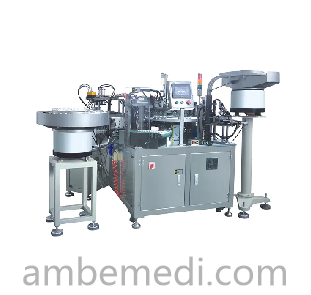
Medical product manufacturing often involves multiple components that must be assembled accurately and consistently. Small connectors, molded parts, tubing, housings, and other elements may require different handling methods and assembly sequences. A Medical Assembly Machine integrates component feeding, positioning, joining, inspection, and process control into a coordinated manufacturing workflow. This approach helps manufacturers organize repetitive operations while supporting consistent assembly conditions and more systematic quality management.
Material characteristics play an important role in assembly equipment design. Medical products may contain polymers, elastomers, metals, films, and flexible tubing, each with different mechanical properties. Rigid components may require accurate orientation, while flexible parts need careful handling to prevent twisting, compression, or deformation. Engineers must consider friction, dimensional tolerance, surface sensitivity, and component geometry when selecting fixtures, guides, grippers, and transfer mechanisms.
Component feeding provides the foundation for an organized assembly process. Parts need to reach the correct workstation in a suitable orientation and sequence. Automated feeders, conveyors, trays, positioning units, and detection sensors can coordinate material delivery and reduce inconsistent manual placement. A well-designed feeding system also helps prevent interruptions caused by missing components or irregular material flow.
Positioning accuracy is essential when components must fit together according to defined product specifications. Fixtures can hold parts in stable positions while actuators perform insertion, fastening, pressing, fitting, or other assembly operations. The required movement and applied force depend on the product design. For delicate materials, controlled motion can reduce unnecessary stress, while accurate tooling helps maintain the relationship between connected components.
Synchronization between workstations is another major consideration. Programmable controllers can coordinate feeding systems, actuators, sensors, and transfer mechanisms according to a defined production sequence. Sensors can verify whether components are present, whether a position has been reached, and whether an operation has been completed. This feedback allows the equipment to respond to production conditions and helps prevent downstream processes from continuing when a required step has not been confirmed.
Quality inspection can be integrated into the assembly workflow rather than reserved entirely for the end of production. Vision systems may check component presence, orientation, surface appearance, or assembly position. Depending on product requirements, additional sensing or measurement methods can verify specific dimensions or process conditions. Inspection criteria should reflect the relevant product specifications and quality procedures, ensuring that the equipment evaluates characteristics that matter to the manufacturing process.
Traceability can provide further support for quality management. Automated systems may collect production events, inspection results, machine status, and relevant batch information. Organized records help manufacturers investigate abnormalities and identify the stage where a deviation occurred. When equipment data is connected with established quality procedures, production teams can make more informed decisions about troubleshooting and process improvement.
Equipment cleanliness and material compatibility should also be considered. Contact surfaces, fixtures, and transfer mechanisms need to suit the intended manufacturing environment and avoid unnecessary damage to components. The equipment layout should support appropriate cleaning, inspection, and maintenance procedures. Where the product or process requires controlled environmental conditions, equipment design should be evaluated against the applicable manufacturing requirements.
Operator safety and machine maintainability are equally important. Protective structures can reduce exposure to moving components, while appropriate controls and alarm functions help operators respond to abnormal conditions. Maintenance access should allow technicians to inspect sensors, fixtures, actuators, and transmission components efficiently. A practical design considers the entire equipment lifecycle, including setup, daily operation, cleaning, troubleshooting, and servicing.
Flexibility can help manufacturers respond to evolving product designs and production needs. Modular workstations, adjustable fixtures, replaceable tooling, and configurable control functions may allow selected operations to be modified without redesigning the entire system. This can be useful when product variations require different component arrangements or assembly sequences. However, flexibility should be balanced with reliable operation and straightforward maintenance.
Successful automation combines mechanical engineering, material handling, motion control, inspection, traceability, and safety into a coherent manufacturing system. A Medical Assembly Machine designed

