


Environmental Protection in Modern Power Connectors
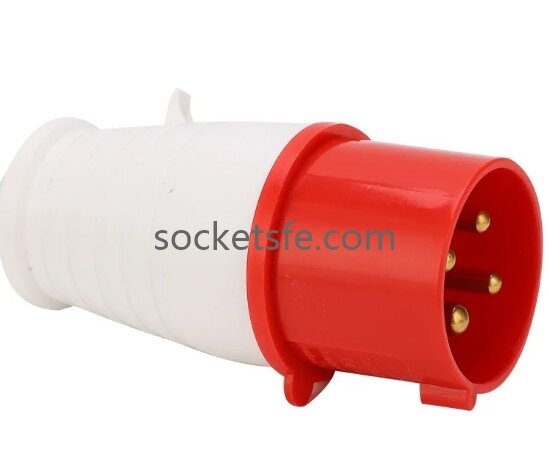
In industrial environments where dust and water exposure are concerns, an IP67 Industrial Plug is designed to provide a defined level of environmental protection when correctly assembled and used under its rated conditions. The IP67 classification indicates dust-tight protection and resistance to temporary immersion under specified test conditions. Actual performance also depends on housing design, sealing components, cable entry, mating compatibility, and installation quality.
The housing forms the main protective structure around internal electrical components. Engineering plastics are frequently used because they can combine electrical insulation with mechanical durability. Material selection should account for the intended environment, including temperature changes, impact, moisture, and possible contact with oils or cleaning agents. Housing dimensions must remain consistent so that seals, contacts, and mating components fit correctly.
Sealing components help limit pathways through which water or contaminants could enter the connector. Depending on the design, seals may be placed around mating interfaces, covers, or cable entries. Their effectiveness depends on material quality, compression, surface condition, and assembly accuracy. Damaged seals or incorrect installation can reduce the intended protection even when the connector has been designed to meet a specific rating.
Cable entry is an important part of the sealing system. The cable must fit the intended entry structure, and the assembly must maintain the required contact between sealing surfaces. A suitable strain-relief arrangement also helps reduce pulling and bending forces near the cable termination. Mechanical stress around the entry point can affect both the cable and the sealing interface.
Electrical insulation separates conductive contacts and helps maintain controlled electrical paths. Insulating materials should retain their properties under the expected operating conditions. Accurate molding and assembly help position internal components correctly and maintain appropriate separation between conductive parts. This is particularly important in connectors intended for environments where moisture or contaminants may be present.
Conductive contacts provide the current-carrying interface between the plug and the matching socket. Materials are chosen according to conductivity, corrosion resistance, and mechanical durability. Accurate contact geometry helps maintain alignment, while suitable contact pressure supports electrical continuity. The connector must also be fully mated according to its design to achieve the intended connection condition.
Mechanical retention supports the connection during vibration, movement, and routine handling. A secure locking mechanism helps keep the plug engaged with its mating socket. The housing and cable support should also reduce the transfer of external mechanical forces to internal contacts and termination points.
Manufacturing technology influences how consistently these features work together. Injection molding processes must maintain accurate dimensions around sealing grooves, mating surfaces, cable entries, and contact supports. Conductive components require controlled forming and assembly. Quality control can include dimensional inspection, visual checks, electrical testing, mechanical verification, and appropriate environmental protection testing.
Application conditions should guide connector selection. Outdoor machinery may encounter rain, dust, and temperature variation, while construction equipment can experience vibration and physical impact. Agricultural installations may involve soil and moisture, and industrial production environments may include cleaning processes. The protection rating should be considered alongside voltage, current, contact configuration, cable type, and mating compatibility.
Installation procedures remain essential. Technicians should inspect seals, housings, contacts, and cables for damage or contamination before use. The plug should be correctly aligned and fully engaged with its mating socket. Cable routing should avoid excessive tension, and sealing surfaces should remain clean during assembly. An IP rating should not be interpreted as protection against every possible water exposure or installation error.
Routine maintenance helps preserve connector performance. Inspection can identify cracked housings, damaged seals, corrosion, loose cable entries, and worn locking components. If the connector has suffered impact or other damage, its condition should be evaluated before further use. Cleaning methods should be compatible with the connector materials and its intended application.
A properly engineered IP67 Industrial Plug combines environmental sealing, insulation, conductive contacts, mechanical retention, and precise manufacturing into a coordinated connection system. Understanding these elements helps engineers and installers choose connectors according to real operating conditions. Industrial plug and socket solutions can be explored at https://www.socketsfe.com, with attention to protection requirements, electrical compatibility, materials, cable configuration, and installation practices.

