


Practical Design for Industrial Surface Preparation
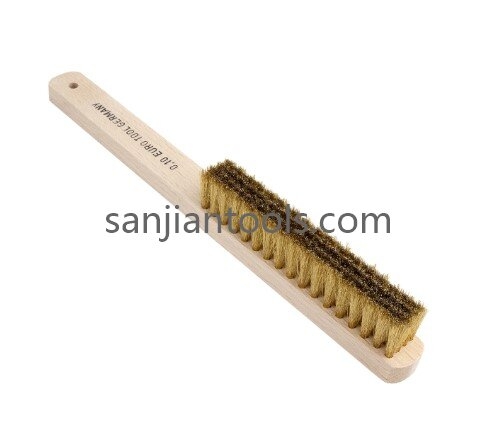
Metal cleaning often involves removing rust, residue, oxidation, and accumulated deposits from components before repair or further processing. For these tasks, a Plastic Handle Steel Wire Brush combines a steel filament working head with a molded grip that supports manual control. Its practical performance depends on wire quality, filament arrangement, brush-head construction, handle design, fastening strength, and manufacturing accuracy.
Steel wire is the primary working material, and its dimensions influence how the brush interacts with a surface. Fine filaments can provide more flexible contact for selected cleaning tasks, while thicker wires may offer a firmer brushing action. The appropriate choice depends on the workpiece, contamination type, and intended cleaning method. Manufacturers should define wire specifications according to actual application requirements rather than assuming that one filament size can handle every situation.
Filament density also affects the contact pattern. A consistent distribution helps maintain predictable brushing action across the working head. Uneven spacing can create differences in cleaning intensity and may affect the appearance of the finished product. Controlled insertion, trimming, and fastening processes help maintain consistent brush-head geometry and reduce variations between production batches.
The brush-head base must provide reliable support for the wire assembly. During use, the tool may experience repeated pushing, pulling, and lateral movement. These forces place demands on the connection between the filaments and the supporting structure. Secure attachment helps reduce premature wire loosening, while routine inspections can identify irregular trimming, poor alignment, and assembly defects before shipment.
Plastic handle construction offers several practical manufacturing advantages. Molding processes allow manufacturers to produce repeatable shapes and incorporate different grip profiles. The handle can be designed with suitable width, length, and surface texture according to the intended application. A well-shaped grip helps users direct the brush while applying appropriate pressure, particularly during repetitive workshop maintenance tasks.
The connection between the handle and brush head is another important quality consideration. A stable joint helps transfer manual force without unnecessary movement between components. Depending on the design, manufacturers may use mechanical fastening, molded connections, or other suitable assembly methods. Inspection should verify that the joint is properly aligned and remains secure under normal working conditions.
Surface finishing influences both appearance and handling. Plastic handles should have clean edges, consistent molding, and no unnecessary excess material that could interfere with the grip. The brush head should also be checked for exposed defects or irregular wire placement. Consistent finishing is important for products supplied through wholesale channels because visual and dimensional differences can affect buyer confidence and inventory management.
Different industries require different cleaning characteristics. Fabrication workshops may use wire brushes for weld preparation and removal of surface residue. Maintenance teams may need them for rust removal from metal components, while automotive repair and construction environments can involve other cleaning tasks. Product variations in wire diameter, brush-head size, filament density, and handle shape allow manufacturers to serve different requirements.
Material compatibility should remain part of product selection. A wire brush that works well on robust metal surfaces may be too aggressive for a more delicate component or finish. Buyers should consider the workpiece material and the intended result when choosing a configuration. Clear product specifications help distributors guide customers toward appropriate applications and avoid treating all wire brushes as interchangeable.
For manufacturers, consistent quality control can cover wire dimensions, filament density, fastening strength, handle molding, connection stability, and final appearance. Standardized inspection procedures help maintain product consistency across production lots. Packaging should protect the wire head from deformation and prevent unnecessary damage to the handle during shipping and storage.
A dependable Plastic Handle Steel Wire Brush is the result of coordinated decisions involving filament material, brush-head design, grip construction, assembly methods, and inspection procedures. Buyers can evaluate these features when sourcing tools for metal cleaning, maintenance, rust removal, and workshop surface preparation. More information about related cleaning and hand tools is available at https://www.sanjiantools.com/product.

