


E-Invoicing Software for UAE Businesses: What to Check
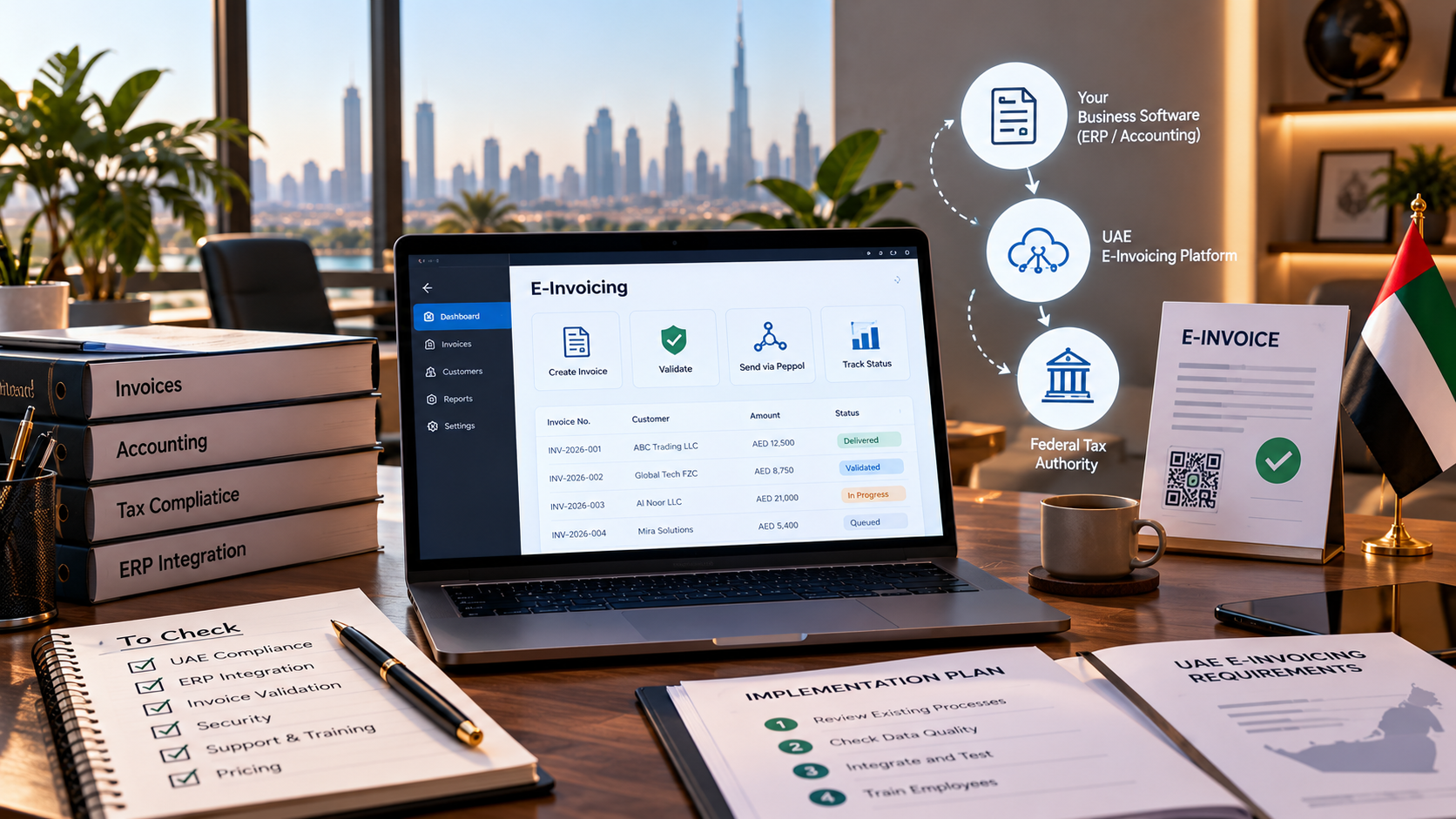
Choosing business software is easier when the team knows which problems it needs to solve. For invoicing, those problems may include repeated data entry, errors in customer records, delayed invoice processing and difficulty connecting finance systems. A new platform should address these issues without creating unnecessary work for employees.
For companies preparing for the UAE's electronic invoicing framework, e-invoicing software for UAE businesses should be evaluated against regulatory requirements, existing accounting systems and everyday invoicing needs. The right choice depends on the company's size, transaction processes and technical environment.
What Makes UAE E-Invoicing Software Different?
Electronic invoicing under the UAE framework involves exchanging structured invoice data electronically. It is different from sending a PDF invoice through email because the information must follow the applicable technical requirements and support electronic processing and reporting.
The UAE programme uses PINT AE, the country's invoice data specification, within a Peppol-based framework. Accredited Service Providers (ASPs) facilitate invoice exchange and the required reporting process.
This means businesses need to look beyond basic invoice creation. Their software arrangements must support the relevant data format, validation and exchange requirements.
A company might already generate invoices through an ERP or accounting application. It should assess whether that system can connect to an appropriate service provider and what additional configuration or integration work may be necessary.
Features to Evaluate Before Choosing a Platform
Not every business needs the same set of features. A company issuing a relatively small number of invoices may have different requirements from an organisation managing multiple entities, complex ERP workflows or high transaction volumes.
The following areas provide a useful starting point.
| Feature or capability | Questions to ask | Business value |
|---|---|---|
| UAE compliance support | Does the solution support applicable UAE e-invoicing requirements and PINT AE? | Helps address regulatory and technical requirements |
| ERP integration | Can it work with the company's existing accounting or ERP system? | Reduces duplicate data entry |
| Invoice validation | How does it identify missing or incorrect invoice information? | Helps resolve errors before they create further delays |
| Invoice exchange | How are invoices transmitted and delivery statuses communicated? | Improves visibility into processing |
| Security and access | What controls protect financial data and restrict access? | Supports responsible data management |
| Reporting and monitoring | Can staff review errors, statuses and unresolved issues? | Makes daily administration easier |
| Support and training | What assistance is available during implementation and operation? | Helps teams manage technical problems |
| Pricing | Are there setup, subscription, transaction or additional service fees? | Helps estimate the total cost |
Ask providers to demonstrate these capabilities using realistic examples from your business. A presentation can explain what a product is designed to do, but testing actual invoice workflows provides better evidence of how it will fit into daily operations.
How to Check Software Compatibility With Your Existing Systems
Replacing an accounting system is not always necessary when introducing electronic invoicing. In some cases, a business can retain its current ERP and connect it to an appropriate e-invoicing service. The available approach depends on the software, provider and integration requirements.
Before selecting a solution, document how invoices are created, approved, sent and recorded in the company's financial system.
For example, a distributor might generate invoices in its ERP, maintain customer tax details in a separate database and rely on finance staff to correct errors manually. During the evaluation, the team should check how invoice data will move between these systems and where validation will occur.
It should also establish what happens when an invoice fails validation, how corrections are submitted and how invoice status is reflected in the accounting records.
Businesses comparing options can review Webtel's UAE e-invoicing offering as one resource during their research. Before choosing any provider, they should confirm the specific integration options, implementation scope, support arrangements and commercial terms relevant to their requirements.
Preparing for Implementation in the UAE
Selecting software is only one part of implementation. Businesses also need clean data, clear responsibilities and enough time to test their processes before the applicable deadlines.
A practical preparation plan includes four activities:
- Review existing invoices. Identify the systems used to create invoices and check whether customer, supplier and tax information is complete.
- Confirm applicable requirements. Determine which implementation dates and obligations apply to the business and verify the latest official guidance.
- Plan integration and testing. Agree on data mapping, validation checks, exception handling and the responsibilities of the business and its service provider.
- Prepare employees. Train finance and IT teams to monitor invoice statuses, resolve errors and escalate technical issues.
The UAE Ministry of Finance publishes the official e-invoicing guidance and the current list of Accredited Service Providers. Businesses should use these resources to verify requirements and provider status rather than relying solely on marketing material.
Starting early also gives the team time to identify integration problems before they affect routine invoicing.
Frequently Asked Questions
Is e-invoicing software the same as ordinary billing software?
Not necessarily. Billing software may create invoices, but UAE e-invoicing also requires structured data exchange and the applicable reporting process. Businesses should verify that their complete software arrangement meets the relevant requirements.
Can a UAE business continue using its existing ERP?
Potentially. An existing ERP may remain part of the process if the necessary integration and technical requirements can be met. Businesses should confirm compatibility with their chosen provider.
How can a business verify an e-invoicing provider?
Check the UAE Ministry of Finance's official Accredited Service Provider register and confirm the exact legal entity. Also review the provider's technical capabilities, implementation approach, security practices and commercial terms.
When should a company start preparing?
A company should begin once it understands the requirements and deadlines applicable to its business. Early preparation allows time for data checks, integration, testing and employee training.
Choosing Software That Fits the Business
The best software choice depends on more than a long feature list. UAE businesses should evaluate regulatory support, ERP compatibility, validation, security, implementation requirements and ongoing costs together.
A structured evaluation helps organisations compare providers on practical evidence and identify gaps before deployment. With the right preparation, businesses can select an invoicing setup that supports their compliance obligations while fitting their existing financial processes.

