


What Causes Lower Back Pain? Causes & Treatment | Spine DRx
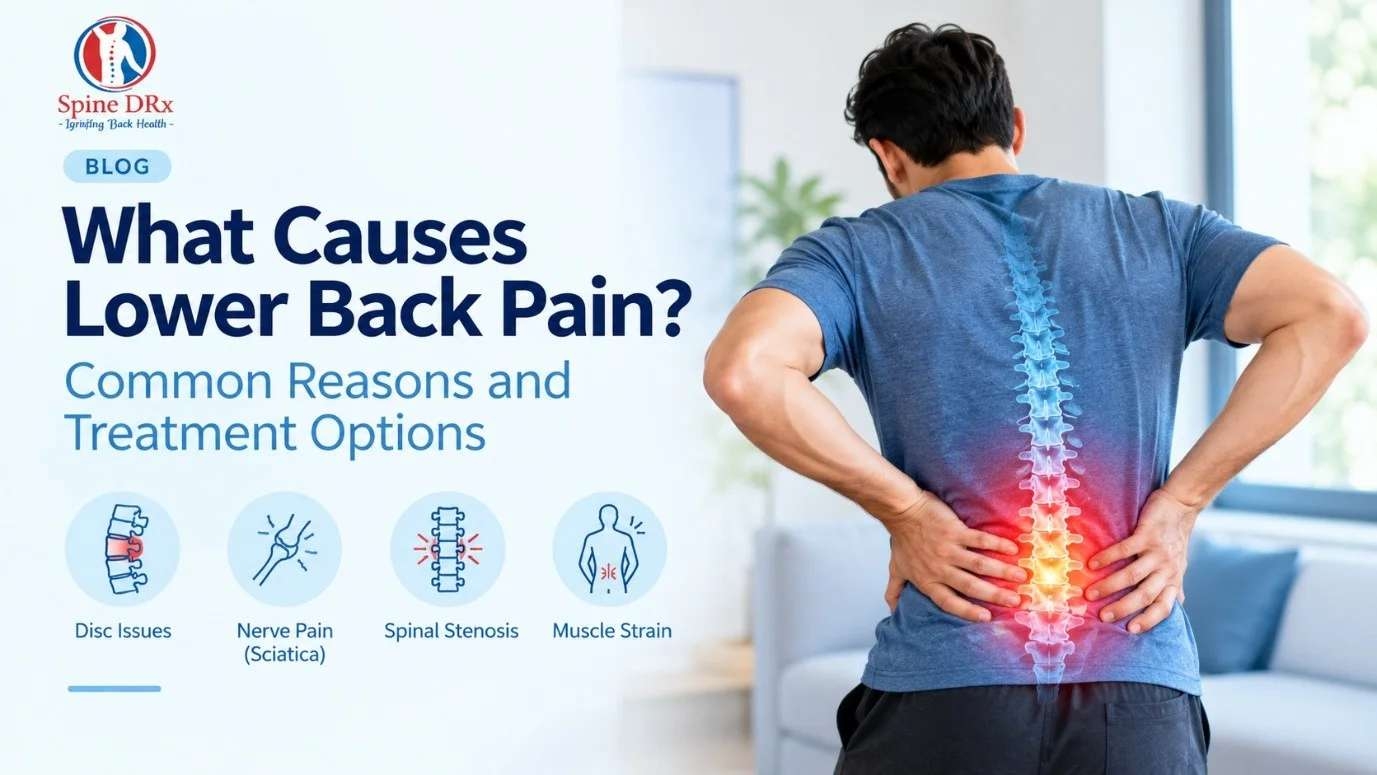
Lower back pain is common and can range from a short-term ache after physical activity to persistent pain associated with a disc, nerve or other spinal condition. Lower back pain causes can include muscle strain, poor conditioning, slipped or herniated discs, sciatica, spinal stenosis, spondylolisthesis and spinal fractures.
Understanding the possible cause is important because treatment depends on the underlying problem. While many cases improve with appropriate non-surgical care, persistent pain, neurological symptoms or certain warning signs may require evaluation by a spine specialist.
If your lower back pain is affecting your daily activities or has continued despite initial care, identifying the cause can help determine the most appropriate next step.
Concerned About Persistent Lower Back Pain?
Get your symptoms evaluated by the spine specialists at Spine DRx to understand the possible cause and explore appropriate treatment options.
What Is Lower Back Pain?
Lower back pain refers to discomfort in the area between the lower ribs and the buttocks. It may be felt as an ache, stiffness, burning sensation or sharp pain.
The pain may remain around the lower back or sometimes travel into the buttock or leg.
The duration can also vary:
- Acute: Usually lasts for a few weeks
- Subacute: Continues for several weeks to a few months
- Persistent or chronic: Continues for several months or longer
Not every episode of lower back pain is caused by a serious spinal condition. However, persistent or worsening symptoms should be assessed appropriately.
What Causes Lower Back Pain?
There are several possible causes of lower back pain. Some involve the muscles and soft tissues, while others are related to discs, nerves, joints or the spinal bones.
Common causes include:
- Muscle strain or overuse
- Poor physical conditioning
- Slipped or herniated disc
- Sciatica or nerve irritation
- Lumbar spinal stenosis
- Lumbar spondylolisthesis
- Spinal fractures
- Certain inflammatory or other medical conditions
The same symptom can occur with different conditions, so the cause cannot always be determined from pain alone.
Common Causes of Lower Back Pain
1. Muscle Strain and Overuse
Muscle strain is one of the common reasons for lower back discomfort. It can occur after lifting, repetitive activity, sudden movements or physical exertion.
Symptoms may include:
- Localized lower back pain
- Muscle stiffness
- Reduced movement
- Discomfort after physical activity
In many uncomplicated cases, symptoms improve with appropriate activity modification and rehabilitation.
2. Slipped or Herniated Disc
The discs between the vertebrae act as cushions and help the spine absorb movement. When disc material protrudes or herniates, it can sometimes irritate nearby nerves.
This may cause:
- Lower back pain
- Buttock pain
- Pain travelling into the leg
- Numbness or tingling
- Weakness in some cases
A slipped disc does not automatically mean surgery is required. Treatment depends on the symptoms, examination findings and whether there is significant nerve involvement.
3. Sciatica
Sciatica describes pain associated with irritation or compression of the sciatic nerve or its nerve roots.
The pain may travel from the lower back or buttock down the leg.
Possible symptoms include:
- Radiating leg pain
- Tingling
- Numbness
- Burning or electric-type pain
- Weakness in some cases
Persistent or worsening neurological symptoms should be medically evaluated.
4. Lumbar Spinal Stenosis
Lumbar spinal stenosis occurs when there is narrowing around the nerves in the lower part of the spinal canal.
Some people may experience:
- Lower back discomfort
- Leg pain
- Numbness or tingling
- Leg heaviness
- Difficulty walking or standing for prolonged periods
Symptoms may sometimes improve when sitting or bending forward.
5. Lumbar Spondylolisthesis
Lumbar spondylolisthesis occurs when one vertebra shifts relative to another.
Depending on the severity and associated nerve involvement, it may cause:
- Lower back pain
- Stiffness
- Buttock or leg pain
- Numbness or tingling
- Difficulty with certain activities
Lumbar spondylolisthesis treatment depends on the individual's symptoms, examination and imaging findings.
6. Spinal Fractures
A spinal fracture can cause sudden or severe back pain, particularly after a significant injury.
Fractures can also occur in people with weakened bones, including osteoporosis, sometimes following relatively minor trauma.
Sudden severe pain after an injury should be medically assessed.
7. Other Possible Causes
Not all lower back pain originates from the spine.
Depending on the symptoms and medical history, other conditions may also need to be considered.
This is why persistent, unexplained or unusual pain should not be diagnosed solely from online information.
What Symptoms Can Occur with Lower Back Pain?
Lower back pain may occur alone or with other symptoms.
Common symptoms include:
- Aching or sharp lower back pain
- Stiffness
- Pain during certain movements
- Pain extending into the buttocks
- Pain travelling down the leg
- Numbness or tingling
- Muscle weakness
- Difficulty walking or standing
The combination of symptoms can provide important clues about the underlying cause.
Is Your Lower Back Pain Coming from the Spine?
Some symptoms may suggest that your lower back pain could be associated with a spinal structure, disc or nerve.
You may need specialist evaluation if you experience:
- Pain radiating from the back into the leg
- Persistent numbness or tingling
- Leg weakness
- Difficulty walking
- Symptoms that continue despite appropriate conservative care
- Recurrent episodes that interfere with normal activities
However, symptoms alone cannot confirm a diagnosis. A spine specialist may need to combine your medical history, physical examination and appropriate imaging before determining the cause.
When Should You See a Spine Specialist?
You should consider a spine specialist evaluation when lower back pain:
- Persists or repeatedly returns
- Interferes with work, sleep or daily activities
- Travels into the leg
- Is associated with numbness or weakness
- Causes difficulty walking
- Has not improved with appropriate initial treatment
- Has been associated with an abnormal scan or diagnosed spinal condition
Seek urgent medical evaluation if you develop:
- Loss of bladder or bowel control
- Difficulty passing urine
- Numbness around the groin or saddle region
- Progressive weakness in the legs
- Severe pain following significant trauma
- Severe back pain accompanied by fever or other concerning symptoms
These symptoms should not be managed solely through self-care.
How Is the Cause of Lower Back Pain Diagnosed?
A diagnosis usually begins with a detailed medical history and physical examination.
Depending on the symptoms, a specialist may assess:
- Location and duration of pain
- Movement-related symptoms
- Muscle strength
- Sensation
- Reflexes
- Walking pattern
- Nerve-related symptoms
- Previous injuries or medical conditions
Imaging such as an X-ray, MRI or CT scan may be recommended when clinically appropriate.
Importantly, an abnormal scan does not always mean that surgery is necessary. Imaging findings need to be considered together with the patient's symptoms and examination.
Lower Back Pain Treatment Options
Treatment depends on the underlying cause, severity and duration of symptoms.
| Treatment approach | When it may be considered |
| Activity modification | For appropriate acute or activity-related pain |
| Exercise and rehabilitation | To improve mobility, strength and function |
| Physiotherapy | When structured rehabilitation is appropriate |
| Medication | Depending on the condition and medical history |
| Targeted procedures | For selected patients when clinically indicated |
| Surgery | For specific structural or neurological problems when appropriate |
Activity Modification
Depending on the condition, modifying activities that aggravate the pain may help. Prolonged inactivity is not necessarily appropriate for uncomplicated back pain.
Physiotherapy and Exercise
A structured rehabilitation programme may help improve mobility, strength and function. Exercises should be appropriate for the individual's condition rather than copied from generic online programmes.
Medicines
Pain-relieving or anti-inflammatory medicines may be considered in some situations. The appropriate medicine depends on individual health factors and should be discussed with a qualified healthcare professional.
Targeted Procedures
Some spinal conditions may be treated with targeted interventions when conservative treatment has not provided sufficient relief or when there is a specific clinical indication.
Is Lower Back Pain Affecting Your Daily Activities?
Persistent back pain, pain radiating into the legs, numbness or weakness may need specialist assessment. Spine DRx can help evaluate your symptoms and discuss suitable treatment options.
When Is Spine Surgery Considered?
Surgery is not automatically required for lower back pain.
It may be considered when there is a specific structural problem, significant neurological involvement, persistent disabling symptoms despite appropriate non-surgical treatment, or another clear surgical indication.
The recommended procedure depends on the diagnosis rather than simply the severity of pain.
When Should You See a Spine Specialist in Bangalore?
If lower back pain is persistent, recurrent or associated with leg pain, numbness, weakness or difficulty walking, a specialist assessment may help identify the underlying cause.
At Spine DRx, patients can consult for different spine and back-pain conditions at locations including Whitefield and Kasavanahalli in Bangalore.
How Can You Reduce the Risk of Lower Back Pain?
Not every episode of back pain can be prevented, but several healthy habits may support spinal health.
Consider:
- Staying physically active
- Maintaining appropriate body weight
- Building core and overall muscle strength
- Using proper techniques when lifting
- Avoiding prolonged inactivity
- Taking breaks from prolonged sitting
- Following an appropriate exercise programme
- Addressing recurring symptoms rather than repeatedly ignoring them
If you have a known spinal condition, ask your healthcare professional which activities and exercises are appropriate for you.
Conclusion
Lower back pain can have many causes, ranging from muscle strain and physical overuse to disc problems, nerve irritation, spinal stenosis, spondylolisthesis and fractures.
The important step is to understand why the pain is occurring rather than treating the symptom alone. Persistent pain, radiating leg symptoms, numbness, weakness or other warning signs may need a detailed clinical evaluation.
Not every episode of lower back pain requires surgery. The appropriate treatment depends on the underlying diagnosis, symptoms, examination findings and individual circumstances.
If your lower back pain is persistent or affecting your daily life, consider discussing your symptoms with a spine-focused specialist.
Book a Spine Consultation in Bangalore
Experiencing persistent lower back pain, leg pain, numbness or weakness?
Consult Spine DRx for an evaluation of your spine condition and appropriate treatment options.
Whitefield: 7996992919
Kasavanahalli: 7996997989

