


When Wire Rope Moves from "Watch It" to "Pull It"
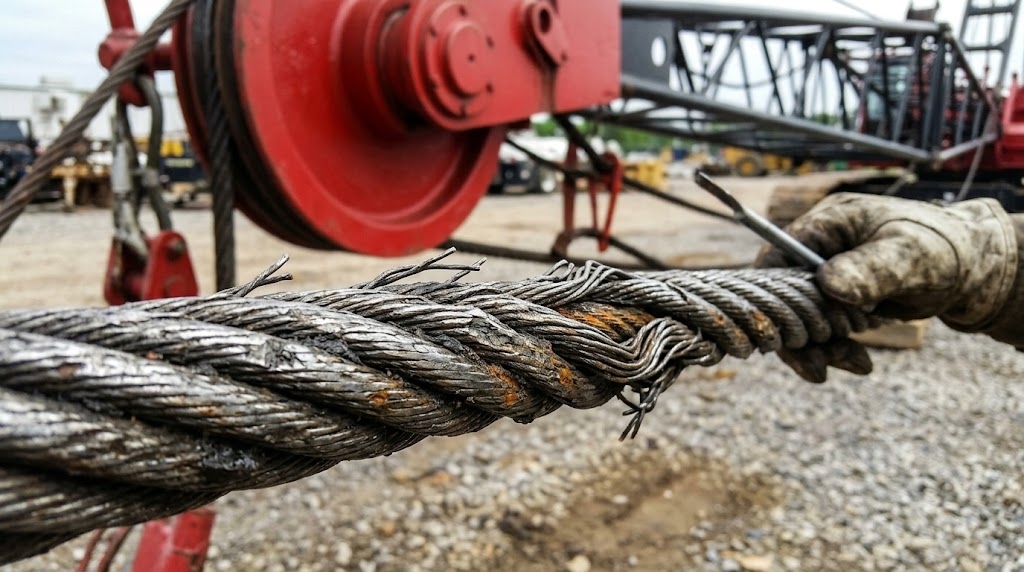
Rope failures rarely come without warning. What they lack is an audience. Steel strands carry every pick, hold, and swing on a Manitowoc crane, and each cycle leaves a mark. Marks accumulate quietly until the rope stops cooperating.
Good inspection sorts findings into two categories: those worth monitoring and those demanding removal. Confusing the two categories is how crews keep working with rope that should already be off the machine. The difference between the categories usually comes down to measurement rather than opinion. The sections below walk through each failure mode from the outside in.
Some crews handle rope decisions entirely in-house. Others lean on outside support at the ordering stage. A dependable crane parts supplier can confirm construction, core type, and fitment before anything ships. Either way, the inspection itself remains your responsibility.
Broken Wires: Count, Then Check the Pattern
Most people catch this one first. Rotate the rope hand over hand and tally broken wires inside a single lay length. Six or more in that span is the common discard line. Chalk-mark the lay length first so every count covers the same distance.
Where the breaks sit tells you as much as how many. Clustered breaks usually trace to a fixed problem—a scored sheave groove, a dented drum flange, or a bad fleet angle. Put a new rope on that same hardware and the pattern returns. Treat the rope as the patient and the rigging as the cause.
Evenly spaced breaks still matter under severe duty. They accelerate once the line goes back to work. A tally of three can become a dozen in a week of heavy picks. Written counts make that acceleration visible before failure does.
Abrasion: Where the Metal Went
Walk the rope slowly under good light and study the strand crowns. Flattened tops, bright polished patches, and blurred strand edges all indicate abrasive wear. The line is rubbing against something it should not touch. Worn grooves, misaligned drums, and grit packed into the wrap are the usual suspects.
Abrasion matters because it removes section. Diameter and breaking strength were matched at the factory. Thinner rope carries less than the chart in the cab promises. That shortfall surfaces only when the pick gets heavy.
Flat or polished areas wider than about a third of a strand's width justify planning a change-out. Fix the rubbing point before the new line goes on. Ordering Manitowoc parts for the sheaves and drum at the same time protects the fresh rope. Note where the wear appeared; the location often names the guilty component.
Corrosion: Damage That Hides
Steel plus moisture is a reliable equation. Galvanized coatings and good lubrication slow the result without preventing it. Salt air, chemical vapor, and repeated wetting speed everything up. Decay of the worst kind works where nobody looks.
Run the wipe test before you judge severity. Surface film that clears with a rag is largely cosmetic. Pitting, flaking, or rust showing between strands reflects real section loss. Core strands may be failing while the outside still reads acceptable.
Coastal and chemically aggressive sites need shorter inspection intervals than manuals list. For those environments, a crane parts supplier can suggest corrosion-resistant constructions suited to the duty. Keep stored rope dry, covered, and off contaminated ground. Small handling changes often buy months of extra service.
Kinks, Birdcages, and Other Shape Changes
Any change in the rope's outline is a stop signal. Kinks form when line bends tighter than its minimum radius, usually during installation or ground handling. Straightening one does not restore strength; the damage is set. A kinked rope can look normal while carrying a serious flaw.
Birdcaging is the splaying of outer strands into a basket-like bulge. Shock loading or a sudden tension release typically triggers it. Strands stop sharing load evenly at that point and individual wires take too much. Removal is the only sound response.
Crushed sections, protruding wires, and visibly narrowed areas belong in the same category. Each reflects a mechanical breakdown already in progress. Because shape damage means immediate removal, many sites keep Manitowoc parts staged for common line sizes. Handle the rope gently as it comes off, since damaged line can release stored energy.
Diameter Loss and Core Failure
Sound rope holds one diameter along its working length. Measurable thinning in a short section points toward core collapse. In independent wire rope core construction, the core braces the outer strands against deformation. Once it crushes or corrodes, the strands settle inward and the rope narrows.
Take readings with calipers at several locations, not one convenient spot. Loss approaching one third of nominal diameter is grounds for pulling the line. Load charts assume full-size rope, so capacity loss stays hidden until it matters. Consistent technique matters more than expensive instruments here.
For crews unsure about proper measuring points, a crane parts supplier can identify the correct locations for your rope class. Fix those points and repeat them exactly at every inspection. Track the numbers shift by shift so gradual change remains visible. Retiring a rope early on sound data beats guessing at its condition.
Stretch: The Line That Will Not Settle
Fresh rope lengthens slightly as it beds in during early service. That constructional stretch is normal and then stops. Continued stretch on a seasoned line warns of elongating strands or a failing core. Repeatedly taking up slack on a stable system is the classic symptom.
Stretch often travels with diameter loss because both trace back to core trouble. Rope growing longer and thinner at once has passed its useful window. Drum fill also shifts noticeably as a line elongates during payout. Watch how the wrap builds; the drum keeps its own record.
No adjustment compensates for a rope that will not stabilize. Schedule the change-out inside a planned outage instead of reacting mid-job. Confirming specifications early keeps freight delays from idling the machine. Predictable scheduling is half the value of careful inspection.
Heat Damage: Strength You Cannot Get Back
Rope under normal duty stays cool to the hand. Bluing, dark bands, or charred lubricant mean the line has run hot. Slipping drum wraps and seized sheaves account for most cases. Welding current grounded through the crane produces the same result.
Heat changes the steel itself, not merely the surface. Above roughly 200°F (93°C), tensile strength drops and never returns. Nothing applied to the rope recovers that loss. The only response is removal.
Find the heat source before any replacement goes on. Check drum alignment, sheave freedom, and electrical grounding while the crane is down. Once those are corrected, fit Manitowoc parts and run the line through full travel. Feel the drum for warmth during the first shift back in production.
Making the Call and Planning the Change-Out
When a defect shows up, act on it directly. Withdraw the rope from service and document its condition as found. Resist the urge to squeeze in one more lift. Failure costs—in dropped loads, damaged structures, and injuries—dwarf the price of fresh line.
Match the specification exactly, because rope does not swap freely between models. Verify the part number against the manual, then confirm diameter, construction (6×19 or 6×36 class suits many boom hoist and load lines), and core type. Where records are incomplete, a crane parts supplier can confirm fitment from the serial number. Certainty at this stage prevents returns and repeat downtime.
Use the outage to inspect sheaves, drums, and fairleads at the same time. With Manitowoc parts covering the worn components, the entire system ends up matched. Grooves should run smooth, sized correctly, and free of flat spots. New rope paired with tired hardware only relocates the damage.
Close the loop in your maintenance records. Log the date, operating hours, duty type, and reason for removal. Patterns in that log show whether a rope or location is failing early. It also supports smarter planning the next time a line comes due.
Rope is meant to wear out, so plan for it rather than act surprised. Inspect on a routine, respond to findings promptly, and retire the line before failure forces the decision. That habit keeps lifts predictable and crews out of the fall zone. It also turns a feared emergency into an ordinary afternoon of work.

