


How to Choose Electronic Invoicing Software for Your UAE Business
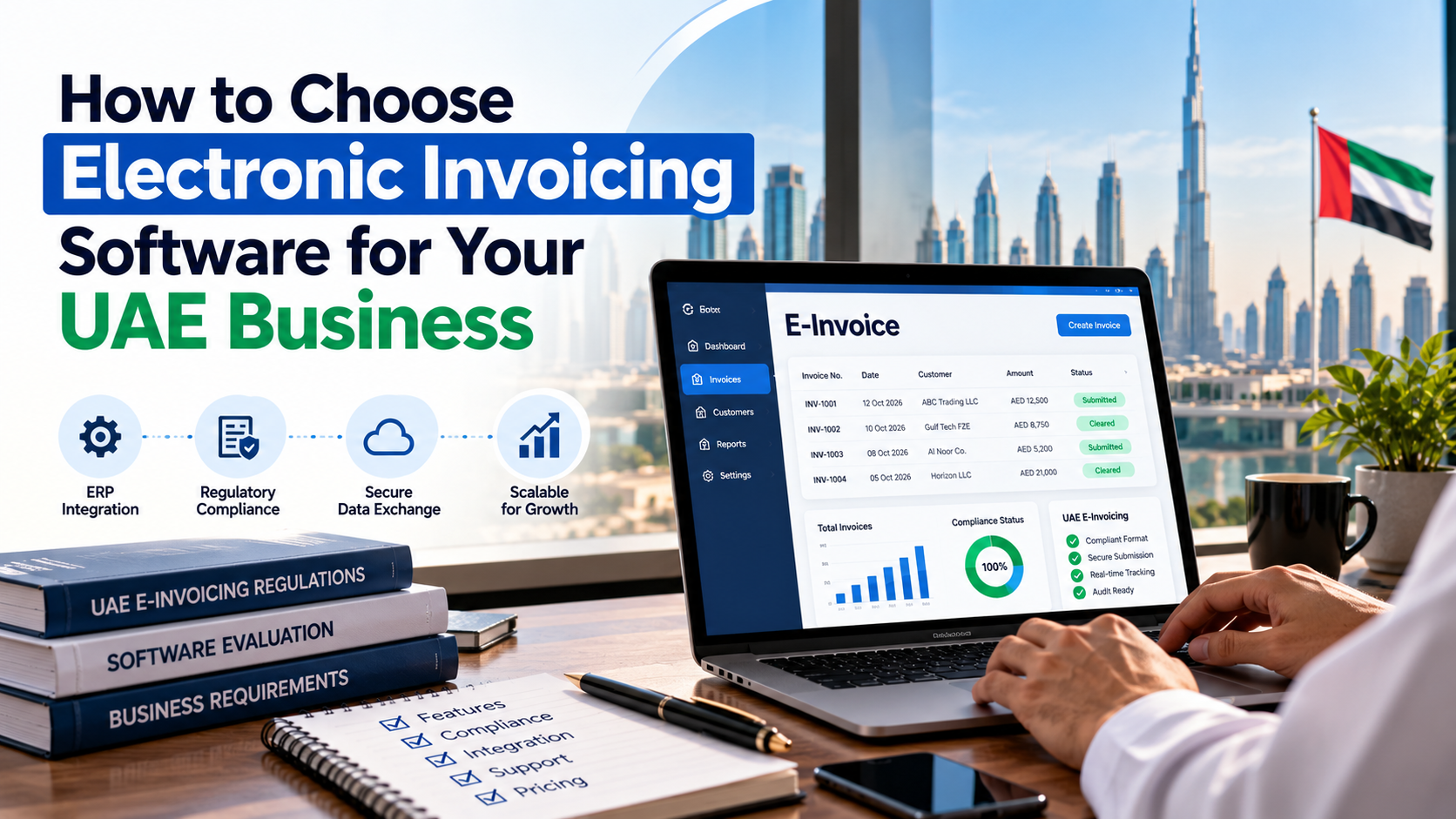
Choosing electronic invoicing software for your UAE business involves more than finding a platform that generates invoices. Businesses need to consider how invoice data moves between existing systems, whether the solution supports applicable UAE e-invoicing requirements, and how easily finance teams can manage errors and transaction records. A platform may look suitable during a demonstration but still require significant work if it does not fit the company's current invoicing processes.
The best starting point is to assess existing software, invoice data and operational needs before comparing providers. This helps businesses identify the features they actually need and avoid paying for capabilities that do not support their workflows.
Businesses evaluating their options can explore UAE e-invoicing software solutions to understand how electronic invoicing platforms may fit into their operations.
What Should Electronic Invoicing Software Handle?
Electronic invoicing involves exchanging invoice information in a structured format that software systems can process. It differs from simply creating a PDF and emailing it to a customer. Businesses should understand this distinction before selecting a platform because their existing invoicing methods may need changes to support structured data exchange.
Structured invoice information
An invoice may contain customer and supplier details, invoice numbers, dates, line items, tax information and payable totals. The selected platform should be assessed against the applicable requirements for handling these fields.
Businesses should also check how the software identifies missing or inconsistent information. For example, a customer record might contain an outdated tax registration number. If the issue is not identified before submission, the finance team may need to correct the record and process the invoice again.
Integration with existing systems
Many companies already use ERP platforms, accounting software or separate billing applications. The e-invoicing solution should fit the systems that generate their invoices rather than introduce unnecessary manual work.
Before making a decision, confirm how invoice information will move between applications and how processing responses will return to the company's records. Also establish whether the proposed connection supports the relevant invoice types and the specific software configuration in use.
Invoice status and error management
Businesses need visibility into whether invoices have been processed, rejected or remain pending. A suitable platform should make exceptions easy to identify and help staff determine the next action.
Without a clear process, finance teams may have to search emails, contact colleagues or manually compare records to find out what happened to an invoice. This can become difficult when multiple employees or business locations manage billing.
Compare Providers Before Making a Decision
Different providers may offer different integration options, support arrangements and pricing structures. Comparing them against the same criteria makes it easier to identify a suitable solution.
| Evaluation area | What to consider |
|---|---|
| Accreditation | Verify the provider's current status through official UAE Ministry of Finance resources. |
| ERP compatibility | Confirm compatibility with your specific ERP or accounting software. |
| Data validation | Check how missing or incorrect invoice information is identified. |
| Error handling | Understand how rejected invoices and corrections are managed. |
| Security | Review access controls and data protection measures. |
| Customer support | Confirm support availability and escalation procedures. |
| Pricing | Compare implementation fees, recurring charges and transaction costs. |
No single criterion should determine the final decision. A low-cost platform may require additional integration work, while a feature-rich solution may be unnecessarily complex for a business with straightforward invoicing needs.
Businesses should request a demonstration based on their own invoice workflows. Seeing how a platform handles a standard invoice, a credit note and an incorrect customer record can reveal more than a general product presentation.
Check Integration, Pricing and Support
A platform's features are only part of the selection process. Businesses should also understand how it will work with their existing systems and what support they can expect after implementation.
Test your actual invoicing workflow
Consider a distributor that creates sales invoices in its ERP but processes credit notes through a separate application. Before selecting a platform, the team should establish whether both systems can be accommodated, how invoice information will be mapped and where transaction statuses will be recorded.
The business should test different scenarios, including standard invoices, missing customer information, rejected submissions and temporary connection failures. These tests help identify integration gaps before the platform becomes part of routine billing. They also clarify the responsibilities of finance, IT and the service provider.
Businesses comparing electronic invoicing solutions for the UAE market should also consider how the provider handles ongoing support, system compatibility and changes to applicable requirements.
Verify provider status and total costs
As of October 2026, businesses should verify a provider's current accreditation status against the UAE Ministry of Finance's official list of accredited e-invoicing service providers. They should not assume that a company is accredited simply because it advertises e-invoicing services or has announced progress towards approval.
Pricing deserves the same attention. Ask whether the quoted amount covers implementation, integration, staff training and ongoing support. Check for transaction-based charges, additional entity fees and costs associated with future changes.
Support arrangements should also be clear before signing an agreement. Establish how technical problems will be reported, who handles rejected invoices and how the provider responds to issues that affect billing.
Prepare Your Business Before Implementation
Once you have shortlisted a platform, focus on making the transition manageable for the people and systems involved.
Finance should review invoice data and tax treatment, IT should assess system connectivity and access controls, and the implementation team should coordinate testing and issue resolution. Assigning these responsibilities early helps prevent confusion when problems arise.
Customer and supplier records also need attention. Review required identification details, tax information and duplicate entries. Data problems are generally easier to resolve before the integration begins processing routine transactions.
Finally, document how the business will handle failed submissions, corrected invoices and transaction reconciliation. Employees should know where to find status information and whom to contact when something goes wrong. The implementation timeline should also reflect the compliance requirements applicable to the business.
Conclusion
Choosing electronic invoicing software for your UAE business requires a practical assessment of system compatibility, data quality, provider accreditation, pricing and support. Businesses should begin by understanding how invoices are created today, identifying the changes needed for structured electronic invoicing and testing the proposed solution against real business scenarios.
A clear evaluation process helps companies make informed decisions and prepare their finance teams for implementation. Reviewing invoice data and assigning responsibility for errors before deployment can also make the transition easier.

