


How Surface Treatment Supports Food Release
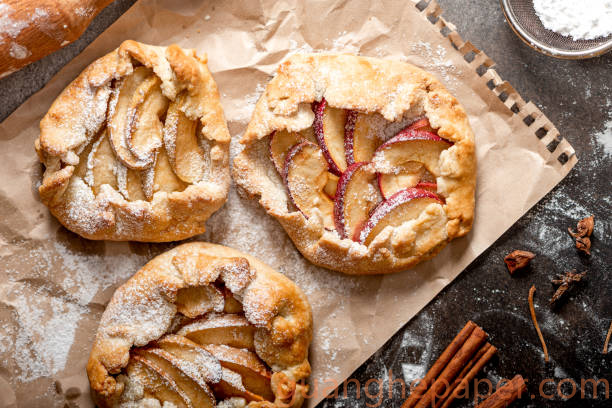
In professional kitchens and food production environments, Baking Paper is a practical material that helps simplify preparation, support food release, and reduce cleanup work. Bakeries, restaurants, catering businesses, and food manufacturers use paper liners for different products and equipment. Selecting a suitable paper requires consideration of the base material, surface treatment, product format, and operating conditions rather than relying on appearance alone.
The base paper determines many of the material's handling characteristics. Thickness uniformity, fiber structure, surface smoothness, and mechanical strength can influence flexibility and resistance to tearing. A consistent paper surface also supports reliable feeding through converting equipment. For businesses that prepare large quantities of baked goods, these characteristics help maintain an efficient workflow and reduce interruptions caused by damaged or difficult-to-handle paper.
Surface treatment can improve performance in baking applications. Silicone-coated paper is commonly selected for its non-stick properties, which help baked goods separate from the liner after baking. Depending on the food and process, this may reduce the need for additional grease and make cleaning trays more convenient. Coating uniformity is important because variations across the surface can affect release behavior. Buyers should confirm that the coating is suitable for their intended use and operating conditions.
Paper formats can be adapted to different preparation methods. Rolls are useful when operators need to cut liners to fit trays or equipment of varying sizes. Pre-cut sheets offer convenience where standardized dimensions help streamline repetitive tasks. Restaurants and bakeries may prioritize easy handling, while food manufacturers may focus on compatibility with production equipment and efficient material consumption. Roll width, roll length, sheet dimensions, color, and packaging are all relevant selection factors.
Manufacturing technology contributes to consistency from one product batch to another. Typical processes include base paper inspection, coating application, drying, rewinding, slitting, and cutting. Stable machine settings help maintain material tension and reduce wrinkles, while precise cutting supports uniform dimensions. Inspection during and after production can identify visible defects, uneven edges, or packaging problems before shipment. Consistent processing is especially important for customers who require regular deliveries.
The intended application should guide product selection. Different baked goods, tray surfaces, and preparation methods can create different requirements. Buyers should consider the food type, equipment design, contact conditions, and temperature range before confirming an order. A product that works well for cookies or pastries may not automatically be appropriate for every other baking process. Reviewing samples and technical information helps establish whether the material suits the actual working environment.
Food-contact safety and compliance are equally important. Businesses should verify that the paper and its coating meet the requirements applicable to the intended use and destination market. Relevant declarations, test reports, and technical specifications should be reviewed for the specific product. Temperature limits and other operating conditions should be confirmed with the supplier rather than inferred from general descriptions. Proper storage also helps protect paper from moisture, dust, and damage before use.
Packaging can affect product condition and convenience. Rolls should remain securely wound, while pre-cut sheets should be packed to prevent folding, contamination, or deformation during transportation. Clear labels help warehouse teams identify product sizes and formats quickly. For international procurement, buyers may also need to confirm carton dimensions, packaging quantities, shipping schedules, and labeling arrangements. These details can improve stock control and reduce handling difficulties after delivery.
Sustainability and material efficiency are increasingly relevant in purchasing decisions. Selecting suitable roll widths and sheet dimensions can help reduce offcuts, while careful storage and handling can prevent unnecessary waste. Buyers may also ask about the composition of the base paper and available environmental documentation. Any environmental or recyclability claims should be assessed according to the actual product structure and local waste-management conditions.
For commercial buyers, choosing Baking Paper involves balancing performance, ease of use, material consistency, and supply reliability. Evaluating the complete product rather than a single feature helps businesses identify a practical solution for their workflow. Zhejiang Guanghe New Materials Co., Ltd. offers food paper products for baking and packaging applications. Explore the available options at https://www.guanghepaper.com/product/ to find formats suited to your business requirements.

