


How to Use Competitor Content Gaps to Discover Ecommerce SEO Opportunities
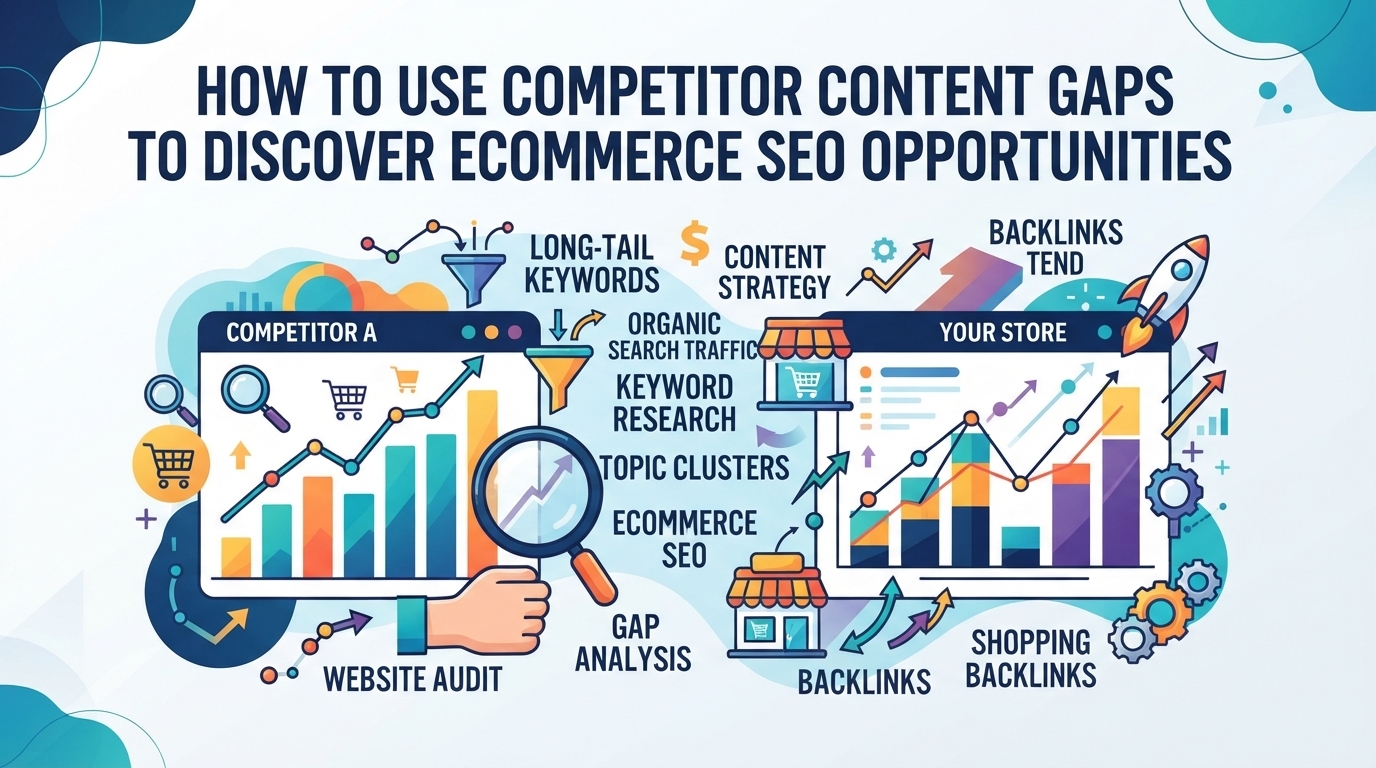
In the competitive world of ecommerce, ranking higher in search engines requires more than simply publishing a large amount of content. Your website needs to answer the questions customers are searching for, target relevant keywords, and provide useful information throughout the buying journey.
One of the most effective ways to discover new SEO opportunities is through competitor content gap analysis. By studying what your competitors rank for that your website does not, you can uncover valuable topics, keywords, product opportunities, and content ideas.
A well-planned ecommerce seo strategy can use these content gaps to attract additional organic traffic, reach new customers, and improve overall search visibility.
What Is a Competitor Content Gap?
A competitor content gap occurs when another ecommerce website has useful content or rankings for a search query that your website does not currently target.
For example, imagine you sell running shoes. A competitor may rank for searches such as:
-
Best running shoes for beginners
-
Running shoes for flat feet
-
Best shoes for long-distance running
-
How to choose running shoes
-
Running shoes for rainy weather
If your website only has product pages and a general running-shoes category page, these topics represent potential content gaps.
Finding and filling these gaps allows you to create content that targets searches your competitors are already benefiting from.
Why Competitor Content Gaps Matter for Ecommerce SEO
Competitor analysis can reveal opportunities that may not appear during traditional keyword research.
Your competitors have already invested time in creating content and ranking for specific search terms. By analysing their pages, you can identify patterns and discover topics relevant to your own customers.
Competitor content gap analysis can help you:
-
Discover new keyword opportunities
-
Find topics your audience is searching for
-
Identify missing category content
-
Improve product descriptions
-
Create useful blog content
-
Strengthen internal linking
-
Find long-tail keywords
-
Identify informational search intent
-
Improve topical authority
-
Discover opportunities for featured snippets
Rather than copying competitors, the goal is to understand what they are doing successfully and create something more useful and comprehensive.
Identify Your Main Ecommerce Competitors
Start by creating a list of websites that compete with your business in organic search.
Your SEO competitors are not always the same as your direct business competitors. A website may sell similar products but have very little organic visibility, while another website may compete with you for hundreds of valuable keywords.
Search Google for your most important product and category keywords and record websites that frequently appear in the results.
For example, if you sell skincare products, you might search for:
-
Best moisturiser for dry skin
-
Vitamin C serum
-
Face cleanser for sensitive skin
-
Best skincare products
-
Skincare routine for beginners
Look for websites that consistently rank for these searches.
Compare Your Keyword Rankings With Competitors
Once you have identified your competitors, compare their keyword rankings with your own.
SEO platforms can help you identify keywords where:
-
Your competitor ranks in the top 10
-
Your website does not rank
-
Your competitor ranks higher than your website
-
Your website ranks on page two or three
-
Multiple competitors rank for the same topic
The most valuable opportunities are often keywords where several competitors rank but your website has no meaningful visibility.
These keywords indicate that Google already considers the topic relevant within your industry.
Look for Missing Topics
Do not focus only on individual keywords. Look for broader topics that your website has not covered.
For example, an ecommerce furniture store might discover that competitors have content covering:
-
How to choose a sofa
-
Sofa sizes
-
Best sofa materials
-
Sofa cleaning guides
-
Sofa styles for small rooms
-
How to arrange furniture in a living room
Instead of creating dozens of disconnected articles, you could build a comprehensive content cluster around sofas.
This approach can support a stronger ecommerce seo strategy because it connects informational content with relevant category and product pages.
Analyse Search Intent
Finding a keyword is not enough. You also need to understand why someone is searching for it.
Search intent generally falls into several categories.
Informational Intent
The user wants information.
Examples:
-
How to clean leather shoes
-
How does a coffee machine work?
-
What size mattress do I need?
These searches are often ideal for blog posts, guides, tutorials, and FAQs.
Commercial Investigation
The user is researching products before purchasing.
Examples:
-
Best laptops for students
-
Running shoes vs walking shoes
-
Best wireless headphones under £100
Comparison guides and buying guides can target these searches.
Transactional Intent
The user is ready to purchase.
Examples:
-
Buy black leather boots
-
Women's running shoes
-
Samsung phone 256GB
These searches should generally be targeted with product and category pages.
Understanding intent helps you create the right type of content instead of simply inserting keywords into existing pages.
Find Competitor Pages With Strong Organic Traffic
Look for competitor pages that appear to attract significant organic traffic.
These pages can reveal valuable content opportunities.
For example, suppose a competitor has an article titled "How to Choose the Right Office Chair" that ranks for hundreds of related searches.
You could analyse:
-
Main keyword
-
Related keywords
-
Questions answered
-
Page structure
-
Headings
-
Internal links
-
Products mentioned
-
Images and visual content
-
FAQs
-
Calls to action
You should not copy the competitor's content. Instead, identify what information users need and create a better, more useful resource.
Identify Long-Tail Keyword Gaps
Long-tail keywords can be especially valuable for ecommerce websites because they often have more specific search intent.
For example, instead of targeting only:
"running shoes"
you might discover opportunities such as:
-
Best running shoes for beginners
-
Best running shoes for flat feet
-
Lightweight running shoes for women
-
Waterproof running shoes for winter
-
Best running shoes for marathon training
Long-tail keywords may have lower individual search volumes, but they can attract highly relevant visitors.
A large collection of relevant long-tail rankings can generate substantial organic traffic over time.
Analyse Competitor Category Pages
Content gaps are not limited to blog posts.
Your competitors may have category pages targeting valuable searches that your website does not have.
For example, an online clothing store may have categories such as:
-
Women's summer dresses
-
Cotton dresses
-
Maxi dresses
-
Wedding guest dresses
-
Petite dresses
-
Plus-size dresses
If your store has only a broad "Women's Dresses" category, these additional categories could represent important SEO opportunities.
Creating useful category pages can help search engines understand the products you offer while giving customers a better way to navigate your website.
Improve Product Page Content
Competitor analysis can also reveal gaps in product-page content.
Compare your product pages with competitors and look for missing information such as:
-
Detailed product descriptions
-
Specifications
-
Size information
-
Materials
-
Usage instructions
-
Benefits
-
FAQs
-
Customer reviews
-
Delivery information
-
Returns information
A stronger product page can potentially improve both user experience and organic search visibility.
If your competitors provide significantly more useful information, this is an opportunity to make your product pages more comprehensive.
Use Competitor FAQs to Discover New Keywords
Frequently asked questions are another excellent source of content ideas.
Look at the questions competitors answer on product pages, category pages, and blog posts.
For example, an ecommerce store selling coffee machines might discover questions such as:
-
How often should I clean a coffee machine?
-
What coffee machine is best for beginners?
-
Can you use ground coffee in this machine?
-
How long does a coffee machine last?
-
What is the difference between espresso machines and pod machines?
These questions can become FAQ sections or dedicated articles.
Answering relevant questions can also help your website address informational searches earlier in the customer's buying journey.
Create Better Content Than Your Competitors
The purpose of content gap analysis is not to produce a copy of your competitors' pages.
Instead, aim to create content that provides greater value.
You can improve upon competing content by adding:
-
More comprehensive explanations
-
Original examples
-
Better product comparisons
-
Helpful images
-
Tables
-
Expert insights
-
FAQs
-
Updated information
-
Clearer formatting
-
Stronger internal links
-
Relevant product recommendations
The objective should be to create the most useful resource for the searcher's specific question.
Connect Informational Content With Product Pages
One of the biggest opportunities for ecommerce websites is connecting informational content with commercial pages.
For example, a skincare website could publish an article titled:
"How to Build a Skincare Routine for Sensitive Skin"
The article could naturally link to:
-
Sensitive-skin cleansers
-
Moisturisers
-
Serums
-
Sunscreens
-
Relevant product categories
This creates a logical journey from information to product discovery.
It can also help search engines understand the relationship between your content and ecommerce pages.
Prioritise Your Content Gaps
You may discover hundreds or even thousands of potential keywords. Do not create content for everything immediately.
Prioritise opportunities based on factors such as:
|
Factor |
Why It Matters |
|
Search intent |
Determines whether the keyword matches your business |
|
Search volume |
Indicates potential demand |
|
Competition |
Helps estimate ranking difficulty |
|
Business value |
Shows potential commercial impact |
|
Relevance |
Ensures the topic matches your products |
|
Existing rankings |
Identifies pages that can be improved |
|
Conversion potential |
Estimates potential sales value |
A keyword with moderate search volume and strong purchase intent may be more valuable than a high-volume keyword with little commercial relevance.
How Shopify Stores Can Use Content Gap Analysis
Shopify stores can benefit significantly from competitor content analysis.
A Shopify SEO campaign can examine competitor:
-
Product pages
-
Collection pages
-
Blog posts
-
Buying guides
-
FAQs
-
Comparison pages
-
Internal linking structures
-
Metadata
-
Category structures
This can reveal opportunities for improving both technical SEO and content.
Businesses that need help implementing these improvements may also consider professional Shopify seo services to optimise their store structure, content, product pages, collections, and organic search visibility.
Common Competitor Content Gap Mistakes
Copying Competitor Content
Never simply rewrite a competitor's article. Use competitor research to identify opportunities, then create original and more useful content.
Targeting Every Keyword
Not every keyword is relevant to your business. Focus on searches that align with your products, audience, and commercial objectives.
Ignoring Search Intent
A product page may not rank well for an informational keyword. Create the type of page that best satisfies the searcher's intent.
Focusing Only on Search Volume
High-volume keywords are not automatically the best opportunities. Relevance and commercial value are equally important.
Forgetting Existing Pages
Sometimes the best opportunity is improving an existing page rather than creating a new one.
Final Thoughts
Competitor content gap analysis is a powerful way to discover ecommerce SEO opportunities that might otherwise be overlooked. By identifying keywords, topics, questions, categories, and content formats that competitors successfully target, ecommerce businesses can develop a more focused and effective SEO plan.
The key is to use competitor research as a source of insight—not as a reason to copy. Combine competitor findings with search intent, keyword research, customer needs, and your own product expertise.
With a consistent ecommerce seo strategy, businesses can turn content gaps into new ranking opportunities, stronger topical authority, more qualified organic traffic, and ultimately more ecommerce conversions.

