


Reliable Guide Rail Components for Automation
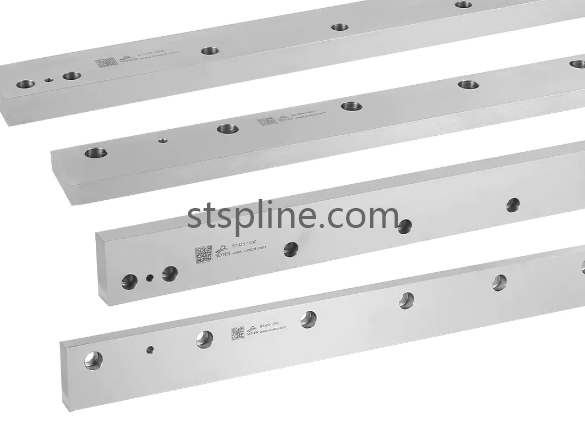
Rolling guidance systems are widely used in industrial equipment that requires smooth movement along a fixed path. V Track Rollers and Guide Rails work together to support and guide moving structures in applications such as automation machinery, sliding doors, conveyor systems, material handling equipment, and industrial positioning mechanisms. The V-shaped contact between the roller and its matching track helps maintain directional guidance while supporting the movement of connected assemblies. Reliable operation depends on roller geometry, material selection, machining quality, installation alignment, and the load conditions of the complete system.
The V-groove profile is a defining feature of this type of rolling mechanism. Its angled contact surfaces engage with a compatible V-shaped track, helping guide the roller along the intended travel path. The geometry needs to match between the roller and rail to avoid unstable contact or concentrated loading. Important design considerations include groove angle, roller diameter, bearing arrangement, rail profile, and mounting dimensions. Compatibility between these features helps maintain consistent rolling behavior throughout the operating range.
Material selection affects load capacity, wear resistance, and environmental suitability. Carbon steel is commonly used for industrial rollers and rails because of its mechanical strength and machinability. Alloy steel may be selected for applications involving higher loads or demanding operating cycles. Depending on the intended use, heat treatment or surface hardening can improve resistance to repeated rolling contact. Corrosion protection may also be considered when equipment operates in humid, dusty, or exposed environments. The final material and surface treatment should reflect actual working conditions.
Manufacturing accuracy is important for achieving consistent contact between the roller and guide rail. Roller production may involve turning, groove machining, grinding, bearing assembly, and dimensional inspection. Rail manufacturing may include profile forming, milling, drilling, straightness correction, and surface finishing. The accuracy of the V-groove and rail profile influences how the components engage. Surface defects, dimensional variation, or uneven finishing can contribute to vibration, noise, localized wear, and inconsistent movement.
Bearing selection is another factor in roller performance. The bearing supports rotational movement and transfers loads from the moving structure to the track. Its configuration should be selected according to radial load, axial load, operating speed, environmental exposure, and expected duty cycle. Sealed bearing arrangements may be useful in applications where dust or other contaminants are present. Proper lubrication and suitable bearing protection help reduce friction and support stable operation during repeated movement.
These rolling guidance components serve a variety of industrial applications. Automated production equipment may use V-track systems to guide sliding assemblies and positioning units. Material handling machinery can use rollers and rails to support movement between workstations. Industrial doors and sliding structures may benefit from guided rolling mechanisms that maintain a defined path. Conveyor-related equipment and mechanical transfer systems can also use these components where controlled travel and installation flexibility are required. Each application has different demands for load distribution, movement frequency, travel distance, and operating environment.
Installation alignment directly affects the contact condition between roller and rail. The track should be mounted on a stable and accurately prepared support structure. Parallelism, mounting-hole positioning, fastening stability, and track straightness should be checked during assembly. If the rail is misaligned, the roller may experience uneven loading or increased resistance. For systems using multiple rail sections, joint alignment is important to avoid abrupt changes in rolling contact. Proper installation also helps reduce unnecessary stress on the bearing and supporting structure.
Maintenance procedures should reflect the operating environment and equipment usage. Regular inspection may include checking roller rotation, bearing condition, rail surface wear, fasteners, lubrication, and contamination. Dust, metal particles, and moisture can affect rolling surfaces and bearing performance, so suitable protective covers or cleaning procedures may be necessary. Replacing worn components before excessive damage develops can help maintain consistent guidance and reduce unexpected equipment interruptions.
When selecting V Track Rollers and Guide Rails, industrial buyers should evaluate groove and rail compatibility, bearing configuration, material options, machining accuracy, load requirements, and customization support. SOTER provides industrial transmission and mechanical motion components for different equipment applications. Explore its product range at https://www.stspline.com/product/straight-teeth-rack/ to discuss component requirements and suitable configurations for your machinery.

