


Industrial Forged Steel Ball Valve Design and Selection
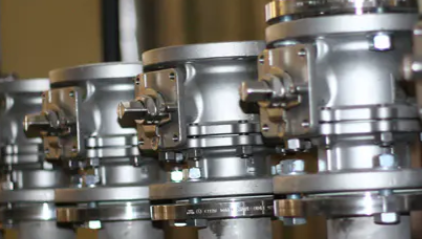
Industrial pipelines often require isolation valves that can withstand demanding operating conditions while providing controlled opening and closing. A Forged Steel Trunnion Mounted Ball Valve combines a forged steel body with a ball supported by a trunnion structure. This design is commonly considered for applications involving substantial pressure loads, larger pipeline systems, or frequent operational requirements. Its performance depends on the relationship between material properties, mechanical structure, sealing technology, and manufacturing quality.
Forging is a metal-forming process in which steel is shaped through compressive force. Compared with some other manufacturing methods, forging can help create a dense material structure when the process is properly controlled. This makes forged components useful in valve designs where mechanical strength and material integrity are important considerations. However, the benefits of forging depend on the steel grade, forging procedure, heat treatment, component geometry, and inspection process. Buyers should evaluate the complete manufacturing specification rather than relying on the term forged alone.
Material selection begins with the intended pipeline service. Forged carbon steel is commonly considered for many industrial applications, while stainless steel may be selected where corrosion resistance is a priority. Alloy steel options can be evaluated for particular temperature or mechanical requirements. The selected material must be compatible with the transported medium and operating environment. Engineers should consider pressure, temperature, corrosion potential, and any special process conditions before confirming the material combination.
The trunnion-mounted ball structure is designed to support the ball mechanically. The upper and lower trunnion components help maintain the ball's position and manage the forces generated by pipeline pressure. This differs from a floating ball design, in which the ball moves slightly against the downstream seat to establish sealing contact. By providing additional support, the trunnion structure can help reduce seat loading under certain conditions and make the design suitable for a wider range of larger or higher-pressure applications.
The body and closure arrangement must provide a secure pressure boundary while allowing access to internal components during manufacturing and maintenance. Different product designs may use different body construction methods. The connection between body sections, the stem arrangement, and internal clearances all influence the finished assembly. Precision machining is necessary to establish suitable dimensions and contact surfaces, while assembly procedures help ensure that the ball, seats, and stem are correctly positioned.
Seat technology is an important part of the valve's functional design. Soft seats are used in many applications where polymer materials can provide suitable sealing characteristics. Metal seats may be considered for services involving elevated temperatures, abrasive particles, or other demanding conditions. The selection should reflect the medium, pressure, temperature, operating frequency, and required leakage performance. A seat configuration that works well in one service may not be suitable for another.
The stem connects the ball to the operating mechanism. Its design must transfer torque effectively while maintaining the required sealing arrangement. Depending on the application, the valve may be equipped with a manual lever, gearbox, pneumatic actuator, or electric actuator. Automated operation may be useful in facilities where valves are integrated into remote control systems. The actuator should be selected according to the required operating torque, control signals, power availability, and installation environment.
Manufacturing control extends beyond the forging process itself. Forged components may require heat treatment and machining before assembly. Critical surfaces must be checked to ensure that they meet the approved design requirements. The ball's surface finish, seat contact geometry, stem dimensions, and body sealing interfaces can all influence operating performance. A consistent production process helps reduce variation and supports repeatable product quality.
Inspection requirements should be agreed upon before production. Depending on the design and applicable standards, procedures may include material verification, dimensional inspection, visual examination, pressure testing, and functional testing. Project specifications may also require additional documentation or third-party inspection. Buyers should clarify the applicable standards and acceptance criteria to ensure that the inspection scope matches the intended application.
A Forged Steel Trunnion Mounted Ball Valve may be used in oil and gas pipelines, petrochemical facilities, power stations, and other industrial systems. These sectors can involve different combinations of pressure, temperature, fluid characteristics, and operating cycles. For this reason, valve selection should be based on actual process conditions rather than industry classification alone. Buyers should provide accurate pipeline information so that the manufacturer can assess the appropriate body material, pressure class, seat design, and operating arrangement.
For international projects, technical coordination is just as important as product manufacturing. Purchasers should confirm connection dimensions, material requirements, actuator arrangements, inspection procedures, marking, and packaging before placing an order. Customized designs should be reviewed through approved drawings and documented specifications. This approach helps reduce misunderstandings and supports better coordination between manufacturers, distributors, contractors, and end users.
Choosing a suitable valve requires a complete review of its structure and manufacturing requirements. Buyers should evaluate the forging quality, trunnion support arrangement, sealing system, operating method, and available inspection documentation together. With clearly defined service conditions and effective technical communication, forged steel valve solutions can be selected more accurately for demanding industrial pipeline applications. For industrial valve products and configuration information, visit https://www.ncevalve.com/product/

