


Why Payment Posting Accuracy Matters in Healthcare Revenue Management
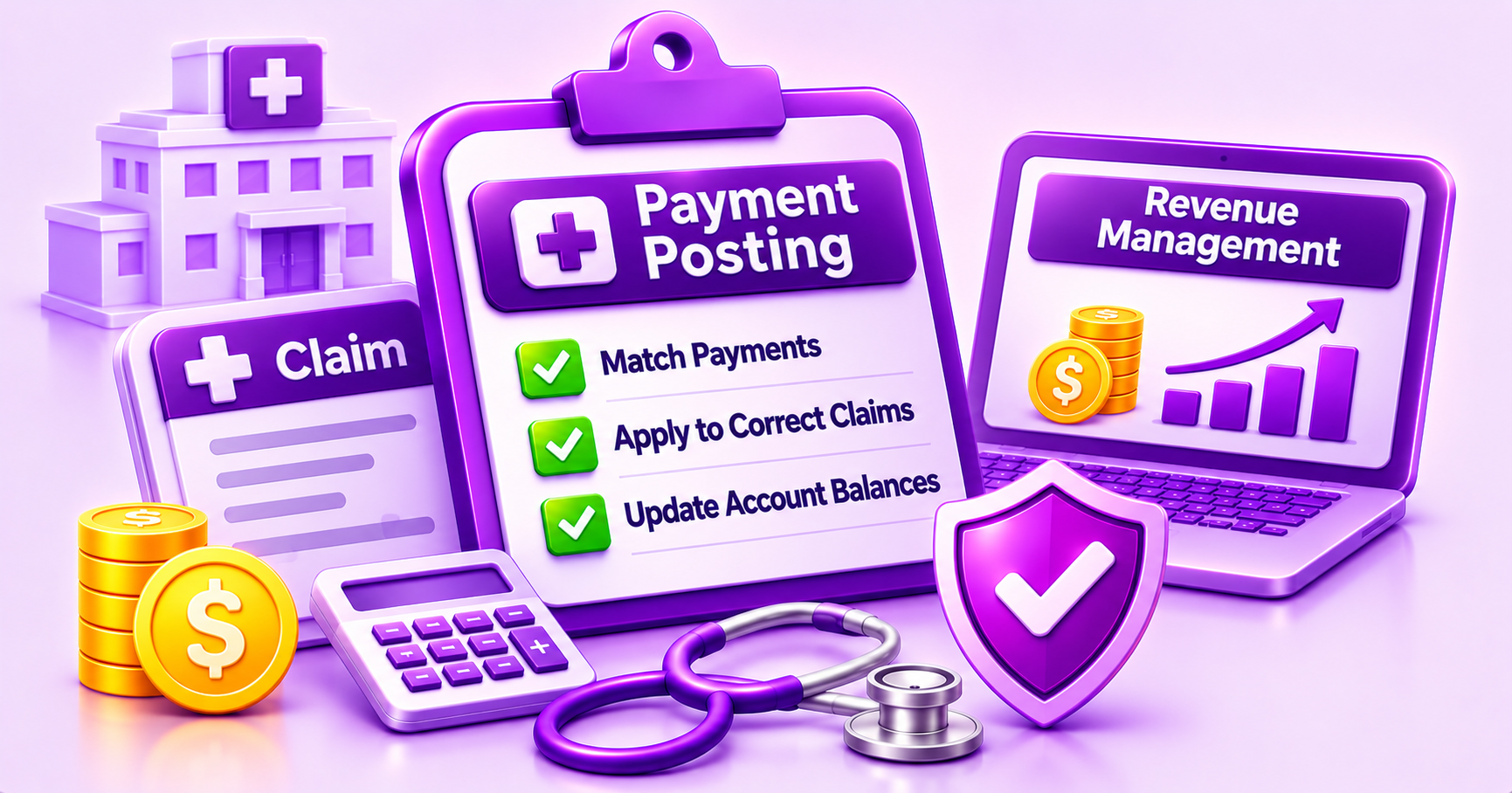
For a healthcare practice, why Payment Posting Accuracy Matters in Healthcare Revenue Management is not an abstract billing concern. It affects the handoffs between clinical work, patient information, payer rules, and the money ultimately collected. The useful question is where the process breaks and what evidence would show that a correction worked. Payment posting is the financial translation of adjudication A payer remittance explains paid amounts, contractual adjustments, patient responsibility, and denials. Posting these transactions accurately updates the account and drives the next workflow step. An incorrect posting can make a paid claim look outstanding or close an account that still needs follow-up. Reconcile deposits with remittances Match EFT deposits or checks to remittance records and ensure every payment batch balances. Investigate unapplied cash and unmatched remittances instead of forcing a batch to close. Electronic remittance advice can support automated posting, but exception review remains important when claim identifiers or amounts do not match. Read adjustment codes rather than guessing Contractual adjustments, deductibles, coinsurance, and denials are not interchangeable. Their correct classification determines whether the next step is patient billing, payer appeal, or no further collection. A miscellaneous adjustment may conceal a recoverable underpayment if staff use it to clear balances without investigating. Catch overpayments and duplicate postings Review negative balances, duplicate EFT entries, and claims with unusual reversals. Follow payer and legal requirements when resolving overpayments. Posting accuracy protects patients too: an overstated deductible or missed secondary payment can produce an incorrect statement. Use posting exceptions as management data Track unapplied cash, posting lag, reconciliation variances, and adjustment trends by payer. Investigate repeated ERA mapping failures. Accurate posting is the foundation for credible accounts receivable reports and collection metrics. A realistic practice scenario Consider a fictional practice that notices repeated exceptions related to read adjustment codes rather than guessing. Rather than submitting every account again, the team isolates affected claims, checks the source documents, and determines which step introduced the discrepancy. It then corrects the accounts using the payer’s applicable procedures and updates the workflow that produced the errors. This illustration is hypothetical, not a reported client outcome. Where outsourced billing support fits A medical billing partner can help monitor claim status, maintain exception queues, analyze rejection and payment patterns, and coordinate corrections with practice staff. Clinical decisions, documentation integrity, payer requirements, and provider oversight remain essential. VerifiMed offers outsourced medical billing, coding, denial management, A/R follow-up, credentialing, and revenue cycle management services.Practices that need additional operational capacity may work with a Medical Billing Company such as VerifiMed for claim follow-up, exception monitoring, and billing coordination while clinical and coverage decisions remain with the appropriate professionals. Use remittances to reconcile actual outcomes Payment posting is more than entering a deposit amount. The remittance identifies which claims and service lines were paid, denied, adjusted, or assigned to patient responsibility. Teams should match the electronic remittance advice to the associated payment and apply adjustments using appropriate reason codes and contract rules. An unmatched deposit or unexplained credit balance is an exception requiring investigation. Compare expected contractual reimbursement with posted allowed and paid amounts. Do not automatically classify every difference as an underpayment: deductibles, coinsurance, bundling, sequestration, and other valid adjustments may affect the result. Incorrect posting can make an account look settled when money remains due, or show an artificial balance that should have been adjusted. Reconcile at both the batch and account level. Confirm that remittance totals agree with deposits, investigate unapplied cash, and review unusual write-offs. A small sample of high-dollar claims can reveal whether adjustment codes are being mapped correctly. If the posting rule is wrong, correct the configuration and assess whether earlier accounts were affected. Practical review checklist Assign a clear owner to the workflow, document the evidence required to close an exception, and set a review cadence appropriate to the volume of affected claims. Separate problems that staff can correct immediately from those requiring payer clarification, clinical documentation, system configuration, or contractual interpretation. Retest the process after any change. Compare the same measures over a consistent period, and keep examples of resolved cases to support training and quality review. A final operational safeguard A policy is only effective when staff can see the next action on an actual account. Record the reason a claim or encounter is held, the supporting evidence, the date of the most recent payer response, and the person responsible for follow-up. This makes work transferable between shifts and helps managers distinguish a one-time exception from a systemic defect. Review closed items as well as open ones: a resolved claim can still reveal an upstream error worth preventing. If a proposed correction affects coding, clinical necessity, coverage, or contract interpretation, involve the appropriate qualified reviewer before changing the record or resubmitting. A remittance-reconciliation example A payer deposits one electronic payment covering several claims, but the posting system leaves part of the deposit unapplied. The team should reconcile the bank amount to the remittance and match each service line to its account. A missing claim identifier or incorrect adjustment mapping may explain the difference. Staff should not create a miscellaneous write-off merely to force the batch to balance. After resolving the transaction, they can check whether the same mapping problem affected earlier remittances. Good payment posting produces a trustworthy patient balance, an accurate accounts receivable report, and a clear record of what the payer actually decided. To make this review actionable, the practice should keep a small sample of affected transactions, identify the team responsible for each correction, and review whether the same error recurs after the workflow change. The purpose of measurement is to guide a specific improvement, not simply to produce another dashboard. Any correction that changes a clinical code or coverage determination should receive the appropriate professional review before submission. Final Words The central lesson of why payment posting accuracy matters in healthcare revenue management is that reimbursement performance depends on the details of the underlying workflow. Focus on the specific exceptions described above, verify changes against actual claim outcomes, and keep patient billing accurate throughout the process. FAQs 1. What should a practice know about payment posting is the financial translation of adjudication? A payer remittance explains paid amounts, contractual adjustments, patient responsibility, and denials. The best next step is to check actual account records and the relevant payer rules before changing the workflow. 2. What should a practice know about reconcile deposits with remittances? Match EFT deposits or checks to remittance records and ensure every payment batch balances. The best next step is to check actual account records and the relevant payer rules before changing the workflow. 3. What should a practice know about read adjustment codes rather than guessing? Contractual adjustments, deductibles, coinsurance, and denials are not interchangeable. The best next step is to check actual account records and the relevant payer rules before changing the workflow.

