


What Makes Pink Lab Grown Diamonds Pink
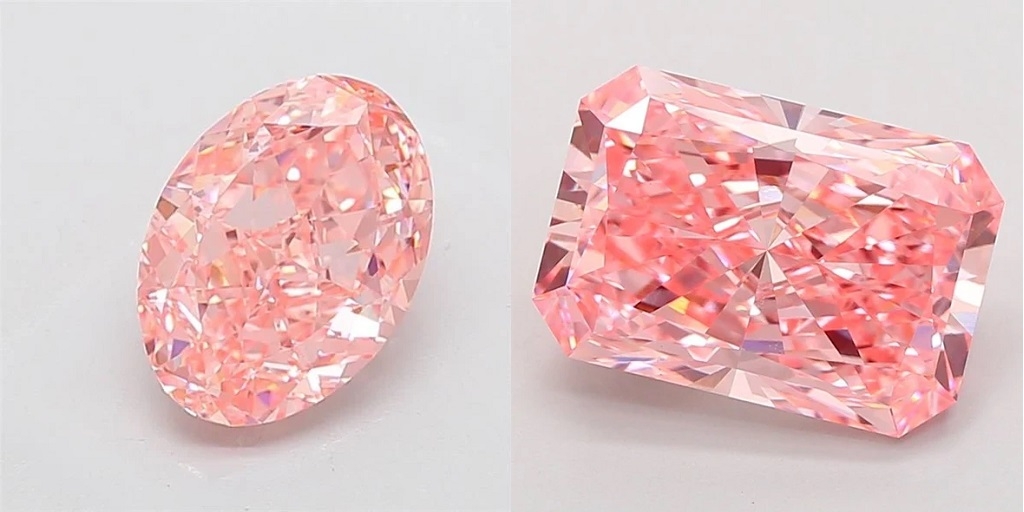
A grading report that says "treated" makes plenty of shoppers assume someone dyed or coated the stone. Listings for pink lab grown diamonds use that word because growers usually create the pink after the crystal forms, inside the diamond itself. The color doesn't wash off or sit on the surface. A few facts about growth methods, report wording, and heat tell buyers what they're paying for and how to keep the color intact.
Trace the Color in Pink Lab Grown Diamonds
Natural and lab pinks get their color from different causes. GIA research credits distortion in the crystal structure, not trace elements, for the color in 99.5% of natural pinks. Most pink lab grown diamonds owe their color to nitrogen vacancy centers, tiny defects that absorb yellow and orange light and let pink through. GIA traced the pink in one 3.02 carat HPHT stone to irradiation and annealing that formed those centers. Read any treatment comment on a report as a note on where the color came from, not a warning about quality.
Compare HPHT and CVD Pink Lab Grown Diamonds
HPHT and CVD growers reach the same pink by different routes. HPHT pink diamonds start in a press, and GIA measured about 1.6 parts per million of nitrogen in that 3.02 carat sample, the raw material for later treatment. CVD reactors build pink lab grown diamonds layer by layer from carbon rich gas, and many then go through HPHT processing, irradiation, and low temperature annealing. GIA documented that full sequence on a 3.00 carat Fancy Vivid orangy pink, a common hue among CVD pink diamonds. Check the growth method and any color modifier on the report before comparing prices.
Confirm the Pink Sits Inside the Stone
Irradiation and annealing rearrange atoms inside the diamond, so the pink runs through the entire crystal. A coating works differently: it lays a thin colored film on the surface that acid or wear can strip away, and grading labs generally don't issue certificates for coated stones. Treated pinks also glow orange red under UV, and GIA recorded one HPHT pink that changed color temporarily under strong short wave light. Confirm the report lists lab grown origin and a treatment comment, with no mention of coating.
Judge Intensity Before Carat Weight
Intensity moves the price of fancy pink lab diamonds faster than carat weight does. IGI reports grade lab created pink diamonds in steps such as Fancy, Fancy Intense, and Fancy Vivid, and modifiers like purplish or orangy change the price too. One retailer lists an IGI certified 1.04 carat Fancy Pink VS1 round at $751, while natural Fancy Intense pinks above one carat trade around $200,000 to $400,000 per carat. That gap puts top grades within reach for buyers shopping for affordable pink diamonds. Pick the intensity grade first, then choose the largest carat weight that still fits.
Match the Report Number to the Listing
A grading report protects buyers only when it matches the stone in the box. IGI starts its lab grown report numbers with an LG prefix and often laser inscribes that number on the girdle, the stone's thin outer edge. The report also states lab grown origin, which gives shoppers looking for ethical pink diamonds a documented answer on sourcing. Retailers such as Mikado Diamonds, a Jewelers Board of Trade member, offer free virtual appointments to review a stone before checkout. Enter the report number on the lab's website and confirm the carat, color, and measurements match the listing.
Protect Pink Lab Grown Diamonds During Ring Repairs
Heat can change treated color permanently. The annealing step that sets the pink runs around 800 to 900°C, and irradiated diamonds stay sensitive to temperatures in that range. A jeweler retipping a platinum prong works near metal that melts at 1,768°C. Pink diamond engagement rings face this risk during resizing and prong repairs, and the International Gem Society advises jewelers to remove mounted colored diamonds before repair work for this reason. Ask the jeweler to unset the center stone before any torch work and write that request on the repair ticket.
Pink lab grown diamonds carry their color inside the crystal, where treatment builds nitrogen vacancy centers after HPHT or CVD growth. A matched report and a stone unset before torch work keep that pink intact.
For more information about Lab Grown Cushion Cut Diamond Ring and Oval Moissanite Engagement Rings Please visit: Mikado Diamonds.

