


Resistance Seam Welder: Advanced Welding Solutions by Heron Welder
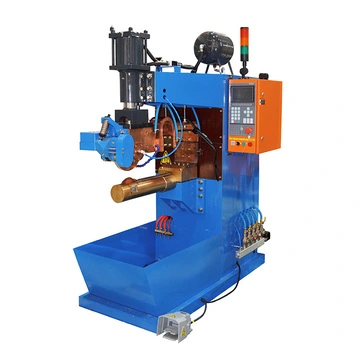
A resistance seam welder is an advanced industrial welding machine designed to join metal sheets and components through continuous or overlapping welds. It uses electrical resistance to generate heat at the joining surface while applying controlled pressure through rotating wheel electrodes. This process creates strong, consistent, and reliable metal joints suitable for demanding manufacturing applications.
In modern industries, manufacturers require welding equipment that delivers excellent performance, production efficiency, and dependable results. A resistance seam welder meets these requirements by providing a practical solution for producing continuous metal seams. Heron Welder offers advanced resistance welding solutions designed to support industrial production and improve metal-joining operations.
How Does a Resistance Seam Welder Work?
The working principle of a resistance seam welder is based on electrical resistance and mechanical pressure. During operation, two metal workpieces are positioned between rotating electrode wheels. These wheels apply pressure while electrical current passes through the contact area.
The electrical resistance generates localized heat, allowing the metal surfaces to fuse together. As the electrode wheels rotate and move along the workpieces, they produce a continuous or overlapping welding seam.
Depending on the application, manufacturers can adjust welding current, speed, pressure, and pulse timing to achieve the desired results. This flexibility makes resistance seam welding suitable for different industrial components and production requirements.
Important Features of a Resistance Seam Welder
A modern resistance seam welder combines several important features to deliver reliable industrial performance.
1. Rotating Wheel Electrodes: The rotating electrode system allows manufacturers to produce continuous welds along metal surfaces, making it suitable for components that require sealed joints.
2. Controlled Welding Current: Accurate current control supports stable heat generation and consistent welding quality throughout the production process.
3. Adjustable Welding Pressure: Controlled electrode pressure helps maintain proper contact between metal surfaces and contributes to reliable joint formation.
4. Automated Operation: Resistance seam welding equipment can be integrated into automated manufacturing systems, supporting repeatable production and improved operational efficiency.
5. Flexible Applications: Different machine configurations can accommodate longitudinal and circumferential welding requirements, depending on the shape and design of the workpiece.
Major Applications of Resistance Seam Welder Technology
Resistance seam welding is widely used in industries where strong, continuous, and dependable metal joints are essential.
Automotive Manufacturing
The automotive industry uses resistance seam welding for producing fuel tanks, shock absorber components, exhaust systems, and other metal assemblies. These components often require reliable seams that can withstand pressure, vibration, and demanding operating conditions.
Heron Welder provides resistance welding equipment designed to support automotive manufacturing requirements and consistent production quality.
Home Appliance Manufacturing
Manufacturers of washing machines, refrigerators, water heaters, and other household appliances use seam welding to join metal housings, containers, and tanks. The process helps create clean and durable joints while supporting efficient manufacturing operations.
Metal Container Production
Resistance seam welders are particularly valuable in producing steel drums, metal barrels, cans, and storage containers. Their ability to create continuous joints makes them suitable for applications requiring gas-tight or liquid-tight seams.
Electrical Equipment Manufacturing
Electrical equipment manufacturers use resistance seam welding for metal enclosures, housings, and other components that require consistent joining quality. The process supports accurate manufacturing and dependable assembly performance.
Exhaust and Industrial Components
Exhaust systems, industrial pipes, and tubular metal products can benefit from resistance seam welding. The rotating electrode system supports continuous joining along the required connection, helping manufacturers achieve consistent production results.
Advantages of Using a Resistance Seam Welder
Choosing a resistance seam welder offers several important advantages for modern manufacturing businesses.
1. Strong and Reliable Welded Joints
One of the primary advantages is its ability to produce durable metal connections. The combination of controlled electrical heat and mechanical pressure creates dependable joints suitable for various industrial applications.
2. Improved Production Efficiency
Resistance seam welding supports continuous production, allowing manufacturers to join metal components efficiently. Its automated operation capabilities also help improve production speed and workflow consistency.
3. Consistent Welding Quality
Controlled welding parameters help maintain uniform results across repeated production cycles. This consistency is especially important for manufacturers producing large quantities of identical metal components.
4. Clean Welding Process
Resistance seam welding does not require filler materials or shielding gas for conventional applications. It also avoids the open welding arc associated with many other welding processes, supporting a clean and controlled production environment.
5. Excellent Sealing Performance
The process can produce continuous or overlapping welds that provide effective gas-tight and liquid-tight connections when correctly configured. This makes it valuable for fuel tanks, containers, radiators, and other sealed metal products.
6. Automation Compatibility
Modern seam welding equipment can be incorporated into automated production lines. This allows manufacturers to improve process repeatability, reduce manual handling, and maintain efficient manufacturing operations.
7. Versatile Industrial Applications
Resistance seam welding supports a broad range of metal products and manufacturing requirements. With suitable machine configurations and welding parameters, businesses can use the technology for different component shapes and production processes.
Why Choose Heron Welder for Resistance Seam Welding Solutions?
Heron Welder is an established manufacturer of industrial metal-joining equipment, with more than three decades of experience in resistance welding technology. The company provides different welding solutions, including spot welders, projection welders, seam welders, and butt welders.
Heron's seam welding solutions are developed to support industrial applications requiring reliable joining performance and production efficiency. Its equipment portfolio includes different configurations designed to accommodate manufacturing requirements.
Another important advantage is Heron's experience with different industrial sectors, including automotive manufacturing, home appliances, electrical equipment, and hardware production.
The company's focus on engineering, equipment development, and customized manufacturing solutions makes Heron Welder a valuable option for businesses looking to improve their metal-joining capabilities.
How to Select the Right Resistance Seam Welder
Selecting suitable welding equipment requires understanding the production requirements and characteristics of the materials being joined.
Manufacturers should consider the following factors:
-
Material Type: Identify whether the application involves stainless steel, low-carbon steel, galvanized steel, aluminum alloys, or other compatible materials.
-
Material Thickness: Check the welding machine's supported thickness range.
-
Production Requirements: Consider the required welding speed and daily production volume.
-
Seam Configuration: Determine whether longitudinal or circumferential welding is necessary.
-
Welding Parameters: Evaluate current, pressure, electrode speed, and control capabilities.
-
Automation Requirements: Consider whether the machine will operate independently or as part of an automated production line.
Carefully evaluating these factors helps businesses select equipment that matches their manufacturing objectives.
Benefits of Investing in Modern Resistance Seam Welding Technology
Investing in modern resistance seam welding technology can help manufacturers improve productivity and product quality. Consistent welding performance supports dependable manufacturing standards, while automation capabilities help streamline repetitive operations.
The technology also supports efficient material joining without requiring additional filler materials in conventional resistance seam welding applications. Its versatility makes it suitable for manufacturers working with different metal products and industrial components.
With the right equipment, businesses can establish more efficient production processes and maintain consistent manufacturing performance.
Final Thoughts
A resistance seam welder is an important solution for manufacturers seeking strong, continuous, and reliable metal joints. From automotive fuel tanks and exhaust components to household appliances and industrial containers, this technology supports a wide range of manufacturing applications.
Its major advantages include consistent weld quality, efficient production, excellent sealing capabilities, automation compatibility, and versatile industrial applications.
Heron Welder combines extensive resistance welding experience with advanced equipment solutions to support modern manufacturing requirements. For businesses looking to improve their welding processes and achieve dependable production results, Heron Welder offers industrial metal-joining solutions designed to meet diverse application needs.

