


What Buyers Should Consider When Selecting Automotive Spring Compressors
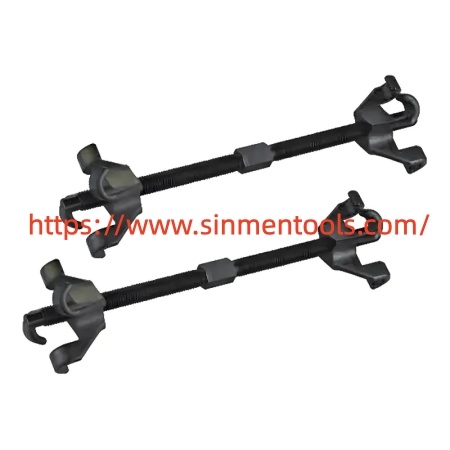
Automotive suspension maintenance involves components that must be handled with care, particularly when working with springs that store mechanical energy. During removal or installation, technicians need equipment that provides controlled engagement and a stable working arrangement. In this context, a Coil Spring Compressor serves as an important workshop tool, helping mechanics manage spring tension while carrying out suspension-related repair procedures. Its usefulness depends not only on the compression mechanism but also on material quality, structural design, operating convenience, and compatibility with different service requirements.
Material selection is an essential part of tool manufacturing because each component has a different role. The main body must maintain structural stability, while hooks or gripping elements need to establish dependable contact with the spring. Steel is commonly considered for these load-bearing components because of its mechanical strength and suitability for forging and machining processes. Manufacturers may evaluate carbon steel or alloy steel according to the intended structure, manufacturing method, and application environment. The objective is to create a tool whose components work together without unnecessary deformation or premature wear.
Surface treatment also influences the practical value of a workshop tool. Automotive repair environments can expose equipment to oil, moisture, dust, and repeated contact with other metal components. Appropriate finishing can help protect exposed surfaces and make routine cleaning easier. A smooth, consistent finish may also reduce the accumulation of workshop residue around moving or adjustable parts. Buyers should therefore consider both the underlying material and the quality of its finishing rather than judging durability from appearance alone.
Selecting suitable equipment begins with understanding the work that a repair facility regularly performs. Different suspension layouts and spring arrangements can require different gripping positions and tool configurations. A workshop servicing a broad range of vehicles may need equipment with adaptable contact points, while a facility focused on particular vehicle categories may prefer a design suited to its recurring maintenance tasks. The first purchasing consideration should be whether the tool can be positioned correctly on the springs encountered in daily work.
The arrangement of the gripping components deserves particular attention. Hooks should make secure contact without creating an unstable or awkward position. Their shape, opening, and relationship with the supporting structure can affect how easily technicians prepare the tool before compression begins. Buyers should also examine how the operating mechanism is adjusted, whether the components can be inspected conveniently, and whether the tool can be stored without damaging its working surfaces. Clear product documentation and accessible supplier support are useful considerations when comparing alternatives.
Mechanical design determines how the tool transfers operating force to the spring. A well-considered structure coordinates the gripping elements, threaded components, and supporting parts so that the compression process can be managed in a controlled manner. Depending on the design, the tool may use paired compressors, different hook arrangements, or additional securing features. These elements are not simply visual variations; they influence positioning, access, and the way the equipment fits into a particular suspension service procedure.
Manufacturing processes contribute to the consistency of these mechanical relationships. Forging can help form durable structural components, while machining supports the accurate production of contact surfaces and threaded sections. Heat treatment may be used where appropriate to establish the desired mechanical characteristics of selected parts. Assembly inspection is equally important because even well-made individual components must fit and move together correctly. Attention to these production stages helps manufacturers maintain repeatable product quality and identify potential issues before tools reach customers.
For technicians, usability is closely connected to preparation and control. A tool that is easy to position and adjust can make the initial stages of a repair more organized. Grip geometry, operating access, component visibility, and the arrangement of handles or driving points all influence the user's interaction with the equipment. A practical design should allow technicians to check engagement before proceeding, recognize whether the tool remains correctly positioned, and follow the manufacturer's operating instructions throughout the task.
Safety should remain central to the working experience. Suspension springs can release stored energy if they are handled incorrectly, so a compressor must be used only in accordance with its intended application and instructions. Technicians should inspect hooks, threads, and other working components before use, confirm secure engagement, and avoid improvised adjustments. A comfortable operating arrangement is valuable, but it cannot replace correct procedures, suitable equipment selection, or appropriate workshop precautions.
Appearance and product organization also contribute to a tool's professional value. A clean finish, recognizable component layout, and practical packaging can make equipment easier to identify and manage in a busy workshop. Surface colors and coatings may help distinguish product versions or provide a consistent visual identity across a tool range. Protective packaging is another consideration because it helps keep separate components together during transport and storage. For distributors, organized presentation can also support product identification and inventory management.
Taizhou Xinming Technology Co., Ltd. develops automotive repair tools with attention to manufacturing processes, product variety, and practical workshop applications. Its spring compressor range includes different structural arrangements, such as two-claw and four-claw designs, reflecting the varied positioning needs encountered in suspension maintenance. The company also provides OEM and ODM cooperation, allowing product discussions to address different market and customer requirements. Buyers evaluating spring compression equipment can consider material construction, gripping design, operating arrangement, and supplier manufacturing experience together when making purchasing decisions. Further information about the company's automotive tools and manufacturing capabilities is available at https://www.sinmentools.com/.

