


What Should Buyers Check Before Choosing Air Compressor Machine?
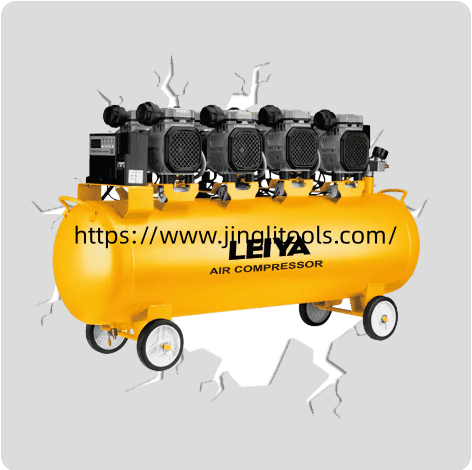
Air Compressor Machine selection is an important consideration for businesses that depend on compressed gas for manufacturing, workshop operations, equipment maintenance, and pneumatic applications. However, purchasing decisions should not be based only on equipment dimensions or quoted prices. Buyers need to examine airflow requirements, working pressure, storage capacity, energy consumption, and installation conditions. For distributors, wholesalers, and factory procurement teams, understanding these factors can make supplier discussions more productive and help identify configurations that match actual operating requirements.
Calculate the Required Flow Capacity
Flow capacity is one of the main specifications buyers should evaluate before placing an order. Different pneumatic tools and production processes consume different quantities of compressed gas. If the available supply does not match actual demand, connected equipment may experience interruptions during operation.
Purchasing teams should list the pneumatic devices that will operate within the facility and estimate their individual consumption. They should also consider whether several devices will work simultaneously.
Important questions include:
How many pneumatic devices will be connected?
What is the expected consumption of each device?
Will multiple machines operate at the same time?
Are there plans to expand production capacity?
Does the application require continuous or intermittent operation?
These details provide a practical basis for discussing equipment capacity with manufacturers. Buyers should also account for possible pressure drops and system losses when planning the required flow rate.
Compare Working Pressure and Storage Capacity
Working pressure is another important parameter because different applications require different pressure levels. Buyers should check the operating pressure specified by their pneumatic equipment and confirm that the proposed configuration can meet those requirements.
Storage capacity also deserves attention. A suitable tank can help manage variations in compressed gas demand and support connected equipment. However, tank size should be evaluated alongside flow capacity and consumption patterns rather than considered independently.
Before purchasing, buyers can compare the following specifications:
Rated working pressure
Maximum operating pressure
Tank capacity
Delivery rate
Motor specifications
Available control functions
It is also useful to ask whether the manufacturer offers different configurations for specific industrial requirements. Comparing technical parameters helps businesses select equipment according to their actual operating conditions instead of relying on general descriptions.
Consider the Installation Environment
Installation conditions can influence equipment selection and the overall arrangement of a compressed gas system.
For example, a small maintenance workshop may have limited floor space, while a manufacturing facility may need a designated equipment area with suitable ventilation and access for servicing.
Buyers should examine the available installation space, floor conditions, ventilation arrangements, and distance between the equipment and its points of use.
Noise is another factor worth considering, particularly when equipment operates near offices or workstations. Depending on the model and installation environment, additional sound management measures may be necessary.
Purchasers should also discuss electrical supply requirements, connection arrangements, and installation instructions with the manufacturer. Preparing these details before ordering can help reduce installation difficulties after delivery.
Examine Energy Consumption and Operating Expenses
Initial purchasing costs are only one part of equipment expenditure. Electricity consumption, routine maintenance, replacement components, and operating schedules can also influence the total cost of ownership.
Buyers should review the motor rating, operating efficiency information, control system, and expected workload. They can then compare different configurations according to their actual production requirements.
For facilities with changing gas demand, control arrangements that adjust operation according to consumption may be worth discussing with the supplier.
It is also useful to examine whether the system has potential leakage points. Poorly maintained connections can result in unnecessary gas loss and additional energy consumption.
When requesting quotations, procurement teams should ask for relevant technical information instead of comparing prices without considering equipment specifications. This approach makes commercial evaluations more meaningful.
Check Filtration and Moisture Control Requirements
Not every application requires the same compressed gas quality. Some industrial processes can operate with general-purpose compressed gas, while others may require additional filtration or moisture control.
Water vapor, oil particles, and dust can affect downstream equipment and production processes. Buyers should therefore identify the quality requirements of their applications before choosing a configuration.
Depending on the intended use, additional components may include:
Gas filters
Moisture separators
Drying equipment
Pressure regulators
Drainage arrangements
These accessories should be selected according to the actual application and relevant technical requirements.
For businesses supplying equipment to different industries, understanding filtration requirements can also help when preparing product recommendations for customers.
Evaluate Maintenance Access and Component Supply
Maintenance arrangements should be considered before an order is confirmed. Buyers need to know how the equipment is inspected, which components require periodic servicing, and whether replacement parts can be obtained when needed.
Ask the manufacturer about maintenance schedules, filter replacement, lubrication instructions, drainage procedures, and technical documentation.
Accessibility is also important. Equipment that allows convenient access to service points can make routine inspection easier for maintenance personnel.
For distributors and wholesalers, spare component availability is particularly relevant because it may affect inventory planning and after-sales arrangements.
Clear communication about warranty coverage and technical support can further help purchasing teams understand the service arrangements associated with an order.
Review Manufacturing and Quality Inspection Procedures
Choosing a manufacturing partner involves evaluating more than the product catalogue. Buyers should understand the supplier's production arrangements, assembly procedures, material inspection, and finished-product checks.
For bulk orders, it is useful to request specification sheets, product photographs, and available sample information. These materials can help confirm whether the proposed configuration matches purchasing requirements.
Overseas buyers should also discuss packaging, labeling, production schedules, shipping arrangements, and export documentation before confirming an order.
A structured supplier evaluation helps procurement teams compare manufacturing capabilities and clarify expectations before production begins.As an industrial equipment manufacturer, jinglitools provides product information for businesses evaluating different workshop and manufacturing requirements. Preparing the intended application, required specifications, and estimated order quantity can help both parties communicate more clearly. For distributors, wholesalers, and factory purchasers planning their next sourcing project, visit https://www.jinglitools.com/product/ to browse the company's product range and contact jinglitools for further information about specifications, manufacturing arrangements, and purchasing requirements.

