


Understanding Forged Steel Valve Manufacturing
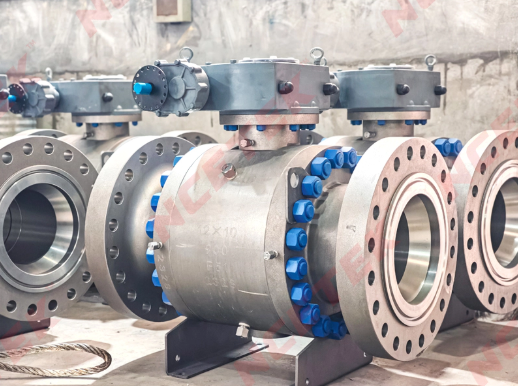
Industrial pipeline systems operating under demanding pressure and temperature conditions require valve equipment with carefully engineered pressure-containing components. A Forged Steel Trunnion Mounted Ball Valve combines a mechanically supported ball structure with a forged steel body, providing a configuration that can be considered for selected high-pressure pipeline and process applications. Its suitability depends on the material grade, pressure design, sealing arrangement, manufacturing quality, and actual operating environment.
The trunnion-mounted structure is designed to support the ball through upper and lower mechanical support points. Unlike a floating ball arrangement, where the ball moves under fluid pressure to establish contact with the downstream seat, a trunnion-mounted ball is retained in a supported position. This arrangement changes how mechanical loads are transferred through the valve and allows the seating system to perform its sealing function according to the specific design.
During normal operation, the ball rotates to control the pipeline passage. When the bore aligns with the pipeline, fluid can pass through the valve. A quarter-turn movement brings the solid surface of the ball into the flow path, interrupting fluid movement. This operating principle allows relatively straightforward manual or automated operation, although the required operating torque depends on the valve dimensions, pressure conditions, seat design, and mechanical configuration.
Forged steel construction is an important feature of this product category. Forging involves shaping heated metal under compressive forces to produce the required component geometry. The process can provide a controlled grain flow and mechanical properties suitable for certain pressure-containing applications. Compared with casting, forging uses a different manufacturing approach and may be selected when the design emphasizes material integrity and specific mechanical characteristics.
The appropriate forging process depends on the body design and production requirements. Forged components may be produced through different methods, including open-die or closed-die forging, depending on the geometry and manufacturing arrangement. After forging, the material may undergo heat treatment, machining, and inspection according to the specified material grade and product requirements.
Material selection must begin with the operating conditions. Carbon steel may be appropriate for many general industrial applications where the pressure, temperature, and medium are compatible with the selected grade. Alloy steel may be considered for particular mechanical or temperature requirements, while stainless steel may be selected where corrosion resistance is an important consideration. Material suitability should be verified against the applicable design and purchasing specifications.
Heat treatment can influence the final mechanical properties of forged components. Depending on the material specification, processes such as normalizing, quenching, and tempering may be required. The exact treatment route should follow the applicable material requirements rather than a general manufacturing preference. Mechanical testing and material documentation can help confirm that the processed material meets the specified requirements.
Machining accuracy is equally important. The valve body must provide accurate interfaces for the trunnion supports, ball, seats, stem, and pipeline connections. The ball requires appropriate spherical geometry and surface finishing to establish consistent contact with the seating components. Seat pockets and internal passages must also be machined according to the approved design. Manufacturing deviations may influence assembly alignment, operating torque, and sealing performance.
The sealing system determines how the valve controls leakage. Depending on the product configuration, trunnion-mounted designs may use pressure-assisted seats, spring-loaded arrangements, or other engineered structures. Soft-seated configurations may be suitable for applications where their temperature and chemical compatibility limits are satisfied. Metal-seated arrangements may be considered for selected high-temperature, abrasive, or severe service conditions.
Engineers should also evaluate how the seat assembly responds to changing pipeline pressure. In certain designs, upstream pressure moves the seat toward the ball to increase sealing contact. Some configurations may provide sealing from both directions, while others have specific pressure-relief or directional characteristics. These functions should be confirmed through technical drawings and product documentation instead of being assumed from the general valve category.
Body cavity pressure is another important design consideration. When the valve is closed, fluid may remain trapped inside the cavity between the ball and body. If the temperature rises or the trapped liquid expands, internal pressure may increase. Depending on the seat design and operating requirements, the valve may incorporate an automatic cavity pressure-relief arrangement or another engineered pressure management solution. Buyers should clarify the intended function and configuration before procurement.
The stem assembly must transfer operating movement while maintaining pressure containment. Suitable stem materials, sealing arrangements, and anti-ejection features may be incorporated according to the design. Operating mechanisms can include manual gearboxes and different actuator types. For automated pipeline systems, actuator selection should account for operating torque, control requirements, emergency operation arrangements, and available energy sources.
Typical applications include oil and gas transmission, petroleum processing, gas distribution, industrial storage facilities, and selected power generation systems. In these environments, valves may encounter changing pressures, temperature fluctuations, and different fluid compositions. Buyers should consider corrosion exposure, pressure cycles, installation orientation, and maintenance access when selecting the appropriate configuration.
Quality inspection should cover the complete manufacturing process. Forged material verification, mechanical testing, dimensional inspection, nondestructive examination where specified, and final pressure testing all contribute to product evaluation. Shell tests and seat leakage tests should follow the applicable standards and project acceptance requirements. Inspection records and material certificates also help establish traceability throughout the procurement process.
For international projects, relevant API and ASME requirements may apply depending on the valve design and specified service. Procurement teams should identify the exact standards, editions, material grades, pressure classes, and supplementary inspection requirements in advance. This helps manufacturers establish the correct production and testing procedures.
Zhejiang Naishi Valve Co., Ltd., operating under the NCETEK and Naishi Valve brands, provides industrial valve products for pipeline and process applications. Selecting a Forged Steel Trunnion Mounted Ball Valve requires consideration of forging quality, material properties, internal support construction, sealing technology, and testing documentation. A clear understanding of these factors helps engineering teams match valve configurations with actual project requirements. For additional information about industrial valve products and available configurations, visit https://www.ncevalve.com/product/.

