


Commercial Cooling Solutions for Growing Businesses
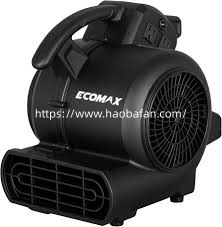
Industrial and commercial ventilation projects often require equipment that can deliver stable airflow through systems with different pressure conditions and installation requirements. For distributors, contractors, and project purchasers, choosing Wholesale Centrifugal Fan solutions involves evaluating more than product availability or purchasing price. Understanding the equipment's construction, operating characteristics, application suitability, and supplier capabilities helps businesses make more informed sourcing decisions.
Centrifugal fans operate by drawing air into the center of a rotating impeller and accelerating it outward. The air then passes through the surrounding housing before leaving through the discharge outlet. This operating principle allows the equipment to generate airflow against system resistance, making it suitable for many ducted ventilation and industrial air handling applications. The actual operating performance depends on the relationship between impeller design, motor characteristics, housing geometry, and connected system conditions.
The impeller is the central airflow-generating component. Different designs use different blade shapes to achieve particular operating characteristics. Forward-curved blades are commonly associated with compact air handling arrangements, while backward-curved designs are often considered for applications requiring particular efficiency and pressure characteristics. Radial blade configurations may be used in selected industrial environments where construction and transported air conditions influence the design choice.
The housing guides air from the impeller toward the outlet. Its structure needs to provide adequate mechanical strength and maintain appropriate internal clearances. A well-designed housing can help manage airflow direction and support stable operation. The inlet arrangement, discharge orientation, access panels, and mounting structure should all be considered when selecting equipment for a particular installation.
Material selection is an important purchasing consideration because operating environments vary considerably. Carbon steel is commonly used in general industrial ventilation equipment due to its structural properties. Stainless steel may be suitable for environments where corrosion resistance is particularly important. Aluminum can be considered where lower weight is beneficial. The appropriate material depends on humidity, air temperature, chemical exposure, particle content, and the mechanical demands of the application.
Motor configuration also influences product suitability. Direct-drive systems connect the impeller directly to the motor arrangement, creating a relatively straightforward assembly. Belt-driven systems provide a different transmission structure and may offer additional flexibility in selected installation and operating arrangements. Buyers should consider motor compatibility, electrical supply, expected duty cycle, maintenance requirements, and available installation space when comparing configurations.
Centrifugal ventilation equipment is used across many industries. Manufacturing plants may use it for general exhaust, process ventilation, machinery cooling, and air circulation. Warehouses and distribution centers require ventilation to manage indoor heat and support air exchange. Commercial facilities such as shopping centers, office buildings, hotels, and restaurants may incorporate centrifugal equipment into their HVAC and air handling systems.
Specialized applications require additional evaluation. Systems handling heated air, moisture, dust, or other airborne substances may need specific material choices and structural arrangements. For example, a fan intended for clean air circulation may not be suitable for an industrial process involving abrasive particles. Buyers should provide accurate information about the transported air so that the supplier can assess the appropriate product configuration.
Airflow and static pressure are fundamental selection factors. The required air volume should be evaluated together with the resistance generated by ducts, filters, bends, dampers, and discharge openings. If the selected fan cannot operate appropriately against the system resistance, the actual airflow may differ from project expectations. Reviewing the complete ventilation design helps reduce the risk of purchasing unsuitable equipment.
For wholesale procurement, product consistency is another important consideration. Distributors and contractors may need equipment for multiple projects, replacement requirements, or regular inventory supply. They should evaluate manufacturing processes, component quality, inspection procedures, packaging arrangements, and the supplier's ability to communicate product information clearly. Consistent documentation can also help simplify product comparison and future purchasing decisions.
Logistics and after-sales support contribute to the overall purchasing experience. Buyers should confirm product identification, packaging suitability, delivery arrangements, and the availability of relevant technical documentation before placing an order. For international purchasing, communication about electrical requirements, installation instructions, and product configurations is particularly important. Clear agreements help reduce misunderstandings during procurement and delivery.
Installation and maintenance should also be considered before selecting a supplier. The equipment must fit the available space and connect properly with the intended duct system. Adequate access should be provided for inspection, cleaning, and servicing. Routine maintenance generally includes checking impeller condition, bearings, fasteners, motor operation, and electrical connections. The maintenance schedule should reflect the equipment's operating environment and duty cycle.
Noise and energy consumption are relevant to long-term operating costs. The fan should be selected according to the actual ventilation requirement rather than simply choosing the largest available product. Correct sizing and suitable system design can help avoid unnecessary energy use and excessive noise. In variable-demand applications, appropriate control arrangements may help match ventilation output to changing operating conditions.
When comparing Wholesale Centrifugal Fan suppliers, purchasers should consider product suitability, manufacturing consistency, technical support, and the ability to meet project requirements. A clear understanding of application conditions allows both parties to discuss appropriate configurations and procurement arrangements. Taizhou Haoba Electromechanical Co Ltd. supplies ventilation products for industrial and commercial applications, and buyers can review its available equipment at https://www.haobafan.com/product/mixed-flow-fan/ when planning their next ventilation equipment purchase.

