


Building a Yearly Crane Parts Spending Plan
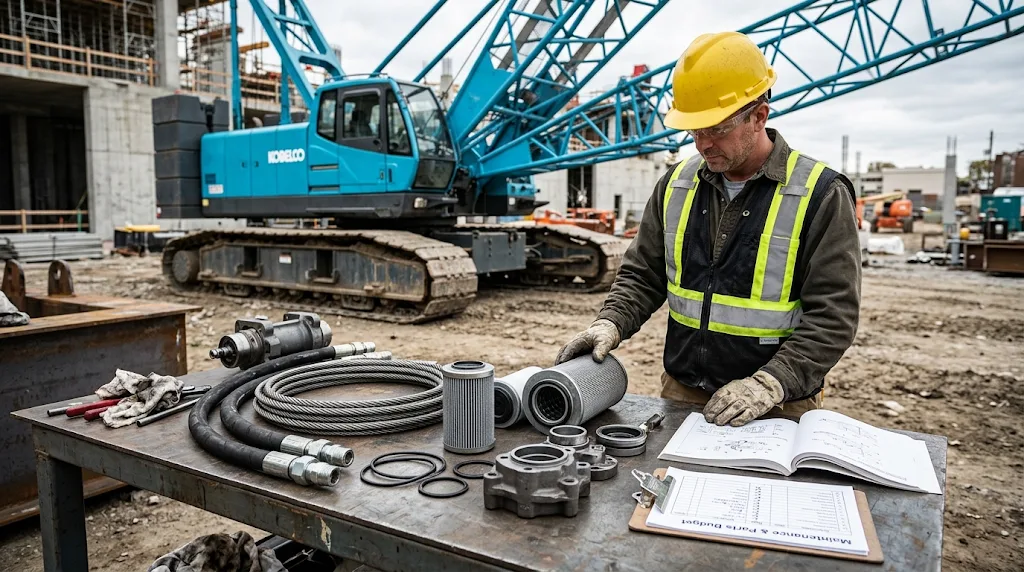
Most owners discover their maintenance costs in hindsight. The invoices arrive, someone totals them, and the figure looks nothing like what was set aside. Planning ahead reverses that order.
Some seasons a Kobelco runs on nothing but filters and grease. Other seasons it claims a wire rope, a swing motor seal, and a hydraulic pump in a single quarter. A budget will not stop either outcome, but it changes how they hit the bank account. You spend money already assigned to Kobelco parts rather than inventing funds at the counter on a bad morning.
The system below scales from a single machine to a fleet of twenty.
Follow the Manufacturer's Intervals
Before anyone quotes you a price, locate the periodic maintenance table in the service manual. It maps inspections and replacements from the daily walkaround through the heaviest annual tasks, functioning as a twelve-month shopping list.
Start by listing the consumables: engine and hydraulic filters, oil, grease, fuel filters, cabin items. These recur on a fixed rhythm regardless of performance, which makes them the simplest section to price. A brief call to your dealer's counter supplies current figures for the entire year.
As you transcribe the table into a spreadsheet, add two useful columns: last replacement date and next due date. By the final row, the scheduled half of the plan already carries real numbers.
The schedule will not reveal when a wear component lets go. That question needs a different tool.
Separate the Spending Into Three Streams
Every item on your purchase list this year belongs to one of three groups, and each group follows different rules.
Consumables are the calendar-driven buys: filters, fluids, grease, bulbs, wipers. Their timing is fixed, and the manual gives you quantities.
Wear items degrade through work rather than through dates. Wire rope, brake components, hoses, seals, pins, bushings, and crawler undercarriage belong here. Inspect on a schedule; replace when measurements reach the limit.
Breakdowns absorb the surprises. The sensor that fails mid-shift. The pump that begins whining in November. Nobody forecasts these events. The plan can only hold reserves against them.
Folding all three into one figure is the usual error. A filter follows a schedule; a pump follows chance. Split the streams, and the budget starts reporting truth instead of averages.
Let History, Hours, and Sites Set the Baseline
Two cranes of the identical model rarely cost the same to keep working. Three variables explain nearly the entire spread.
Age and hours matter most. A machine under five years old with light hours mostly requires consumables. Past 10,000 hours, the wear list grows steadily: hoses hardened by heat cycles weep, seals dry, pins develop play. As the machine matures, the annual figure climbs with it.
Duty cycle shapes the pace of consumption. Continuous demolition wears components far faster than seasonal steel erection. Rough, uneven ground punishes the undercarriage as well, which is why crawler owners track shoe and roller condition hourly.
Environment completes the estimate. Dust cuts filter life and contaminates hydraulic circuits. Salt air accelerates corrosion on wire rope and exposed pins. Harsh sites must appear in the totals.
Average two years of invoices and add 10 to 15 percent for aging, and you have a defensible base. With no history, ask the dealer's parts counter or another owner running the same model. Both beat a borrowed industry average.
Decide Sourcing Rules Before the Year Opens
Three realistic channels exist, and each has a defined role in the plan.
Factory-original components carry the highest cost and the least doubt. They are the conservative choice for hydraulics, safety devices such as the load moment indicator, and anything sealed inside a winch or swing drive. When a failure would sideline the crane for a week, the premium shrinks into insignificance. On critical systems, genuine Kobelco parts remain the default for good reason.
The aftermarket covers a wide spectrum. Quality crane parts from a specialist who actually understands these machines can reduce spend on filters, hoses, pins, and undercarriage wear. Weak vendors push cheap components that fail early and sometimes drag seals and pumps along with them. Judge a supplier by whether it stands behind what it sells, not by the tag.
Salvaged and rebuilt units suit older cranes whose replacement value approaches the machine's worth. Cabs, covers, and cosmetic panels are reasonable candidates. Load-bearing or pressure-holding parts are not.
Most fleets blend the three, and the blending reflects sound practice rather than compromise. Fix your policy per system before January opens, because the choice reshapes every figure that follows.
Work Through the Arithmetic
Build the estimate machine by machine. A five-year-old crawler and an older rough terrain crane share almost nothing, and their Kobelco parts costs will look nothing alike.
Begin with the fixed line: consumables priced through your supplier. Then add the wear items due this year, which is where inspection records earn their keep. The rope nearing its discard limit, the hoses with cracked covers, the brakes flagged last quarter — price them now, even when the date remains a guess. If a major service falls due, request the parts list and obtain a written quote.
Next comes contingency, somewhere between ten and twenty percent of the total. Older cranes and heavy duty cycles justify the upper figure. This reserve covers the pump that fails in November. Omit it, and one difficult quarter dismantles the plan.
Keep labor outside this budget; blending them muddies both figures. Track freight on its own line too. Ordering a wire rope two weeks early costs far less than expediting it after a failed inspection, and that discipline applies year-round.
The output is an annual figure per machine. It will not be exact, but it will rest on your own operation.
Count the Days the Crane Sits Still
Here is the calculation people skip. A parts budget is not really about parts. It is about keeping a machine earning. An idle crane charges you every day: lost rental income, contract penalties, a crew waiting on the ground.
When a six-week-old seal fails and the replacement takes two weeks to arrive, the saving has already disappeared before the job finishes. That logic should reinforce three habits. Order ahead rather than pay for expedited freight, and hold a modest shelf of critical spares — filters and common seals — when utilization stays high.
Suppliers who stock quality crane parts shorten those waits considerably, since the item is already on the shelf instead of in transit. Choosing them is a form of downtime insurance as much as a purchasing decision. The payoff surfaces most clearly in weeks when the schedule carries no slack.
Recheck the Plan Every Quarter
A budget remains a guess until it meets actual spending. Place a recurring reminder on the calendar every three months.
Compare projected figures against real outlays. Note what failed early and what slipped into the following year. Two quiet quarters in a row suggest your estimates ran high. A reserve emptied by June suggests the fleet is aging faster than assumed. Adjust the assumptions in response.
The review also tests your supply chain. Consistent delays from any vendor — including those providing quality crane parts — signal a need to reorder earlier. After two or three cycles, the numbers settle near reality, resting on your machines, sites, and crews rather than generalizations.
What Steady Planning Delivers
Annual parts budgeting is unglamorous work. Read the schedule, split the spending into streams, quote each sourcing route, add a cushion for the year you cannot see coming, and check the figures four times a year.
Handle it well, and Kobelco parts stop being a string of emergencies and become an ordinary planned expense. The office finds the year easier to forecast. So do you, the week a winch motor fails in March.

