


Transmission Repair vs. Replacement: Which Is Better?
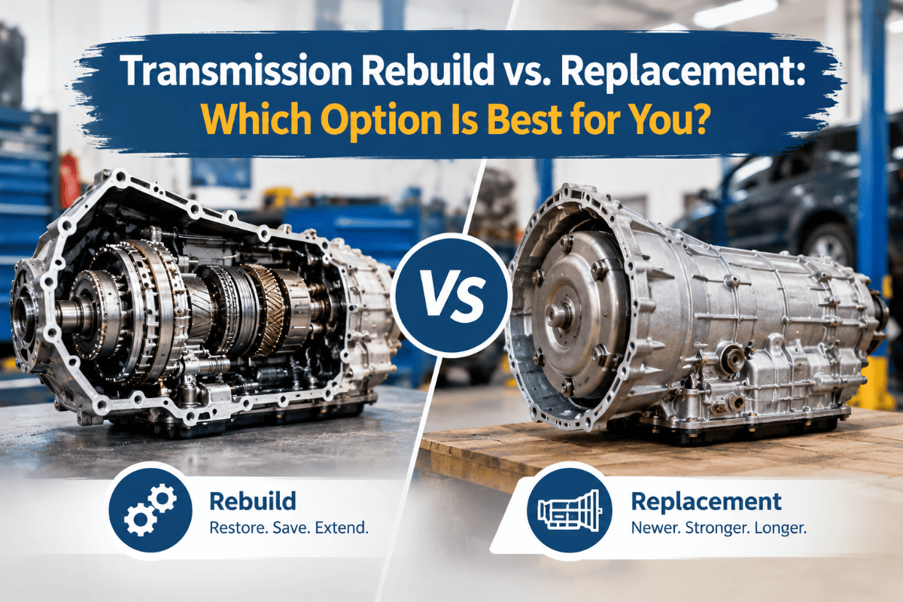
A vehicle's transmission plays an important role in keeping it running smoothly. It transfers power from the engine to the wheels and allows the vehicle to change gears according to driving conditions. When the transmission starts developing problems, drivers may notice unusual noises, delayed shifting, slipping gears, or difficulty accelerating.
One of the biggest questions vehicle owners face is whether to repair the existing transmission or replace it with another one. Both options have advantages, and the right choice depends on the severity of the damage, the vehicle's age, repair costs, and overall condition.
Understanding the differences between transmission repair and replacement can help you make a better decision and avoid unnecessary expenses.
What Is Transmission Repair?
Transmission repair involves identifying and fixing specific problems within the existing transmission system. Instead of replacing the entire unit, a technician inspects the transmission to determine which components are damaged or malfunctioning.
Depending on the issue, repairs may include replacing worn seals, repairing fluid leaks, changing damaged solenoids, replacing filters, or addressing other internal problems.
For example, if your vehicle experiences delayed gear shifting because of a faulty transmission solenoid, replacing that component may solve the problem without requiring a complete transmission replacement.
Transmission repair is often a suitable option when the damage is limited and the remaining components are still in good condition.
What Is Transmission Replacement?
Transmission replacement involves removing the existing transmission and installing another unit. The replacement may be a new, rebuilt, or used transmission, depending on the vehicle and the available options.
This solution is generally considered when the existing transmission has extensive internal damage or when repairing multiple components would be too expensive.
A replacement can restore normal transmission operation when the original unit is beyond economical repair. However, the cost may be significantly higher than fixing a smaller problem.
Before choosing replacement, drivers should ask a qualified technician to inspect the vehicle and explain the available options.
1. Understanding the Cost Difference
Cost is one of the most important factors when comparing transmission repair and replacement.
Transmission repair is usually less expensive because it focuses on specific damaged components. For instance, repairing a fluid leak or replacing a faulty sensor may cost much less than removing and replacing the entire transmission.
Replacement generally involves additional expenses, including the transmission unit, labor, installation, and sometimes new fluids or related components.
However, the cheapest option is not always the best one. If a transmission has severe internal damage, paying for several separate repairs may eventually cost more than replacing the unit.
Ask the repair shop for a detailed estimate that explains parts, labor, and any additional charges before approving the work.
2. When Is Transmission Repair the Better Choice?
Repair may be the better option when the transmission has a limited problem that can be fixed without replacing the entire unit.
Some situations where repair may make sense include:
-
Minor transmission fluid leaks.
-
Faulty transmission solenoids.
-
Worn seals or gaskets.
-
Damaged transmission sensors.
-
Problems caused by old or contaminated transmission fluid.
-
Certain shifting issues caused by replaceable components.
For example, a vehicle that struggles to shift gears may have an electrical or hydraulic issue rather than complete transmission failure. Proper diagnostics can help identify the actual cause.
Repairing the specific problem may restore performance while helping you avoid the higher expense of a complete replacement.
3. When Is Transmission Replacement Necessary?
Sometimes the damage is too extensive for a practical repair. In these situations, replacing the transmission may be the more reliable long-term solution.
Common signs of serious transmission damage include:
-
Severe slipping between gears.
-
Major internal mechanical damage.
-
Metal particles in the transmission fluid.
-
Complete loss of certain gears.
-
Repeated transmission failures after previous repairs.
-
Unusual grinding or banging noises caused by internal damage.
If several major components are damaged, repairing each one separately may not be cost-effective.
A professional inspection can help determine whether rebuilding or replacing the transmission makes more financial sense.
4. Common Warning Signs of Transmission Problems
Recognizing transmission problems early can help prevent additional damage. Drivers should pay attention to changes in vehicle performance.
Slipping gears: Your engine may increase in speed without a matching increase in vehicle speed. This can indicate that the transmission is not maintaining proper gear engagement.
Delayed shifting: If your vehicle takes longer than usual to move into Drive or Reverse, it may have a hydraulic, electrical, or mechanical problem.
Unusual noises: Grinding, whining, humming, or clunking sounds may indicate a transmission-related issue.
Fluid leaks: Red or brown fluid underneath your vehicle may be transmission fluid. Low fluid levels can affect lubrication and transmission operation.
Burning smell: Overheated or degraded transmission fluid may produce a burning odor.
Dashboard warning lights: A check engine light or transmission warning may indicate a problem that requires diagnostic testing.
These symptoms do not always mean the transmission needs replacement. A proper diagnosis is necessary before choosing a repair solution.
5. How Vehicle Age and Mileage Affect Your Decision
The age and mileage of your vehicle can influence whether transmission repair or replacement is the better investment.
For a relatively new vehicle with low mileage, repairing a minor transmission problem may help preserve the original unit. If the vehicle is still covered by a manufacturer warranty, check the warranty terms before paying for repairs.
For an older vehicle with high mileage, the decision may be more complicated. If the engine, suspension, and other major systems are also experiencing problems, investing in a complete transmission replacement may not be financially practical.
However, an older vehicle with a well-maintained engine and otherwise reliable components may still be worth repairing.
Consider the overall condition and expected remaining life of the vehicle rather than looking only at its mileage.
6. What About Transmission Rebuilding?
Transmission rebuilding is another option between repairing individual components and installing a replacement unit.
During a rebuild, technicians remove and disassemble the transmission, inspect its internal components, and replace damaged or worn parts. The unit is then reassembled and tested.
A rebuild may be appropriate when the transmission has significant internal wear but its main housing and other major components remain usable.
The cost depends on the type of transmission, the extent of the damage, replacement parts, and labor requirements.
Ask the repair shop what components will be replaced, whether the rebuilt unit will be tested, and what warranty is included.
7. Why Professional Transmission Diagnostics Matter
Transmission symptoms can have several possible causes. For example, hard shifting may result from low fluid, a faulty sensor, a damaged solenoid, or internal mechanical wear.
Replacing the transmission without identifying the actual cause can lead to unnecessary expenses.
Professional diagnostics may involve:
-
Scanning the vehicle for diagnostic trouble codes.
-
Checking transmission fluid condition and level.
-
Inspecting for leaks.
-
Evaluating shifting performance.
-
Testing electrical connections and sensors.
-
Examining internal components when necessary.
Accurate diagnostics help technicians recommend a solution based on the actual condition of the transmission.
If you notice unusual shifting, slipping, or other warning signs, consider arranging an inspection with a qualified technician. You can learn more about transmission repair Houston and professional transmission services at Wise Car Care.
8. How to Make the Right Decision
Before choosing transmission repair or replacement, consider these important factors:
Get a professional inspection: Do not make a decision based only on symptoms. Ask a technician to identify the exact problem.
Compare written estimates: Request separate estimates for repair, rebuilding, and replacement when those options are appropriate.
Check warranty coverage: Ask about the warranty on parts and labor. Understand what is covered and for how long.
Consider the vehicle's condition: Evaluate the engine, mileage, body, and other important systems before making a major investment.
Think about long-term value: A lower initial repair cost may not be the best choice if the transmission has extensive damage and is likely to fail again.
Taking time to compare these factors can help you avoid unnecessary spending.
9. Tips to Prevent Future Transmission Problems
Although some transmission problems develop because of normal wear, proper maintenance can help reduce the risk of major damage.
Here are a few useful maintenance practices:
-
Follow the manufacturer's recommended transmission fluid service schedule.
-
Use the correct type of transmission fluid for your vehicle.
-
Address fluid leaks as soon as possible.
-
Avoid ignoring unusual noises or shifting problems.
-
Have warning lights checked promptly.
-
Avoid excessive towing beyond your vehicle's recommended capacity.
-
Schedule regular vehicle inspections.
Driving habits also matter. Aggressive acceleration, excessive loads, and repeated overheating can put additional stress on transmission components.
Routine maintenance cannot prevent every failure, but it can help identify problems before they become more expensive.
Conclusion
Choosing between transmission repair and replacement depends on the type and severity of the problem, the vehicle's age, mileage, overall condition, and repair costs.
Transmission repair may be the more affordable option when the damage is limited to specific components. Replacement may make more sense when the transmission has extensive internal damage or repeated failures. Rebuilding can also be a practical middle option in certain situations.
The most important step is getting an accurate diagnosis before spending money on major repairs. A qualified technician can explain the available solutions, compare their costs, and help you choose the option that best suits your vehicle.
By addressing warning signs early and following recommended maintenance practices, you can help protect your transmission and keep your vehicle operating reliably.

