


Data Governance vs. Data Management: Key Differences Explained
Introduction
Businesses today collect and use large amounts of data from websites, customers, sales platforms, applications, and internal systems. However, collecting data is not enough. Organizations must also make sure their information is accurate, secure, organized, and available when needed.
This is where data governance and data management become important. Although these terms are closely related, they serve different purposes. Data governance establishes the rules, responsibilities, and standards for handling information, while data management focuses on the practical processes and technologies used to store, organize, process, and maintain data.
Understanding data governance vs. data management helps businesses build better data strategies, reduce risks, improve data quality, and make informed decisions.
Businesses looking to improve their information systems can explore professional Data Governance Services to establish better control over their data and support long-term business goals.
What Is Data Governance?
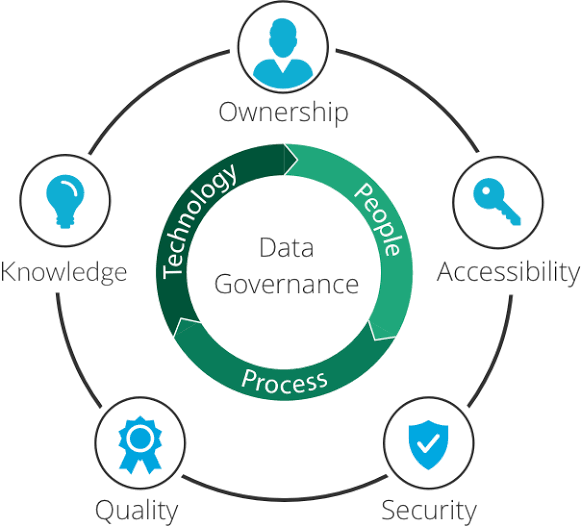
Data governance is a framework of policies, standards, processes, and responsibilities that determines how an organization manages and protects its data. It ensures that business information is accurate, consistent, secure, and used appropriately.
The main purpose of data governance is to establish clear rules for how data should be collected, stored, accessed, shared, and maintained across an organization.
For example, a company may collect customer information through its website, sales department, and customer support system. Without proper governance, different departments might use inconsistent customer records or share sensitive information without authorization.
A data governance framework helps prevent these problems by defining who is responsible for the information and what rules employees must follow.
Key Components of Data Governance
1. Data Policies and Standards
Organizations need clear policies that explain how information should be handled. These standards help employees follow consistent procedures when collecting, storing, and using data.
2. Data Ownership
Data ownership identifies the individuals or departments responsible for specific datasets. Data owners help ensure that information remains accurate, reliable, and properly maintained.
3. Data Quality
Data governance establishes standards for data accuracy, completeness, consistency, and reliability. These standards help businesses reduce errors and make better decisions.
4. Data Security and Privacy
Businesses must protect confidential information from unauthorized access, misuse, and data breaches. Governance policies define access permissions and security responsibilities.
5. Regulatory Compliance
Organizations may need to follow regulations such as GDPR or HIPAA, depending on their industry and the information they process. Data governance helps establish processes that support compliance requirements.
What Is Data Management?
Data management refers to the practical activities, processes, and technologies used to collect, store, organize, process, maintain, and protect data throughout its lifecycle.
While data governance defines the rules, data management puts those rules into action.
For example, when a business collects customer information, data management processes help store it in databases, organize records, maintain backups, integrate information from different systems, and make it available to authorized employees.
Effective data management helps organizations maintain usable information and make it accessible when needed.
Key Components of Data Management
1. Data Collection
Data collection involves gathering information from different sources, including websites, applications, customer databases, and business systems.
2. Data Storage
Businesses need reliable systems to store their information. These may include databases, cloud storage platforms, data warehouses, and data lakes.
3. Data Integration
Data integration combines information from multiple sources into a unified view. This allows departments to work with consistent information instead of maintaining disconnected datasets.
4. Data Processing
Data processing involves cleaning, transforming, organizing, and preparing information for reporting and analysis.
5. Data Backup and Recovery
Regular backups help organizations recover important information after accidental deletion, system failures, or unexpected incidents.
6. Data Maintenance
Data maintenance includes updating records, correcting errors, removing duplicate information, and keeping databases organized.
Data Governance vs. Data Management: Key Differences
Data governance and data management work together, but their responsibilities are different. Governance focuses on rules and accountability, while management focuses on execution and daily operations.
Here are the main differences:
1. Purpose
Data governance establishes policies and standards for managing business information. Its purpose is to make sure data is handled correctly and consistently.
Data management focuses on carrying out the activities required to store, organize, process, and maintain that information.
For example, governance may establish a rule that customer records must be accurate and protected. Data management implements the database processes and security controls that help meet this requirement.
2. Focus
Data governance focuses on accountability, data ownership, policies, compliance, and quality standards.
Data management focuses on databases, storage systems, data integration, processing, backups, and maintenance.
Both areas are important because policies alone cannot maintain data, and technical systems need clear rules to operate effectively.
3. Responsibilities
Data governance responsibilities are often shared among data owners, data stewards, compliance teams, and senior management.
Data management responsibilities commonly involve data engineers, database administrators, IT teams, and data management specialists.
For example, a data owner may define who can access a customer dataset, while a database administrator configures the permissions within the relevant system.
4. Tools and Technologies
Data governance may use tools for data cataloging, metadata management, policy enforcement, data lineage, and access monitoring.
Data management may use databases, cloud storage, ETL platforms, data integration tools, and data processing technologies.
The tools can overlap because some platforms support both governance and operational data management.
5. Data Quality
Data governance defines what good-quality data means and establishes standards for measuring it.
Data management performs practical tasks such as cleaning records, removing duplicates, validating information, and correcting errors.
For instance, governance may require customer records to contain valid email addresses. Data management processes can then identify and correct records that do not meet this requirement.
6. Compliance and Security
Data governance establishes policies for data privacy, security, access, and regulatory compliance.
Data management implements technical and operational controls that help protect information, such as encryption, backups, permissions, and secure storage.
Together, these practices help reduce data risks and support responsible information handling.
Data Governance vs. Data Management: Comparison Table
| Area | Data Governance | Data Management |
|---|---|---|
| Main purpose | Establishes rules and standards | Handles data operations |
| Focus | Policies and accountability | Storage and processing |
| Responsibilities | Data owners and stewards | IT teams and data engineers |
| Data quality | Defines quality standards | Improves data quality |
| Security | Establishes security policies | Implements security controls |
| Compliance | Defines compliance requirements | Supports compliance processes |
| Tools | Catalogs and governance platforms | Databases and ETL tools |
| Main outcome | Controlled and trusted data | Organized and accessible data |
Why Do Businesses Need Both Data Governance and Data Management?
Organizations need both disciplines because they solve different problems. Data governance provides direction, while data management handles the practical work.
Here are some important benefits of using them together.
1. Improved Data Quality
Poor-quality information can lead to incorrect reports, unreliable business decisions, and operational problems.
Data governance establishes quality standards, while data management applies processes to identify and correct inaccurate or incomplete records.
This helps businesses maintain reliable information across departments.
2. Better Data Security
Companies often store sensitive customer, employee, and financial information. Without proper controls, this information may be exposed or misused.
Governance defines who should access specific information and under what conditions. Data management implements access permissions, encryption, monitoring, and other security measures.
3. Better Decision-Making
Business leaders depend on accurate information to understand customer behavior, monitor performance, and identify growth opportunities.
When governance standards and management processes work together, teams can access consistent and reliable data for reporting and analysis.
4. Reduced Operational Costs
Duplicate records, disconnected systems, and inaccurate information can waste time and resources.
Data governance creates consistent standards, while data management improves storage, integration, and maintenance processes.
This can reduce unnecessary work and improve operational efficiency.
5. Improved Regulatory Compliance
Many organizations must follow data protection and privacy regulations.
Governance establishes policies and responsibilities, while data management helps implement the technical processes required to handle information securely and maintain appropriate records.
Real-World Examples of Data Governance and Data Management
Understanding these concepts becomes easier when we look at practical business situations.
Example 1: Healthcare Organization
A healthcare organization stores patient records, medical histories, appointment information, and insurance details.
Data governance establishes rules about who can access patient information, how sensitive records should be protected, and how privacy requirements should be followed.
Data management handles the storage, organization, backup, and secure sharing of patient records through approved systems.
Both disciplines help maintain reliable information while protecting patient privacy.
Example 2: E-Commerce Business
An online store collects customer details, product information, payment records, and order histories.
Data governance defines standards for customer information, data ownership, privacy, and access permissions.
Data management organizes product databases, integrates order information, removes duplicate customer records, and maintains backups.
As a result, the business can operate more efficiently and provide a better customer experience.
Example 3: Financial Institution
A financial institution processes transactions, customer records, account information, and financial reports.
Data governance establishes policies for data accuracy, access control, privacy, and regulatory responsibilities.
Data management maintains databases, processes transactions, integrates information, and supports secure reporting.
This helps the organization maintain trustworthy financial information and manage operational risks.
Best Practices for Implementing Data Governance and Data Management
Businesses should develop a clear strategy before introducing new data systems or governance policies.
The following best practices can help organizations build an effective approach.
1. Define Clear Data Ownership
Assign responsibility for important datasets. Every department should understand who owns the information and who is responsible for maintaining its quality.
2. Establish Data Governance Policies
Create written policies covering data collection, access, storage, security, sharing, retention, and deletion.
These policies should be easy for employees to understand and follow.
3. Maintain Data Quality Standards
Establish measurable standards for accuracy, completeness, consistency, and validity. Regularly review information to identify errors and inconsistencies.
4. Choose Suitable Data Management Tools
Select technologies that match your organization's data requirements. Depending on business needs, these may include cloud databases, data warehouses, data integration platforms, and data quality tools.
5. Control Data Access
Give employees access only to the information required for their roles. Review permissions regularly and update them when responsibilities change.
6. Train Employees
Employees should understand how to handle business information safely and follow established data policies.
Training helps create a culture where data quality, privacy, and accountability are shared responsibilities.
7. Monitor and Improve Your Strategy
Review governance policies and data management processes regularly. Track data quality, access permissions, compliance activities, and system performance.
Continuous improvement helps businesses adapt as their information needs change.
How Data Engineering Supports Data Management
Data engineering plays an important role in implementing effective data management processes. It focuses on building and maintaining the infrastructure that allows organizations to collect, transform, integrate, and deliver information.
For example, data engineers create pipelines that transfer information from different business systems into centralized platforms. They also help automate data processing, improve pipeline performance, and maintain reliable data infrastructure.
Businesses can explore Data Engineering Services to understand how modern data systems can support their data collection, integration, and processing requirements.
When data engineering and data governance work together, organizations can build systems that are both technically reliable and properly controlled.
Common Challenges in Data Governance and Data Management
Although both disciplines offer significant benefits, organizations may face several challenges when implementing them.
Inconsistent Data Across Departments: Different departments may store the same information in different formats. Establishing shared standards and integration processes can help resolve this issue.
Lack of Clear Responsibilities: When data ownership is unclear, employees may not know who should maintain or approve information. Assigning data owners and stewards helps improve accountability.
Legacy Systems: Older databases and applications may not support modern data requirements. Businesses may need to upgrade systems or integrate them with newer platforms.
Poor Data Quality: Duplicate, incomplete, or outdated records can affect reporting and business decisions. Regular validation and data-cleaning processes can improve reliability.
Limited Employee Awareness: Employees may not understand data policies or security responsibilities. Regular training and clear documentation can help address this challenge.
Conclusion
Data governance and data management are closely connected, but they serve different purposes. Data governance establishes the policies, responsibilities, and standards that guide how information should be handled. Data management focuses on the practical processes and technologies used to collect, store, process, organize, and maintain that information.
Businesses need both to improve data quality, protect sensitive information, support compliance, and make better decisions. Governance provides direction, while management turns that direction into daily operations.
By developing a coordinated data strategy, organizations can build reliable information systems that support long-term growth and changing business needs.
To strengthen your organization's data strategy, explore Data Governance Services and learn how effective data practices can support better business operations.
Frequently Asked Questions (FAQs)
1. What is the main difference between data governance and data management?
Data governance establishes policies, standards, and responsibilities for handling information. Data management focuses on the practical activities used to collect, store, organize, process, and maintain data.
2. Is data governance part of data management?
Data governance is closely related to data management and provides direction for it. It establishes the rules and responsibilities that guide data management activities.
3. Why is data governance important for businesses?
Data governance helps businesses improve data quality, protect sensitive information, establish accountability, support regulatory compliance, and make more reliable decisions.
4. What are examples of data management?
Examples include database administration, data integration, data storage, data processing, data backup, data cleaning, and data maintenance.
5. Can a business have data management without data governance?
Yes. A business can store and process information without a formal governance framework. However, unclear responsibilities, inconsistent data standards, and security risks may become more difficult to control as the organization grows.
6. How do data governance and data management work together?
Data governance defines the policies and standards, while data management applies them through operational processes and technologies. Together, they help organizations maintain secure, accurate, and accessible information.

