


Plus Size Womens Clothing Market Size, Share and Growth 2033
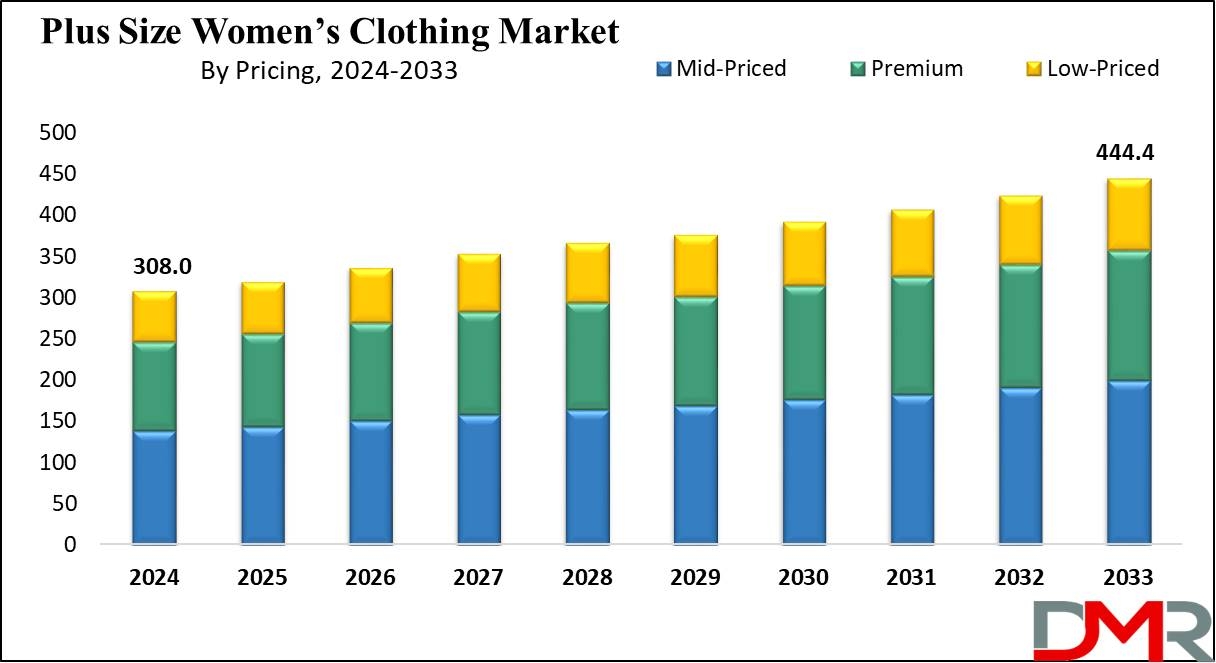
The global Plus Size Womens Clothing Market Size reflects a major transformation in fashion retail as consumers seek broader size availability, contemporary designs, inclusive brand representation, and improved shopping experiences.
According to Dimension Market Research, the global Plus Size Womens Clothing Market is valued at USD 308.0 billion in 2024 and projected to reach USD 444.4 billion by 2033, expanding at a CAGR of 4.2% during the forecast period.
Growing attention to body diversity, the expansion of e-commerce, and increasing demand for fashionable extended-size collections are influencing product development and retail strategies.
What Is the Plus Size Womens Clothing Market?
The market covers women's apparel designed and marketed for extended-size consumers across casual wear, formal clothing, sportswear, lingerie, maternity wear, swimwear, and other fashion categories.
The market is not defined simply by larger garment dimensions. Effective extended-size apparel development requires attention to body proportions, garment construction, fit consistency, fabric performance, and consumer preferences.
Retailers must also consider differences in sizing standards across markets and brands.
For consumers, product availability and reliable fit information can strongly influence purchasing decisions.
For fashion companies, improved size inclusivity can expand addressable customer groups while strengthening product differentiation and brand engagement.
Why Is Inclusive Fashion Becoming More Important?
Consumer expectations are changing as fashion shoppers increasingly seek products that reflect diverse body shapes and personal styles.
Historically, many extended-size clothing collections offered fewer design choices than standard-size ranges.
Greater attention to inclusive fashion has encouraged retailers to expand their collections across everyday clothing, professional apparel, activewear, and special occasions.
Digital shopping platforms are also influencing the market by making extended-size product ranges more accessible.
Online stores can present broader assortments than individual physical outlets, while product reviews, customer photographs, and detailed size charts help shoppers evaluate available options.
However, digital expansion also increases the importance of managing size-related returns and providing accurate product information.
Get a Free Customized Sample of This or Any Other Market Research Report
https://dimensionmarketresearch.com/request-sample/plus-size-womens-clothing-market/
Plus Size Womens Clothing Market Segmentation and Leading Categories
The research segments the market by product, raw material, age group, pricing, and distribution channel.
Product Categories
Casual Wear leads the market with approximately 33.0% share in 2024.
Demand for comfortable and versatile everyday clothing supports this segment's position.
Casual apparel includes products such as T-shirts, jeans, dresses, and other wardrobe essentials designed for routine use.
Formal Wear, Sportswear, Lingerie, Maternity Wear, and Swimwear represent additional opportunities for fashion brands developing specialized extended-size collections.
Sportswear is particularly relevant as customers seek functional garments suitable for fitness activities and everyday athleisure.
Pricing Categories
Mid-Priced clothing dominates the pricing category with approximately 44.9% market share in 2024.
This category appeals to consumers seeking a balance between product affordability, style, fabric quality, and durability.
Low-Priced and Premium categories address different purchasing priorities, creating opportunities for both value-oriented retailers and specialist fashion brands.
Distribution Channels
Online and Offline channels both play important roles in market development.
E-commerce offers broader product discovery and access to additional sizes, while physical stores provide opportunities for garment trials and personalized assistance.
An integrated omnichannel approach may help retailers improve convenience while addressing common fit-related purchasing concerns.
Regional Market Outlook: North America Leads
North America accounts for approximately 41.3% of the global Plus Size Womens Clothing Market in 2024.
The region benefits from established extended-size fashion retailers, developed e-commerce infrastructure, and consumer demand for inclusive apparel.
The US market was valued at approximately USD 107.0 billion in 2024 and is projected to reach USD 151.6 billion by 2033, representing a CAGR of 3.9%.
Europe represents an important market where fashion brands are increasingly evaluating inclusive product ranges and size availability.
Japan presents distinct opportunities involving local fit preferences, retail formats, and changing consumer expectations.
Regional differences in body measurements, pricing, and distribution strategies remain important for brands expanding internationally.
Competitive Landscape and Retail Innovation
Major companies identified in the report include ASOS plc, H&M Group, Nike Inc., Adidas AG, forever 21 Inc., Macy's Inc., and Torrid LLC.
Competition involves design relevance, garment fit, assortment breadth, pricing, brand representation, and distribution accessibility.
Brands are also evaluating improved product photography, virtual fitting technologies, and customer feedback systems to support online purchasing decisions.
Extended-size fashion requires dedicated product development rather than simply scaling conventional patterns.
Companies capable of combining attractive styles with consistent sizing and comfortable construction may strengthen customer loyalty.
Market Challenges and Growth Opportunities
Important challenges include inconsistent size standards, limited physical-store assortments, inventory complexity, and return management.
Manufacturing multiple sizes across extensive product catalogues can increase inventory planning requirements.
Nevertheless, opportunities exist in specialist activewear, formal clothing, premium collections, and personalized online shopping.
Retailers that use consumer feedback and fit-related data to improve products may be better positioned to serve underserved customer requirements.
Explore the Complete Plus Size Womens Clothing Market Analysis
https://dimensionmarketresearch.com/checkout/plus-size-womens-clothing-market/
Frequently Asked Questions
1. What is the size of the Plus Size Womens Clothing Market?
The global market was valued at USD 308.0 billion in 2024 and is projected to reach USD 444.4 billion by 2033.
2. What is the expected CAGR of the Plus Size Womens Clothing Market?
The market is forecast to grow at a CAGR of 4.2% during the 2024 to 2033 forecast period.
3. Which product segment dominates the market?
Casual Wear leads the product category with approximately 33.0% market share in 2024.
4. Which region holds the largest market share?
North America dominates with approximately 41.3% of global market revenue in 2024.
5. Which pricing category leads the market?
Mid-Priced clothing represents the largest pricing category, accounting for approximately 44.9% market share in 2024.
Conclusion
The Plus Size Womens Clothing Market highlights the growing commercial significance of inclusive fashion and extended-size product development.
Retailers are increasingly challenged to provide fashionable designs, consistent fit, broader assortments, and convenient shopping experiences.
Brands that address these expectations while maintaining effective inventory management and competitive pricing can pursue opportunities across multiple apparel categories.
Related Market Research Insights
The US Plus Size Women's Clothing Market Size explores consumer preferences, e-commerce expansion, and product developments within one of the largest extended-size apparel markets globally.
The Europe Plus Size Women's Clothing Market Share examines changing fashion retail strategies, size-inclusive collections, and opportunities across European clothing markets.
The Japan Plus-Size Women's Clothing Market Growth evaluates extended-size apparel demand in Japan, including fashion preferences, retail availability, and opportunities for brands adapting their collections to local consumers.

