


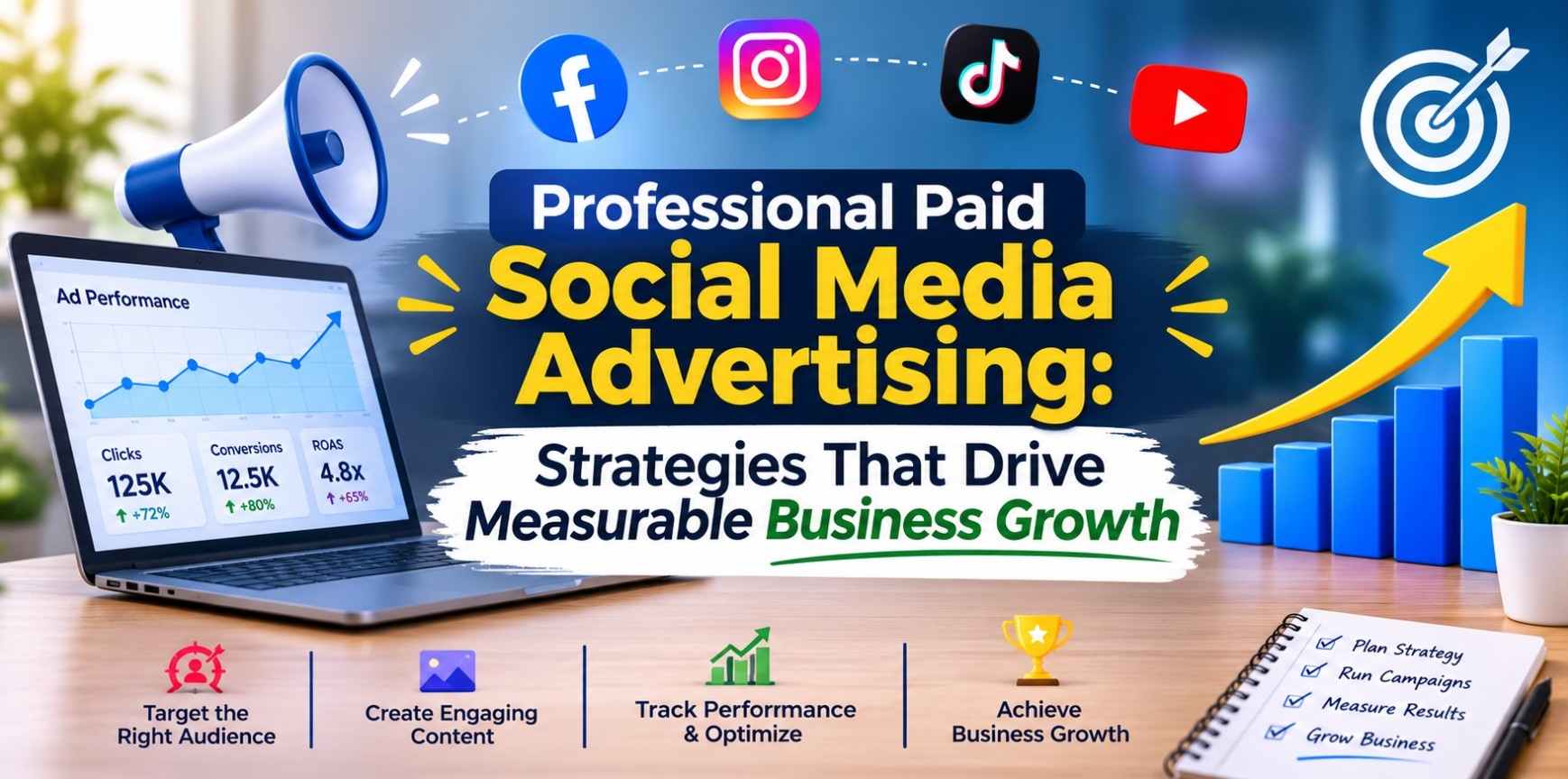
Professional Paid Social Media Advertising: Strategies That Drive Measurable Business Growth
Social media has become one of the most influential channels for businesses looking to connect with potential customers, increase brand awareness, and generate revenue. However, simply maintaining an active social media presence is no longer enough to stay competitive.
Businesses need strategic advertising campaigns that reach the right audience, communicate meaningful messages, and encourage valuable actions. This is where professional paid social media advertising makes a difference.
With billions of people using social platforms every day, paid advertising offers businesses an opportunity to reach highly specific audiences and turn online attention into measurable results. When managed strategically, it can become a powerful part of a company's overall digital marketing strategy.
What Is Professional Paid Social Media Advertising?
Professional paid social media advertising involves creating, managing, and optimizing sponsored campaigns across platforms such as Facebook, Instagram, TikTok, and YouTube. Unlike organic social media marketing, which relies on unpaid content and audience growth, paid advertising allows businesses to increase their visibility through targeted promotional campaigns.
The real value comes from combining audience research, compelling creative content, strategic budgeting, and performance analysis. Rather than spending money simply to generate impressions or likes, professional advertisers focus on meaningful business outcomes such as website traffic, qualified leads, product purchases, and customer retention.
Why Businesses Need a Strategic Paid Social Media Approach
Social media advertising can deliver impressive opportunities, but successful campaigns require more than launching advertisements and waiting for results. Competition for audience attention is increasing, and consumers are becoming more selective about the content they engage with.
A professional approach helps businesses make better use of their advertising budgets by identifying relevant audiences and delivering messages that match their interests and needs. Another important advantage is scalability.
Businesses can begin with smaller campaigns, evaluate their performance, and gradually increase investment in advertisements that produce positive results. This approach reduces unnecessary spending while creating opportunities for sustainable growth.
Choosing Right Social Media Advertising Platforms
Every social media platform attracts different audiences and supports different advertising objectives. Selecting the right platform is therefore essential for campaign performance.
Facebook and Instagram Advertising
These platforms offer powerful advertising options for businesses interested in lead generation, ecommerce sales, brand awareness, and customer retargeting. Their targeting capabilities allow advertisers to reach people based on interests, behaviors, demographics, and previous interactions.
TikTok Advertising
TikTok is particularly valuable for businesses targeting audiences who enjoy short form videos, creative storytelling, and entertaining content. In feed advertisements and creator style videos can introduce products naturally while encouraging discovery and engagement.
YouTube Advertising
YouTube provides opportunities to connect with audiences through video content. Businesses can use video advertisements to explain products, demonstrate services, build brand credibility, and reach potential customers during their research process.
The best platform depends on the target audience, available budget, industry, and business objectives. A well planned strategy may also combine multiple platforms to increase reach and support customers throughout their buying journey.
Creating Advertisements That Capture Attention
Creative content plays a major role in successful paid social media campaigns. Even carefully selected audiences may ignore advertisements that look repetitive, feel overly promotional, or fail to communicate a clear benefit.
Professional advertising focuses on developing content that immediately captures attention and gives viewers a reason to continue watching or reading.
Strong visuals, engaging video formats, persuasive headlines, and clear calls to action help communicate the value of a product or service. Authentic content can also make advertisements feel more relatable, particularly when businesses use customer testimonials, product demonstrations, or creator generated videos.
Testing different creative approaches is equally important. Small changes in messaging, visuals, video length, or calls to action can influence campaign performance. Continuous experimentation helps identify which combinations connect most effectively with the intended audience.
Audience Targeting and Retargeting for Better Conversions
One of the biggest advantages of paid social media advertising is the ability to reach specific audience segments. Instead of showing advertisements to everyone, businesses can focus their budgets on people who are more likely to be interested in their offerings.
Audience targeting can consider factors such as location, age, interests, purchasing behavior, and previous engagement. This creates opportunities to deliver more relevant advertisements and improve advertising efficiency.
Retargeting adds another valuable layer to this strategy. Many potential customers visit a website, watch a video, or interact with an advertisement without making an immediate purchase.
Retargeting campaigns reconnect with these individuals through relevant messages and offers. When combined with thoughtful audience segmentation, retargeting can help businesses recover lost opportunities and encourage customers to complete their purchasing decisions.
Measuring Performance and Optimizing Campaigns
Professional paid social media advertising should always be supported by accurate measurement and continuous optimization. Without performance tracking, businesses cannot clearly understand whether their advertising investments are producing meaningful returns.
Important performance indicators include:
-
Click Through Rate (CTR): Measures how frequently people click after seeing an advertisement.
-
Cost Per Click (CPC): Shows how much an advertiser pays for each click.
-
Cost Per Acquisition (CPA): Measures the cost of generating a customer or desired conversion.
-
Return on Ad Spend (ROAS): Evaluates the revenue generated relative to advertising expenditure.
-
Conversion Rate: Indicates how effectively campaign traffic completes the intended action.
Regular A/B testing, budget adjustments, creative improvements, and audience analysis help campaigns become more efficient over time. Successful optimization is an ongoing process rather than a one time activity.
Future of Paid Social Media Marketing
Paid social media advertising continues to evolve as platforms introduce new technologies, advertising formats, and audience targeting capabilities. Artificial intelligence, automation, creator partnerships, and personalized content are influencing how businesses approach digital advertising.
However, technology alone cannot guarantee success. Businesses still need a clear understanding of their customers, compelling creative ideas, and measurable objectives. Combining human creativity with data driven decision making will remain essential for building effective advertising campaigns.
Frequently Asked Questions
1. What is the main benefit of professional paid social media advertising?
It helps businesses reach relevant audiences, increase visibility, generate qualified leads, and drive sales through strategically managed advertising campaigns.
2. Which social media platform is best for paid advertising?
The best platform depends on business goals and audience behavior. Facebook and Instagram work well for many ecommerce and lead generation campaigns, while TikTok and YouTube offer valuable opportunities for video focused advertising.
3. How much should a business spend on social media advertising?
There is no universal advertising budget. Spending should depend on business objectives, competition, audience size, and expected customer acquisition costs. Starting with a manageable budget and scaling based on performance is often a sensible approach.
4. How long does it take to see results from paid social media campaigns?
Initial engagement and traffic data may appear within the first few days. However, meaningful performance insights and consistent results generally require several weeks of testing, analysis, and optimization.
Conclusion
Professional paid social media advertising is much more than paying for online visibility. It requires strategic planning, audience understanding, creative development, accurate tracking, and continuous improvement.
Businesses that approach advertising with clear objectives and data driven decisions are better positioned to attract potential customers, improve conversions, and achieve sustainable growth. By investing in professional campaign management and focusing on measurable outcomes, businesses can transform social media advertising into a valuable long term growth channel.

