


Japan Short-Term Rental Market Forecast to 2035 as Tourism and Extended Stays Grow
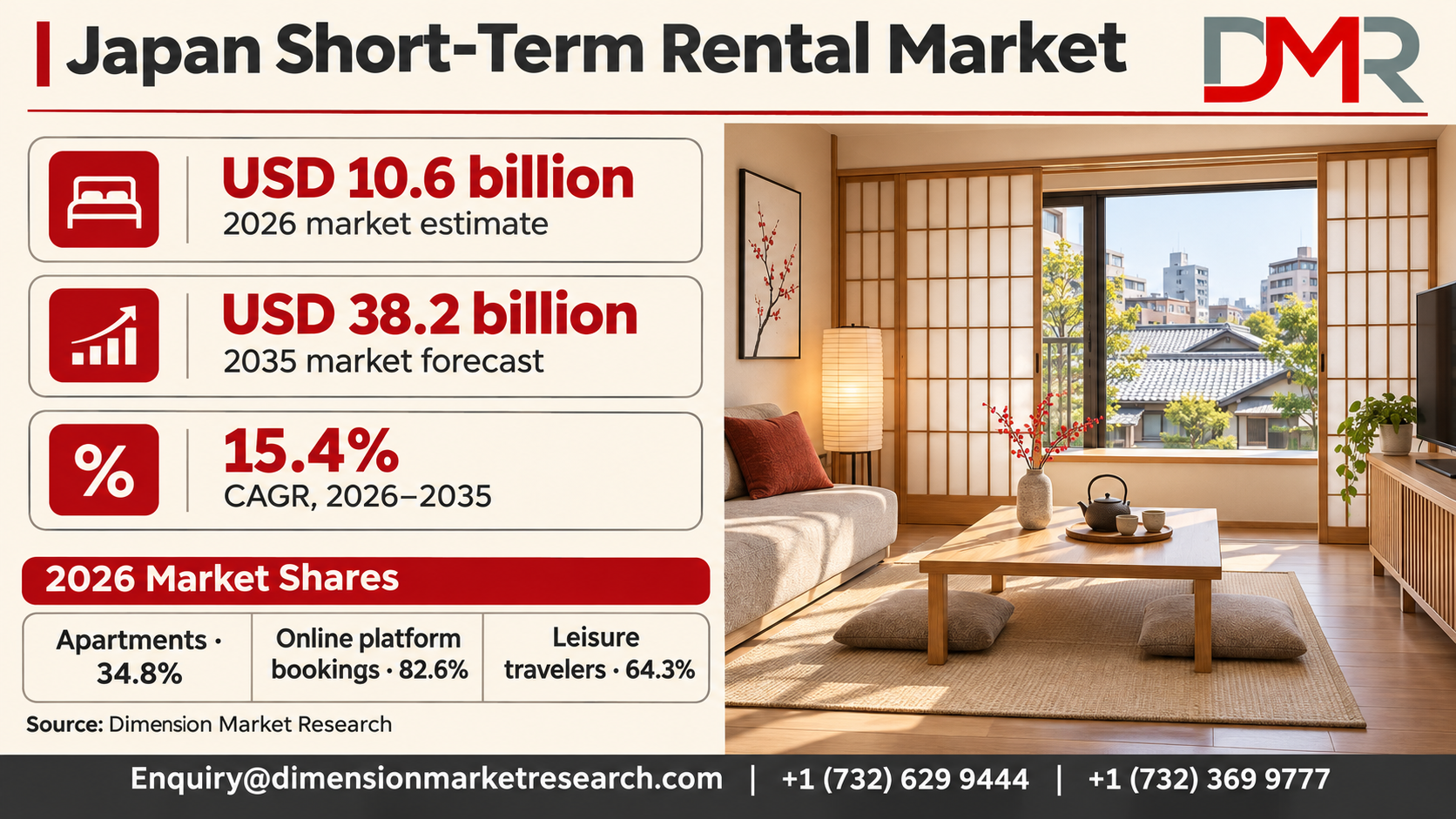
The Japan Short-Term Rental Market Share outlook reflects rising demand for furnished accommodation from tourists and business travelers. According to Dimension Market Research, the market is estimated at USD 10.6 billion in 2026 and is projected to reach USD 38.2 billion by 2035, growing at a CAGR of 15.4% from 2026 to 2035. Apartments lead by accommodation type, while serviced apartments are projected to grow fastest.
A family visiting Osaka may choose an apartment with a kitchen and laundry facilities. A project team on an extended assignment may value reliable internet, housekeeping and corporate billing. Both groups can book furnished rentals, but their needs influence which properties operators develop, how they price stays and which booking channels they use.
What Is the Japan Short-Term Rental Market?
The market covers furnished accommodation rented for limited periods, including apartments, homes, villas, resort condominiums, hostels, guesthouses and serviced apartments. Guests can book through online travel platforms, domestic booking sites, travel agencies or directly with operators. The market serves leisure, business, group and solo travelers, with properties ranging from urban apartments to standalone homes near regional attractions.
Get a Free Customized Sample of This or Any Other Market Research Report
https://dimensionmarketresearch.com/request-sample/japan-short-term-rental-market/
Urban Apartments Lead as Serviced Apartments Gain Ground
Apartments are projected to hold a 34.8% share by accommodation type in 2026. DMR links their position to broad availability and convenient locations in cities such as Tokyo, Osaka, Kyoto and Fukuoka. Furnished units can appeal to independent travelers who want access to urban attractions and practical amenities such as kitchens and laundry facilities.
Serviced apartments are projected to grow fastest by accommodation type, at approximately 17.3% CAGR through 2035. Extended business assignments, relocations and project work support demand for accommodation that pairs residential amenities with professional management. Operators can differentiate through dedicated workspaces, reliable connectivity, housekeeping and flexible booking terms.
Online Booking Platforms Dominate Rental Distribution
Online platform-based booking is projected to account for 82.6% of bookings by mode in DMR’s 2026 market estimates, with an expected CAGR of approximately 16.1% through 2035. Travelers benefit from being able to compare prices, reviews and availability. For operators, platforms can extend reach beyond their direct channels, especially when serving international guests.
● Multilingual listings help guests compare amenities and understand booking conditions before they reserve.
● Calendar synchronization helps operators keep prices and availability aligned across multiple platforms.
● Digital check-in lets operators support arrivals outside conventional reception hours and coordinate access across several properties.
Platform reach comes with operating costs. Commissions affect revenue per booking, while professional cleaning, maintenance and guest support add expenses across a portfolio. For operators evaluating distribution channels, the relevant comparison includes what each channel costs and the kinds of stays it attracts.
Leisure Tourism Leads While Business Travel Grows Fastest
Leisure travelers are projected to account for 64.3% of the market by end user in 2026. Cultural tourism, seasonal attractions and family travel support demand. Regional operators can serve guests seeking skiing, hot springs, coastal trips or local food experiences, while urban rentals can accommodate travelers who want more space for families or groups.
Business travelers are projected to grow fastest, at approximately 17.2% CAGR through 2035. DMR ties this outlook to extended assignments, conventions and demand for furnished accommodation with workspace. For operators, serving this segment can involve longer reservation windows, recurring housekeeping and billing arrangements suited to employers.
Minpaku Rules Shape Property Supply and Operating Costs
Japan’s notified private lodging framework, commonly called minpaku, caps operations at 180 days per year. Municipalities can impose additional restrictions, and other lodging frameworks have separate requirements. For a property investor, the rules that apply to a specific address affect how many nights can be sold and what it costs to operate the property.
DMR identifies vacant-home conversion as an opportunity in destinations with tourism demand. Renovated homes and traditional townhouses can add accommodation supply and give visitors options outside major cities. The business case depends on renovation costs, local operating requirements and the ability to provide cleaning, maintenance and guest support consistently.
Rental Platforms and Property Managers Compete on Guest Experience
Companies covered include Airbnb, Inc., Booking Holdings Inc., Expedia Group, Inc., Rakuten Group, Inc. and Rakuten STAY, Inc. Platforms compete on property choice, pricing and booking convenience, while property managers can differentiate through local knowledge and reliable operations. DMR reports that in September 2025, Matsuri Technologies partnered with Japan Food Guide to help guests discover and book restaurants and dining experiences during their stays.
Explore the Complete Japan Short-Term Rental Market Analysis
https://dimensionmarketresearch.com/checkout/japan-short-term-rental-market/
Frequently Asked Questions
How large is the Japan Short-Term Rental Market?
DMR estimates the market at USD 10.6 billion in 2026 and projects it to reach USD 38.2 billion by 2035.
What is the projected Japan Short-Term Rental Market CAGR?
The market is projected to grow at a CAGR of 15.4% from 2026 to 2035.
Which accommodation type leads Japan’s short-term rental market?
Apartments are projected to lead with a 34.8% share in 2026. Serviced apartments are expected to grow fastest by accommodation type.
Which booking mode leads Japan’s short-term rental market?
Online platform-based booking is projected to lead with an 82.6% share by booking mode in 2026.
Which traveler segment is growing fastest?
Business travelers are projected to grow fastest, at approximately 17.2% CAGR through 2035, supported by assignments, conventions and extended stays.
Conclusion
Through 2035, leisure tourism is expected to support demand for urban apartments and regional rentals, while extended business stays offer a growth opportunity for professionally managed serviced apartments. The strongest fit for an operator depends on the travelers a property can attract, the nights it can legally sell and the cost of delivering reliable service at that location.

