


How a Home Construction Plan Works: From Design to Completion
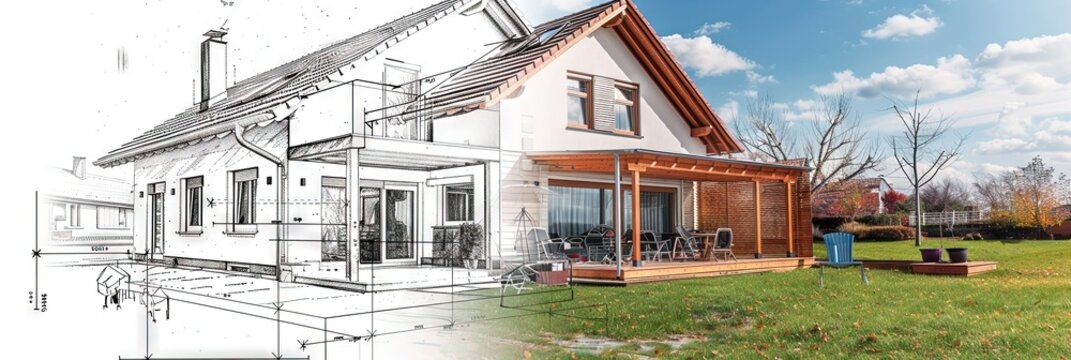
A home construction plan is very detailed, as it includes the details of every step of home construction. It guides the project throughout the construction and until the home is handed over to the owner. Without a proper plan, you should know that the project will be messed up because there will be a lack of management at so many levels. The quality of work will differ noticeably in a house that is made without a plan. Plans are carefully created, so the contractor must ensure that every aspect of the construction is completed as planned. This is also a reason that leads to reduced safety concerns.
There is a step that must be carried out before starting construction. Cost estimation is important because it allows you to see if the plan that you made for your house is actually feasible with your budget or not. These decisions have to be made at the start. You can do residential construction estimation when you are working on a residential project. These projects also have different types, but all of them are somehow the same because their main focus is to make the residence comfortable. This article discusses the role of home construction plans in the overall construction process.
A Home Construction Plan Explained:
A home construction plan has all the documents regarding the building, like the technical drawings and the important decisions. These documents answer questions like
-
What will be built?
-
How will it be built?
-
In what order will the tasks be carried out?
In order to answer these questions, the plan provides all the blueprints and even the material choices. So it is technically not just a plan, but it is actually everything in a project. You can imagine it like
-
A blueprint of the house
-
A schedule for work
-
A financial guide for fund management
The Stages of a Plan:
-
Idea and Requirement Planning:
Construction projects start with a plan. This is where clients share their vision and requirements for their house. The requirements, like
-
How many rooms are needed on each floor?
-
Will the rooms have attached bathrooms or be separate?
-
What is the client’s budget?
-
Do they need a garden, or is a parking space enough?
So, there is a lot that happens in this step, as the client has so many ideas that are filtered. This way, the design process can be initiated.
-
Architectural Design and Layout:
When the plan of the client becomes clear, the designer gets to the design phase. The designer decides how the house will look and function. This is a long process because, along with setting a layout, functionality has to be taken care of. Some of the stages in design are
-
Making a floor plan that shows the arrangement of every room.
-
Elevations that will show how it will look from the outside.
-
Placement of stairs.
-
Placement of doors and windows.
It is common to get the design revised in this step. The client keeps sharing how they want to move a certain thing to somewhere else. And the designer updates the design every time till the client gets satisfied with the final design.
-
Structural and Technical Drawings:
After finalizing the design, the technical drawings can be made. The technical drawings exist for not only the structure but also the MEP systems. In construction a step comes where you have to install MEP systems. And for proper professional installation, drawings are important.
When these drawings are made, it is better that you also get help from a construction estimation company. They can help you in terms of planning how the funds will be used in each part of the project.
-
Approvals and Permissions:
Local authorities accept or reject your design depending on how well the structure is planned. They cannot let you construct a house that can be a safety risk for you and your neighbors as well. Approvals may include
-
Permit for design
-
Utility connections
If you try to skip this process at the start, you may have to stop in the middle of construction because authorities have the power to do so. Cost estimation report also explains how much this step will cost the client.
-
Execution:
The execution phase is obviously very long because it starts from preparing the site and ends at doing the last finishes.
-
Final Inspection:
Once construction work is finished, the house has to be inspected. Once it is approved, you can hand it over to the client.
Conclusion:
A home construction plan is not just a pile of documents. It has every detail that can be required during construction. It directs the workers on how every step will be taken in a flow. The flow of the work cannot be disturbed, and everything in construction must be done in order. It is a demand for construction projects. Homeowners should be well aware of this entire process. It ensures that during their project, they are not completely blank about what is going on.

