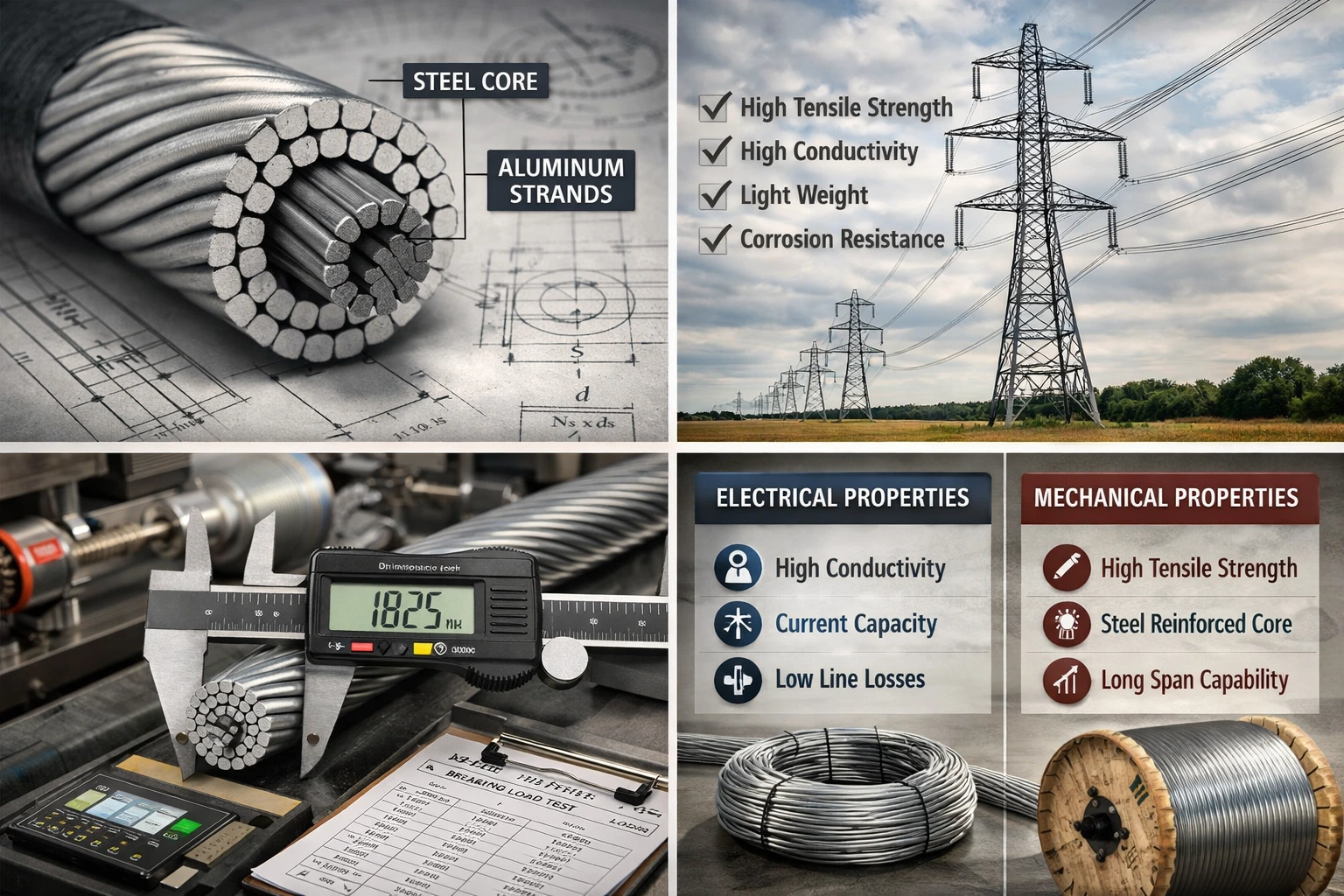
An ACSR (Aluminium Conductor Steel Reinforced) conductor is one of the most widely used solutions in overhead power transmission networks around the world. It is specifically designed to combine the high conductivity of aluminium with the superior mechanical strength of steel, making it suitable for long-span, high-voltage, and demanding environmental conditions.
For utility engineers and procurement specialists, ACSR remains a trusted choice because it delivers an optimal balance between cost efficiency, durability, and electrical performance. At HNBF Power, we manufacture high-quality ACSR conductors engineered to meet global transmission and distribution standards.
What is an ACSR Conductor?
An ACSR conductor consists of multiple layers of aluminium strands surrounding a central steel core. The aluminium layers are responsible for carrying electrical current efficiently, while the steel core provides the necessary tensile strength to support long spans and mechanical loads.
This dual-function design makes ACSR ideal for overhead lines where both electrical efficiency and structural reliability are critical.
Key Components:
- Aluminium Strands: High conductivity, lightweight, and corrosion-resistant
- Steel Core: High tensile strength and structural reinforcement
- Zinc Coating (optional): Enhanced corrosion protection for harsh environments
How ACSR Conductors Work in Power Systems
In overhead transmission lines, conductors must carry electricity over long distances while withstanding wind pressure, ice loading, and mechanical tension. ACSR conductors address these challenges through their composite structure.
- The aluminium outer layer ensures low electrical resistance and efficient power flow.
- The steel core supports mechanical stress, reducing sag and improving line stability.
This combination allows utilities to achieve higher transmission efficiency without compromising safety or structural integrity.
Advantages of ACSR Conductors
ACSR conductors continue to dominate power transmission networks due to several key advantages:
1. High Tensile Strength
The steel reinforcement allows ACSR to be used in long-span applications such as river crossings, valleys, and mountainous regions.
2. Excellent Conductivity
Aluminium strands provide efficient electrical performance, minimizing energy loss during transmission.
3. Cost-Effective Solution
Compared to all-aluminium or copper conductors, ACSR offers a more economical option for large-scale projects.
4. Proven Long-Term Reliability
Decades of field performance have proven ACSR’s durability in diverse climates and operating conditions.
5. Versatile Applications
Suitable for:
- High-voltage transmission lines
- Sub-transmission networks
- Rural electrification projects
- Industrial power distribution systems
Technical Specifications and Variants
ACSR conductors are manufactured in different configurations depending on project requirements. Common variations include:
Standard Designs:
- ACSR Rabbit, Dog, Zebra, Moose (commonly used naming conventions based on size and capacity)
Key Technical Parameters:
- Aluminium-to-steel ratio (varies based on load requirement)
- Current carrying capacity
- Tensile strength
- Sag-tension characteristics
- Corrosion resistance level
At HNBF Power, we produce customized ACSR conductor specifications tailored to utility-grade projects, ensuring compliance with international standards and client-specific engineering requirements.
Applications of ACSR Conductors in Modern Infrastructure
ACSR conductors are widely used in both developing and advanced power systems due to their adaptability.
Power Transmission Networks
Used in high-voltage overhead lines to transfer electricity over long distances efficiently.
Rural Electrification Projects
Cost-effective and durable solution for expanding grid access in rural and remote areas.
Industrial Power Supply
Supports stable power distribution in factories, industrial zones, and mining operations.
Cross-Terrain Installations
Ideal for challenging terrains such as mountains, rivers, and forests where high mechanical strength is essential.
Why ACSR Remains a Preferred Choice for Utilities
Despite the introduction of newer conductor technologies, ACSR continues to be a preferred choice for many utility companies due to its proven performance and reliability.
Engineers often choose ACSR because it:
- Offers predictable mechanical behavior
- Requires lower maintenance compared to alternatives
- Performs well under extreme weather conditions
- Is widely available and globally standardized
For procurement teams, its balance between cost and performance makes it a practical and safe investment for long-term grid projects.
HNBF Power’s Role in ACSR Conductor Manufacturing
HNBF Power is a global manufacturer specializing in overhead conductors and power transmission solutions, including ACSR conductors, AAC, AAAC, and ABC cables.
Our ACSR conductors are engineered with precision to ensure:
- Consistent electrical performance
- High mechanical strength for long spans
- Compliance with international power utility standards
- Long service life with reduced maintenance requirements
We support utility companies, EPC contractors, and infrastructure developers with customized conductor solutions designed for real-world grid challenges.
Quality Assurance and Manufacturing Standards
Every ACSR conductor produced by HNBF Power undergoes strict quality control processes, including:
- Raw material inspection
- Strand tension and alignment testing
- Mechanical load testing
- Electrical resistance validation
- Corrosion resistance evaluation
This ensures that each product delivers reliable performance in critical transmission environments.
FAQs about ACSR Conductors
1. What does ACSR stand for?
ACSR stands for Aluminium Conductor Steel Reinforced, a type of overhead power conductor used in transmission lines.
2. Why is steel used in ACSR conductors?
Steel is used to provide high tensile strength, allowing the conductor to withstand mechanical stress and long-span installations.
3. Where are ACSR conductors commonly used?
They are widely used in high-voltage transmission lines, rural electrification projects, and industrial power distribution networks.
4. What is the lifespan of an ACSR conductor?
With proper installation and environmental conditions, ACSR conductors can last 30–40 years or more.
5. Can ACSR be customized for specific projects?
Yes, ACSR conductors can be customized in terms of size, aluminium-steel ratio, and performance specifications based on project requirements.
Conclusion
ACSR conductors continue to play a vital role in modern power transmission systems due to their balanced combination of strength, efficiency, and cost-effectiveness. Their proven performance across global infrastructure projects makes them a reliable solution for utilities and industrial applications alike.
At HNBF Power, we are committed to delivering high-performance ACSR conductors that meet the evolving demands of global power networks, ensuring stability, efficiency, and long-term reliability.
Contact HNBF Power for Customized ACSR Solutions
If you are planning a transmission or distribution project and require reliable conductor solutions, HNBF Power can support you with customized ACSR designs tailored to your technical and commercial requirements.