


Zpgearmotor by Zhanpeng: What Causes Inline Micro Gear Motor Gear Whine
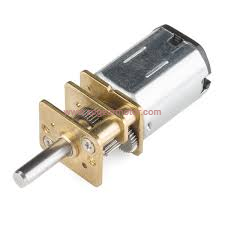
Operators of precision equipment often notice a distinct whine from their Inline Micro Gear Motor at certain rotational speeds. This acoustic signature varies in pitch and intensity, sometimes indicating normal gear mesh, other times warning of impending failure. A whining Inline Micro Geared Motor from zpgearmotor undergoes rigorous tooth profile analysis to minimize such noise, yet environmental conditions, load variations, and wear patterns can create unexpected harmonics. Understanding the mechanical origins of this whine helps distinguish between benign operation and critical distress. Does the pitch from your gear motor reveal a simple lubrication need or a deeper mechanical flaw?
Examine gear tooth meshing frequency. Every pair of gears in a Micro Geared Motor produces a fundamental frequency calculated from the number of teeth and the rotational speed. When this frequency coincides with the natural resonance of the housing or mounting structure, the whine amplifies dramatically. Zpgearmotor's design process includes finite element analysis that predicts these resonances and adjusts housing stiffness or adds damping features to shift natural frequencies away from operating ranges. This proactive engineering reduces the chance that normal meshing produces objectionable noise. A pure, consistent whine at a fixed speed without vibration often falls into this resonance category, addressable through mounting modifications rather than motor replacement.
Tooth profile accuracy directly influences whine characteristics. Gears manufactured with slight deviations from ideal involute form produce non-uniform velocity transmission, generating sidebands around the fundamental meshing frequency. These sidebands sound like a rough or raspy whine with additional overtones. Zpgearmotor utilizes high-precision hobbing and grinding processes that maintain tooth-to-tooth spacing within narrow tolerance bands. Their Inline Micro Gear Motor designs incorporate crowned teeth that compensate for minor shaft deflections under load, maintaining consistent contact even when torque fluctuates. A whine that rises in intensity with increasing load, accompanied by vibration felt through the housing, points to tooth profile wear or manufacturing variation that requires professional evaluation.
Gear material selection plays a significant role in noise generation. Metal gears, while durable, transmit vibration more readily than polymer alternatives. The Micro Geared Motor from zpgearmotor offers both material options depending on application demands. Steel gears produce a sharp, metallic whine that persists across speed ranges, while polymer gears create a softer, lower-pitched sound that often remains unobtrusive. Zhanpeng's engineering team matches material to duty cycle and ambient conditions, ensuring that the chosen gear set does not introduce objectionable noise in typical operating scenarios. Sudden changes in whine character, shifting from a smooth tone to a rough grinding quality, suggest gear surface degradation or foreign particle intrusion.
Lubrication condition affects both noise and longevity. Inadequate lubricant film allows tooth surfaces to contact directly, producing a high-frequency screech or squeal that varies with speed. Conversely, excessive or incorrect lubrication creates drag that alters the meshing dynamics, potentially lowering the whine frequency. Zpgearmotor specifies particular viscosity grades for their Inline Micro Gear Motor that maintain elastohydrodynamic film thickness across the intended temperature range. Zhanpeng's assembly process applies precision metered quantities, avoiding both starvation and flooding. A whine that appears gradually after months of quiet operation often indicates lubricant breakdown or contamination, requiring fresh oil or grease rather than a complete motor change.
Bearing condition modulates gear whine through shaft displacement. Worn bearings allow the gear shaft to move radially, changing the meshing center distance. This shift alters the contact pattern, producing a whine with fluctuating amplitude - sometimes called a "warbling" character. Zpgearmotor equips their Micro Geared Motor with high-grade ball bearings that maintain concentricity under radial and axial loads. Zhanpeng's quality control includes dynamic runout measurements that verify bearing seating before final assembly. A whine accompanied by periodic fluctuation in loudness, especially as speed rises, signals bearing wear that repair can address, provided the housing and shafts remain undamaged.
Motor electromagnetic forces contribute to the overall acoustic profile. The interaction between stator windings and rotor magnets produces torque ripple that excites mechanical structures. This electromagnetic whine occurs at multiples of the electrical frequency, distinct from gear meshing tones. Zpgearmotor's brushless designs incorporate skewed stator slots and optimized winding patterns that minimize these harmonics. The resulting Inline Micro Gear Motor produces a cleaner acoustic signature where gear noise dominates, simplifying diagnosis. A whine that changes with electrical load even at constant speed indicates electromagnetic origin, typically correctable through drive parameter adjustments rather than mechanical intervention.
Alignment between motor and gearbox affects whine in coupled systems. Angular or parallel misalignment introduces axial forces that modify tooth contact, producing irregular whine patterns. Zpgearmotor manufactures their Micro Geared Motor as an integrated unit, eliminating coupling-induced alignment errors. Zhanpeng's assembly fixtures align the motor shaft and gearbox input on common centers, maintaining consistent meshing across the entire speed range. When retrofitting or replacing components, a whine that varies with temperature as housings expand may stem from thermal growth misalignment, correctable through flexible couplings or re-alignment procedures.
Installation mounting rigidity amplifies or dampens whine transmission. A stiff mounting structure carries vibrations efficiently, potentially broadcasting gear noise to surrounding surfaces. Compliant mounts absorb vibrations, reducing radiated whine. Zpgearmotor provides installation recommendations that balance rigidity for torque reaction with isolation for noise reduction. Their Inline Micro Gear Motor includes mounting flange designs that accommodate elastomeric bushings without compromising alignment. A whine that diminishes when the motor is held by hand but intensifies when rigidly bolted indicates a mounting resonance, treatable through dampers or mass addition rather than motor replacement.
A whining Inline Micro Gear Motor demands systematic evaluation of gear condition, lubrication, bearings, alignment, and mounting. Zpgearmotor's technical documentation includes noise spectrum analysis charts that help users correlate specific whine characteristics with root causes. Zhanpeng's after-sales support provides diagnostic guidance, distinguishing between acceptable operational noise and actionable defects.https://www.zpgearmotor.com/ offers a range of brushless gearmotors engineered for low acoustic emissions across diverse applications. Regular monitoring and prompt attention to whine changes prevents minor issues from escalating into major failures. Does your gear motor's whine match one of these identifiable patterns?

