


How Insurance Premiums Are Calculated by Companies?
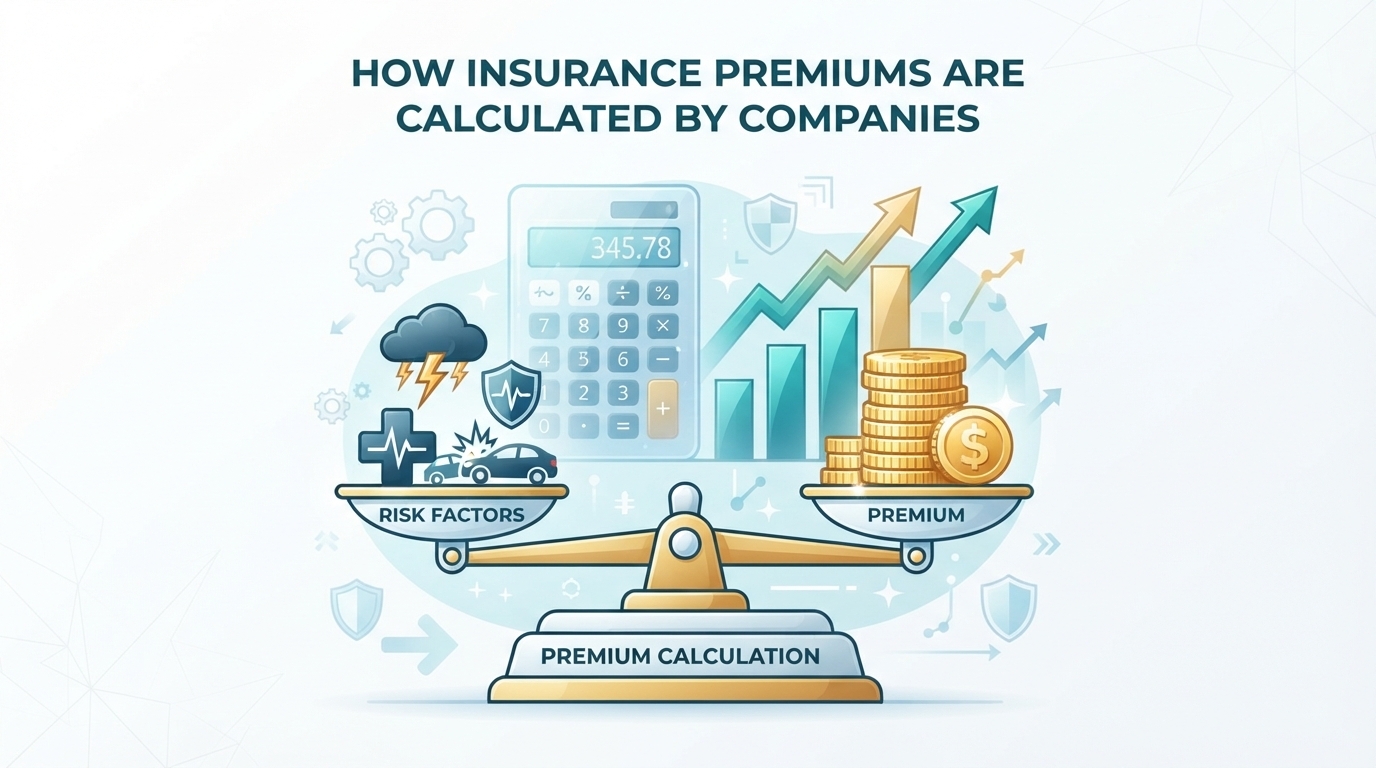
Insurance premiums can vary significantly from one customer to another, even when two people appear to be buying similar coverage. This happens because insurance companies do not usually choose prices at random or apply one fixed rate to every policyholder. Instead, they evaluate risk, expected claim costs, coverage levels, operating expenses, and several other factors before setting a premium.
Understanding how insurers calculate premiums can help individuals and businesses make better decisions when comparing policies. It also explains why changing a deductible, coverage limit, location, or risk profile can affect the amount someone pays.
What Is an Insurance Premium?
An insurance premium is the amount a policyholder pays for insurance coverage during a specified period.
Depending on the policy and provider, premiums may be paid:
- Monthly
- Quarterly
- Semi-annually
- Annually
In return, the insurer agrees to provide coverage according to the terms, limits, conditions, and exclusions stated in the policy.
Paying a premium does not mean every loss will automatically be covered. Any claim must meet the policy's requirements.
Insurance Pricing Starts With Risk
Risk sits at the center of insurance pricing.
An insurer wants to estimate two important things:
- How likely is the policyholder to make a claim?
- How expensive could that claim be?
A customer with a higher probability of experiencing a covered loss may receive a higher premium.
Likewise, an exposure capable of producing a particularly expensive claim may cost more to insure.
Historical Claims Data Matters
Insurance companies use historical data to understand how often certain losses occur.
For example, an auto insurer may study past information about:
- Accidents
- Vehicle theft
- Repair expenses
- Driver claims
- Geographic claim patterns
Historical data cannot predict exactly what will happen to one customer. However, it helps insurers estimate expected losses across larger groups.
Personal Factors Can Affect Premiums
The information insurers consider depends on the type of policy and applicable rules.
For personal insurance, relevant factors may include:
- Age
- Location
- Claims history
- Property characteristics
- Vehicle type
- Coverage selected
- Usage patterns
Insurers use permitted rating factors to estimate the level of risk associated with a policy.
Therefore, two customers purchasing similar coverage may still receive different quotes.
Business Insurance Uses Different Risk Factors
Commercial insurance requires insurers to understand the specific risks associated with a business.
Factors may include:
- Industry
- Number of employees
- Annual revenue
- Business location
- Claims history
- Property value
- Equipment
- Security procedures
- Nature of operations
A small office-based company generally presents different risks from a construction company or manufacturing facility.
As a result, premiums can differ substantially between industries.
Coverage Limits Influence Price
A coverage limit establishes the maximum amount an insurer may pay under specified circumstances.
Higher coverage limits generally expose the insurer to greater potential losses.
Therefore, increasing coverage may increase the premium.
However, businesses and individuals should not automatically choose the lowest limit to reduce costs. Insufficient coverage can leave significant financial exposure after a major loss.
Deductibles Can Change the Premium
A deductible, or excess in some insurance markets, is the amount the policyholder agrees to pay before insurance responds according to the policy terms.
Higher deductibles often reduce premiums because the policyholder accepts more of the initial financial risk.
For example, choosing a larger deductible may lower regular insurance costs, but it also means paying more personally if a claim occurs.
The right balance depends on financial circumstances and risk tolerance.
Location Can Affect Insurance Costs
Geographic location can significantly influence premiums.
Property insurers may consider local exposure to:
- Flooding
- Storms
- Theft
- Fire
- Other regional hazards
Auto insurance pricing may also reflect accident frequency, theft rates, repair costs, and traffic conditions within an area.
For businesses, location can affect property, liability, and operational risks.
Claims History Plays an Important Role
Previous claims can provide insurers with information about future risk.
A history of frequent claims may result in higher premiums because the insurer may consider future claims more likely.
However, the impact depends on factors such as:
- Type of claim
- Number of claims
- Severity
- Time since the claim
- Insurance product
Not every previous claim affects pricing in the same way.
The Value of the Insured Asset Matters
More expensive assets can produce larger claims.
For example, insuring a high-value property generally creates greater potential financial exposure than insuring a less expensive property.
The same principle can apply to:
- Vehicles
- Machinery
- Commercial buildings
- Business equipment
Insurers consider potential replacement or repair costs when calculating premiums.
Insurance Companies Consider Operating Costs
Claim payments are only one part of an insurer's expenses.
Companies also incur costs associated with:
- Staff
- Technology
- Claims administration
- Customer service
- Regulatory compliance
- Distribution
- Fraud prevention
Premiums must help support these expenses while allowing the insurer to operate sustainably.
Reinsurance Can Influence Pricing
Insurance companies also purchase insurance for themselves through reinsurance.
Reinsurance helps insurers manage unusually large or concentrated losses.
For example, a major natural disaster could generate thousands of claims within a short period. Reinsurance can reduce the amount one insurer must absorb alone.
Changes in reinsurance costs can eventually influence the pricing of certain insurance products.
Wider Economic Conditions Matter
Insurance premiums can also respond to broader economic conditions.
Rising costs may increase the amount insurers expect to pay for claims.
Examples include higher:
- Vehicle repair costs
- Construction costs
- Medical expenses
- Replacement equipment prices
- Labor charges
If the average cost of settling claims rises, insurers may adjust premiums accordingly.
How Insurers Use Underwriting
Underwriting is the process insurers use to evaluate applications and determine whether to offer coverage and on what terms.
An underwriter may review:
- Application information
- Previous claims
- Risk controls
- Property details
- Business activities
- Requested coverage
The insurer then determines suitable policy terms and pricing.
Accurate information is important because incorrect or incomplete details can create problems later, particularly during the claims process.
Can Policyholders Reduce Their Premiums?
In some circumstances, customers can reduce insurance costs by lowering their risk or adjusting policy terms.
Possible measures include:
- Increasing the deductible
- Improving property security
- Installing approved safety systems
- Maintaining a favorable claims history
- Reviewing unnecessary coverage
- Comparing suitable policies
However, reducing premiums should not come at the expense of essential protection.
Insurance as Part of Financial Planning
Insurance costs should be considered alongside broader financial commitments rather than treated as an isolated expense. When reviewing budgets, debt, savings, investments, and protection requirements, resources such as Circle Finance can help provide broader financial context for understanding how recurring costs fit into long-term financial planning.
For businesses, insurance expenses should also form part of cash-flow forecasting and risk management. Planning for premiums in advance can reduce unexpected pressure on working capital.
Why Quotes Differ Between Insurance Companies
Two insurers may provide different premiums for the same customer because companies use different:
- Risk models
- Historical data
- Underwriting criteria
- Pricing strategies
- Claims experience
- Reinsurance arrangements
Therefore, comparing policies involves more than comparing prices.
Customers should also review coverage limits, exclusions, deductibles, and policy conditions.
A cheaper policy may provide significantly different protection.
Final Thoughts
Insurance companies calculate premiums by evaluating the likelihood and potential cost of future claims while considering coverage limits, deductibles, claims history, location, operating expenses, and wider economic conditions.
The process allows insurers to price policies according to the risks they accept rather than charging every customer exactly the same amount.
For policyholders, understanding these factors makes it easier to evaluate insurance quotes and identify areas that may influence costs. The goal should not simply be finding the lowest premium. A suitable policy should balance affordable pricing with enough protection to manage significant financial risks.

