


How to Sell and Buy a Home at the Same Time in Seattle

Many Seattle homeowners want to sell and buy a home at the same time but aren't sure how to make it work.
Maybe your family grew, your commute got longer, or you found a home you love and don't want to lose. The challenge is making the move without losing money or watching the new home go to someone else.
Seattle's housing market can move fast. If you wait until your current home sells, the home you want might already be gone. If you try to buy first, you can run into three common roadblocks.
A home sale contingency can weaken your offer because the seller's deal depends on your home selling. A bridge loan can cover the gap, but it adds another monthly payment when your finances need to look their cleanest to a lender. Carrying two mortgages can stretch your monthly budget beyond what feels safe.
There is another way to structure your financing that can address all three problems without gambling on timing or stretching your budget thin. Here's how it works.
Why It’s Difficult to Sell and Buy a Home at the Same Time in Seattle

Selling and buying a home at the same time in Seattle is hard because of how the offer looks to a seller, not because the idea itself is unrealistic. Many people can sell and buy home at same time, but the usual way of doing it puts them at a disadvantage before they even make an offer.
Most buyers start with a home sale contingency. This is a condition added to your offer that says the deal only goes through if your current home sells first. It sounds fair on paper. But sellers in a competitive Seattle market see it differently. Your contingency ties their sale to a transaction they can't control, and if a cleaner offer comes in, most sellers will take it.
To avoid a contingency, some buyers turn to a bridge loan or a home equity line of credit, known as a HELOC. Both can close the gap between your down payment and your current home's equity. But they come with a real cost: interest charges, a new monthly payment, and a hit to how a lender views your finances. That new payment shows up as debt, which can hurt your qualification for the mortgage on your new home.
Other buyers try to carry two mortgages at once. This works for some people, but it stretches a household budget right when a lender wants to see your finances at their cleanest. One missed step here can slow down or even stop your new loan approval.
This same pressure is why so many sellers turn to a rent-back agreement or move into temporary housing between homes. Both options solve the timing problem, but they add extra cost, extra moving days, and extra stress to a process that's already stressful enough.
How to Sell and Buy a Home at the Same Time With Seattle's Mortgage Broker
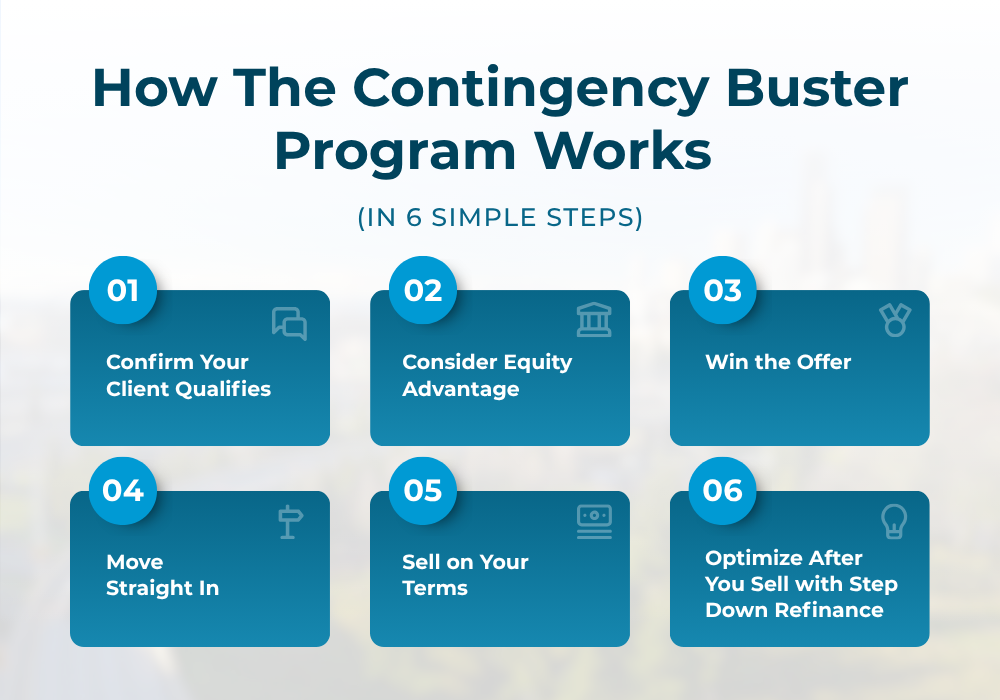
If you want to sell and buy home at same time without a contingency, a bridge loan, or two mortgages, Seattle's Mortgage Broker has built two programs to make that possible: the Contingency Buster Program and the Equity Advantage Program. Together, they remove the sell-first condition from your offer before you ever submit it.
The Contingency Buster Program
Before you make an offer on a new home, Seattle's Mortgage Broker places a guaranteed purchase contract on your current one with a committed buyer, already in place, before you enter the market.
That guaranteed contract is what makes it possible to write your next offer without a home sale contingency attached.
The Equity Advantage Program
Once your current home has a guaranteed buyer, the next question is where your down payment comes from. The Equity Advantage Program answers that by giving you access to up to 75% of your current home's equity, before it even sells. You can use it toward your down payment, closing costs, or moving expenses. And unlike a bridge loan, there is no monthly payment required while you own both properties.
How the advance gets repaid at closing
The full amount you draw from your equity is repaid automatically through escrow when your current home closes. You don't have to send a payment or track a due date. It happens as part of the closing process on your old home.
Why your debt-to-income ratio stays the same
Because there's no monthly payment tied to this advance, it doesn't show up as new debt on your file. Your debt-to-income ratio stays exactly where it was, which keeps your qualification for your new mortgage clean.
How the Two Programs Work Together
On their own, each program solves one piece of the puzzle. Together, they solve the whole thing. The guaranteed buyer contract removes the need to wait on a sale. The funded down payment removes the need for a bridge loan or a second mortgage payment. That combination is what lets your offer go in completely non-contingent, funded, and ready to close.
Who Qualifies for This Path
To qualify for the Contingency Buster Program, you need a minimum of 22% equity in your current home. Once you're above that threshold, Seattle's Mortgage Broker can confirm your equity position and map out your path forward. From there, eligibility also depends on your income, credit, and ability to qualify for the new mortgage, the same as any other purchase.
How to Make a Winning Offer When You Sell and Buy a Home at the Same Time

By the time you're ready to sell and buy home at same time using this approach, most of the hard work is already done. Your guaranteed buyer is in place, and your down payment is funded. The only piece left is getting mortgage preapproval, and that should happen early, before you start touring homes, so your offer is ready to go the moment you find the right one.
With preapproval done, your offer arrives fully funded and ready to close. A seller evaluating your offer doesn't see a buyer waiting on a second sale. They see a buyer who looks financially the same as someone paying in cash. That puts you in the same conversation as the strongest offers on the table, even in a market where multiple buyers are competing for the same home.
Removing the contingency also removes something else sellers worry about: the kick-out clause. This is a clause that lets a seller keep marketing their home and accept a better offer if one comes along, even after they've accepted yours. Without a contingency attached to your offer, there's nothing left for a seller to kick out. Your offer stands on its own.
Your real estate agent plays a big part in how this offer gets received. Because there's nothing conditional to explain or defend, your agent can present your offer with full confidence instead of hedging around a sell-first clause. That confidence also helps when it's time to set the right price, both on the home you're buying and the one you're about to sell.
What Happens After You Sell and Buy a Home at the Same Time
Once your offer is accepted, the process moves into a new phase. Instead of racing to sell your old home before your new one closes, you close on your new home first, move in, and then sell your previous home on your own schedule.
Closing on Your Timeline
Because your financing is already in place, closing moves quickly. At Seattle's Mortgage Broker, paperwork and underwriting are often finished in under a week. By law, a primary residence can't close in less than two weeks, but that wait sits on the calendar, not on your file. You also get to pick your closing date. Timing it near the end of the month helps you avoid paying on two mortgages at once, even for a short overlap.
Selling Your Previous Home the Right Way
Once you've moved into your new home, your old one goes on the market the right way: empty, staged, and without a deadline forcing you to take the first offer that comes in. That difference matters more than it sounds. Staged homes sell 33 to 50 percent faster and for 5 to 10 percent more than homes that aren't staged, according to the National Association of Realtors. On a home in Seattle, even a 5 percent difference adds up to real money in your pocket.
Putting Your Sale Proceeds to Work
Selling your old home isn't just the finish line, it's a chance to make your new mortgage work harder for you. Through the Step Down Refinance Program, the money from your sale gets applied straight to your new mortgage balance.
How the Step Down Refinance Program works
A typical refinance adds loan costs back onto your balance, sometimes $6,000 or more, for things like origination fees and appraisals. The Step Down Refinance Program is built differently. Those costs are either waived or refunded to you at closing, so you keep the full benefit of a lower rate without paying to get it. You can use the program again after six on-time payments, any time rates drop enough to help.
A real example of the savings
One Seattle mortgage broker client used this program three times in about 18 months, once to buy, and twice to refinance. Each time, they kept their monthly payment the same instead of pocketing the savings. That one choice cut eleven and a half years off their loan and saved them more than half a million dollars in interest over time.
Is It Time to Sell and Buy a Home at the Same Time?
Deciding whether to sell and buy a home at the same time is about how your financing is set up. A home sale contingency, a bridge loan, and two mortgages all try to solve the same timing problem, but each one adds risk or cost you don't need to carry.
The Contingency Buster and Equity Advantage programs remove the sell-first condition before you ever make an offer.
The only way to know if this path works for you is to confirm how much equity you have in your current home, and whether you qualify.
That starts with one conversation. Seattle's Mortgage Broker will walk through your numbers, confirm where you stand, and map out your next step.
Frequently Asked Questions
Is It Better to Sell Your House Before Buying Another One?
In most markets, selling first is the safer choice because you know your exact budget before you shop. But in a competitive market like Seattle, waiting to sell first can cost you the home you want if a stronger offer comes in while you wait. That's especially true for well-priced homes, which can draw multiple offers within days. With the right financing in place, buying first doesn't have to carry that same risk.
Can I Use the Same Real Estate Agent for Selling and Buying?
Yes, and it often works in your favor. One agent who understands both sides of your move can time the two transactions together, price both homes correctly, and negotiate with your full situation in mind instead of just one deal at a time. That coordination alone can save you weeks.
How Do I Make an Offer on a New Home Without the Proceeds From My Current Sale?
This is exactly what the Equity Advantage Program solves. It gives you access to your current home's equity before it sells, so your down payment is ready without a bridge loan or a wait on your closing date, and without adding a new monthly payment.
Can I Have Two Mortgages at the Same Time?
You can, but it isn't required with the right plan. Carrying two mortgages adds monthly cost and can work against your loan qualification, especially if your lender is reviewing your file at the same time. Programs like Equity Advantage exist specifically so you don't have to take on that extra payment.
What Happens if I Sell My Home but Can't Find a New One in Time?
This is the exact risk the Contingency Buster Program is built to prevent. Because a guaranteed buyer is already lined up for your current home before you make an offer on a new one, you're never stuck without a plan for where you'll live next, even if your old home takes longer to close than expected.

