


Ayurvedic Medicine: A Simple Guide to Holistic Wellness
Modern lifestyles can make it easy to put personal wellness on the back burner. Long working hours, irregular meals, stress, limited movement and inconsistent sleep can all make maintaining healthy daily habits more challenging.
This is where Ayurvedic medicine and traditional Ayurvedic wellness practices can offer a different perspective. Rather than focusing only on one aspect of well-being, Ayurveda traditionally takes a holistic view that considers food, digestion, lifestyle, sleep, activity and overall balance.
For adults looking to bring more mindful wellness practices into their daily lives, understanding the foundations of Ayurveda can be a useful place to begin.
What Is Ayurvedic Medicine?
Ayurvedic medicine is part of Ayurveda, the traditional Indian system of health and wellness that has been practiced for centuries. The term Ayurveda broadly translates to the “science of life” and reflects an approach centred on maintaining balance through lifestyle, food, herbs and traditional wellness practices.
Unlike a one-size-fits-all approach, traditional Ayurveda considers factors such as an individual's constitution, digestion, environment, age and lifestyle.
Ayurvedic wellness may include:
- Traditional herbal preparations
- Dietary and seasonal routines
- Yoga and other forms of movement
- Breathing and relaxation practices
- Traditional oil-based self-care
- Mindful sleep and daily routines
Today, many people explore Ayurveda as part of a broader approach to everyday wellness.
Ayurvedic products should not be considered a replacement for professional medical diagnosis or treatment. If you have a medical condition, take prescription medication, are pregnant or have a specific health concern, consult an appropriate healthcare professional before introducing herbal products into your routine.
How Does Ayurvedic Medicine Work Traditionally?
A fundamental concept in Ayurveda is balance. Traditional Ayurvedic philosophy describes three doshas—Vata, Pitta and Kapha—which represent different qualities and functions within the body and mind.
According to traditional Ayurvedic thought, every individual has a unique combination of these doshas. Factors such as food, seasons, stress, sleep, age and lifestyle can influence this balance.
Traditionally:
- Vata is associated with movement, variability and qualities such as dryness and lightness.
- Pitta is associated with transformation, metabolism, heat and intensity.
- Kapha is associated with stability, structure, nourishment and grounding.
This traditional framework is best viewed as a wellness perspective rather than a replacement for modern medical evaluation.
It also helps explain why Ayurveda emphasizes personalized routines instead of recommending exactly the same approach for everyone.
What Herbs Are Commonly Used in Ayurvedic Wellness?
Herbs have an important role in traditional Ayurvedic practices. Different herbs have traditionally been used to support different aspects of general wellness.
Some well-known Ayurvedic herbs include:
Ashwagandha
Ashwagandha has a long history of use in Ayurveda. It is traditionally regarded as a rejuvenating herb and is commonly associated with supporting vitality and resilience.
Amla
Amla, also known as Indian gooseberry, is traditionally valued for its nutritional properties and is widely used in Ayurvedic preparations.
Turmeric
Turmeric has been a familiar ingredient in Indian cooking and traditional wellness practices for generations. Its naturally occurring compound curcumin has also received considerable attention in modern research.
Tulsi
Tulsi, or holy basil, is traditionally used in Indian wellness practices and herbal preparations. It is valued as part of several traditional approaches to everyday well-being.
Aloe Vera
Aloe vera has traditionally been used in Ayurvedic and Indian wellness practices, including both internal preparations and topical applications.
The important consideration is that natural does not automatically mean suitable for everyone. The herb, formulation, quality, dosage and individual circumstances should all be considered.
Why Is Ayurvedic Medicine Becoming Popular Today?
Changing lifestyles have encouraged many people to reconsider how they approach wellness.
Instead of focusing solely on what to do when they feel unwell, people are increasingly interested in everyday habits that support long-term well-being.
Ayurveda fits naturally into this mindset because its traditional approach emphasizes the connection between lifestyle, food, rest, activity and overall balance.
People may explore Ayurvedic wellness to:
- Build healthier daily routines
- Support digestive wellness
- Maintain everyday energy and vitality
- Practice mindful self-care
- Support healthy-looking hair and skin
- Incorporate traditional herbal practices into their lifestyle
However, Ayurvedic wellness should not be approached with the expectation of instant results. Traditional Ayurveda generally emphasizes consistency and balance over quick fixes.
How Can You Include Ayurveda in Your Daily Routine?
You do not need to completely change your lifestyle to begin exploring Ayurvedic principles.
Small, sustainable habits can often be easier to maintain than dramatic changes.
1. Maintain a Consistent Routine
Try to maintain relatively consistent waking and sleeping times. A predictable daily rhythm can make healthy habits easier to follow.
2. Eat Mindfully
Slow down during meals whenever possible. Eat without unnecessary distractions and pay attention to hunger, fullness and how different foods make you feel.
3. Choose Balanced Meals
Traditional Ayurveda places considerable emphasis on digestion and appropriate food choices. Freshly prepared, balanced meals can be a practical part of a mindful wellness routine.
4. Stay Active
Choose activities that you enjoy and can maintain regularly. Walking, yoga, stretching, cycling and strength exercises can all contribute to an active lifestyle.
5. Create Time to Relax
A few minutes of meditation, breathing exercises, gentle stretching or quiet time can help create a healthier transition between work and rest.
6. Explore Traditional Self-Care
Traditional oil massage, commonly known as Abhyanga, is one example of Ayurvedic self-care. Depending on individual preferences and skin sensitivity, oil application can become a relaxing part of a personal routine.
What Should You Eat for an Ayurvedic Lifestyle?
There is no single Ayurvedic diet that is suitable for every individual. Traditional Ayurveda considers factors such as digestion, constitution, season and individual needs.
Nevertheless, some practical eating habits can support a balanced lifestyle:
- Include a variety of vegetables and seasonal produce.
- Choose minimally processed foods more often.
- Include suitable sources of protein.
- Drink sufficient water throughout the day.
- Limit excessive dependence on highly processed snacks.
- Reduce frequent consumption of sugary beverages.
- Eat meals at reasonably consistent times.
- Pay attention to how different foods affect your digestion and comfort.
Indian cuisine already provides a wide variety of naturally diverse ingredients, including lentils, vegetables, whole grains, spices, fruits, nuts and seeds.
Rather than following restrictive rules, focus on developing a balanced eating pattern that suits your nutritional requirements and lifestyle.
What Lifestyle Habits Complement Ayurvedic Medicine?
Ayurvedic medicine and herbal wellness practices are only one part of a broader lifestyle.
A balanced approach can include five simple foundations:
- Sleep: Maintain a regular and restorative sleep routine.
- Nutrition: Eat a varied and balanced diet.
- Movement: Stay physically active throughout the week.
- Stress management: Make time for relaxation, hobbies and meaningful social connections.
- Consistency: Give healthy habits time to become part of your everyday routine.
These foundations are useful regardless of whether you choose to include Ayurvedic products in your lifestyle.
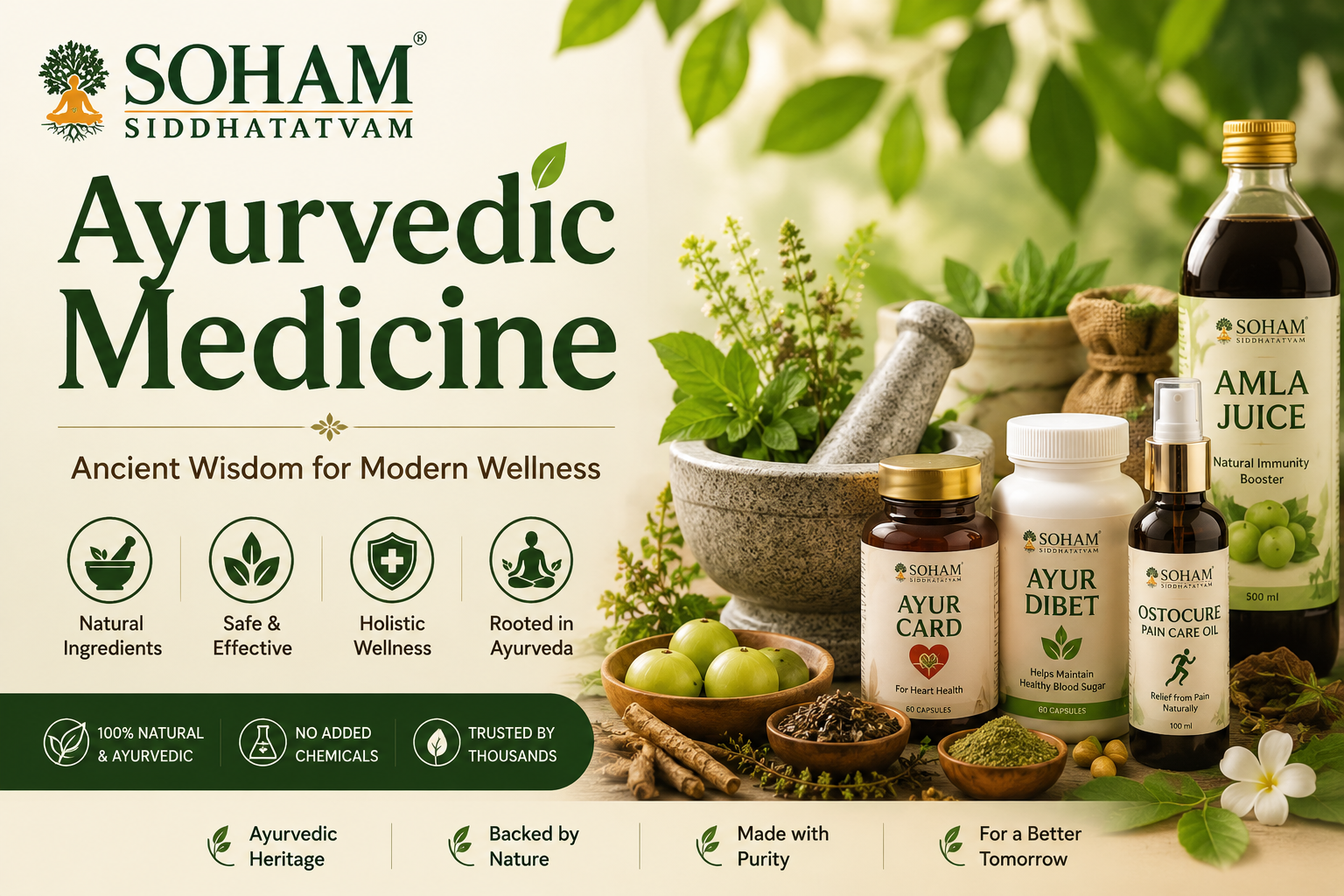
For people interested in traditional herbal wellness, Soham Siddhatatvam offers Ayurvedic products across categories such as Daily Care, Hair Care, Pain Care, Heart Care, Sugar Care and Skin Care. Its range includes formats such as juices, capsules, oils and malts.
How Do You Choose a Quality Ayurvedic Product?
With the growing popularity of herbal wellness products, making informed choices is important.
Before purchasing an Ayurvedic product, consider the following:
- Ingredient transparency: Look for clearly stated ingredients and formulation details.
- Manufacturing standards: Consider products manufactured according to recognized quality standards.
- Clear directions: Follow the recommended usage and dosage instructions.
- Suitable format: Choose a format—such as juice, capsule, oil or malt—that fits comfortably into your routine.
- Product quality: Consider the manufacturer's approach to sourcing, production and quality control.
- Professional guidance: Seek qualified advice when using herbs alongside medication or for a specific health concern.
Soham Siddhatatvam focuses on Ayurvedic wellness products made with traditional principles and manufactured under ISO and GMP-certified standards.
Quality and responsible use matter because herbal products can vary in formulation, sourcing and preparation.
Is Ayurvedic Medicine Safe for Everyone?
Ayurvedic medicine and herbal products should be approached thoughtfully. A natural ingredient may still interact with medication or may not be appropriate for everyone.
Before starting a new herbal supplement, consider consulting a qualified Ayurvedic practitioner or healthcare professional, particularly if you:
- Take prescription or regular medicines
- Have a diagnosed health condition
- Are pregnant or breastfeeding
- Are considering herbal products for a child
- Are preparing for surgery
- Have a known allergy or sensitivity to an ingredient
Always follow the recommended directions on the product packaging. Taking more than the suggested amount does not necessarily provide greater benefits.
Ayurvedic Medicine and Modern Wellness: Finding the Balance
Ayurveda does not have to mean choosing between traditional wisdom and modern life.
One of its practical strengths is its emphasis on everyday fundamentals such as food, sleep, movement, digestion, relaxation and personal routines.
At the same time, modern consumers can approach Ayurvedic products thoughtfully by considering ingredients, manufacturing standards, appropriate use and professional guidance.
This balanced approach allows traditional wellness practices to remain relevant without relying on exaggerated health claims.
Conclusion
Ayurvedic medicine represents a traditional approach to wellness that looks beyond individual concerns and considers the broader relationship between lifestyle, food, daily habits and overall well-being.
You do not need to transform your entire lifestyle overnight. Start with manageable steps—eat mindfully, maintain a consistent sleep schedule, stay active, make time for relaxation and learn how traditional herbs may fit into your personal wellness routine.
When choosing Ayurvedic products, prioritize transparency, quality and responsible use. With informed choices and consistent habits, Ayurvedic wellness can become a thoughtful part of a modern lifestyle.

