


Why a Proper Eye Exam Matters Before Getting New Lenses
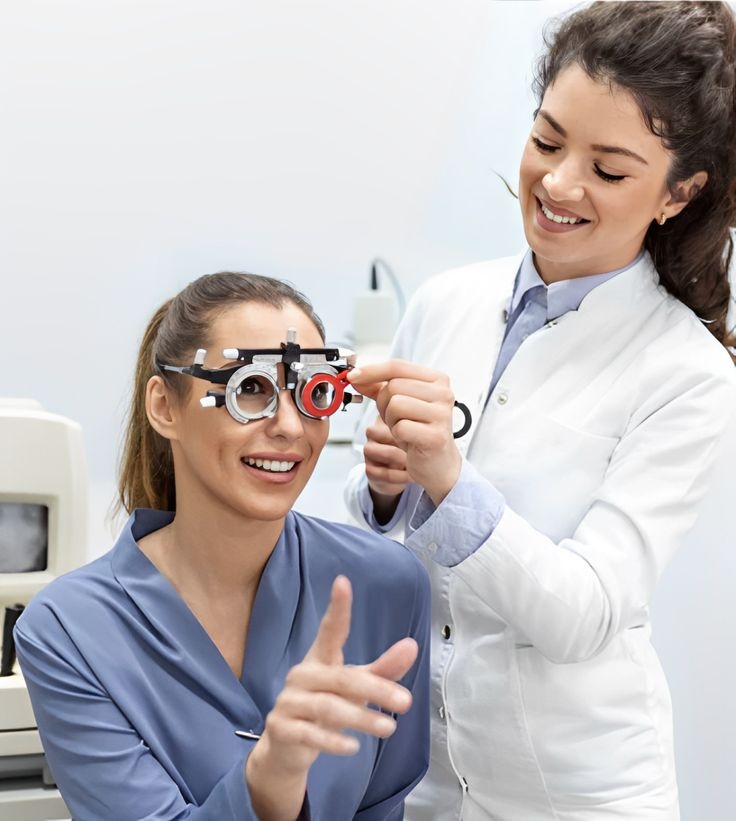
Many people underestimate the clinical importance of a proper eye examination before purchasing contact lenses. It is tempting to simply reorder a familiar lens brand based on a previous prescription. Some people even attempt to share or copy a friend's prescription for convenience. These shortcuts may seem harmless but carry genuine risks for eye health and visual function. Understanding why a proper examination matters helps every contact lens wearer make safer, more informed decisions.
Contact Lens Prescriptions Are Clinically Unique Documents
A contact lens prescription is fundamentally different from a spectacle prescription. Many people assume these two documents are interchangeable. This assumption is incorrect and potentially harmful. A glasses prescription specifies only the optical power needed to correct the refractive error. A contact lens prescription includes additional parameters essential for safe and effective lens wear.
The base curve of a contact lens determines how it curves to match the corneal surface. This value must be matched to the curvature of the individual's cornea. A lens with the wrong base curve does not sit correctly on the eye. It may move excessively with each blink or create excessive pressure on the corneal tissue. Both scenarios cause discomfort and can lead to corneal complications over time.
The diameter of the lens determines how much of the cornea and surrounding limbal tissue the lens covers. Correct diameter is essential for proper centration over the pupil. A diameter too large or too small affects both optical performance and physiological comfort. The specific brand specified on the prescription has also been validated for that individual's eye through a professional fitting process. Different brands with identical powers have different base curves, diameters, and materials that affect fit and performance differently.
Why Expired Prescriptions Are a Clinical Risk
Contact lens prescriptions typically expire one year from the date of issue. This expiration is not arbitrary. It reflects the clinical reality that eyes change over time. Refractive error can shift significantly within twelve months, particularly in young adults and children. A prescription that was accurate when issued may produce optical strain if used twelve to eighteen months later.
Corneal dimensions can also change in response to previous lens wear, health changes, or natural aging. A lens fitted to corneal parameters from over a year ago may no longer center correctly on the current corneal surface. Using an expired prescription bypasses the professional assessment that would detect these changes. It also means that any complications developing since the last examination remain undetected. Reputable retailers require a current, in-date prescription for precisely these clinical safety reasons.
What a Comprehensive Pre-Lens Examination Includes
A comprehensive eye examination before getting new lenses includes several important components. Refraction establishes the current prescription with precision. This measurement ensures any new lens corrects the refractive error accurately. Visual acuity testing confirms how well the patient sees with the corrected prescription. These are the most familiar components of any eye examination.
The contact lens fitting portion adds additional measurements. Keratometry measures the curvature of the corneal surface along its principal meridians. This measurement guides the selection of an appropriate lens base curve. Corneal diameter measurement ensures the selected lens diameter provides appropriate coverage. These measurements must be current to ensure a safe, accurate fit with any new lens.
Slit lamp examination assesses the health of the anterior eye structures. The cornea, conjunctiva, eyelid margins, and anterior chamber are all evaluated. This assessment ensures there are no existing conditions that would contraindicate contact lens wear. It also detects any complications developing from previous lens wear. Early detection of issues like corneal neovascularization or papillary conjunctivitis allows for timely management before problems escalate.
Tear Film Assessment and Its Clinical Importance
The tear film plays a critical role in contact lens comfort and health. An inadequate tear film is one of the most common causes of contact lens intolerance. If a patient has dry eye disease, the wrong lens choice will significantly worsen their wearing experience. Tear film assessment during the pre-lens examination guides the selection of appropriate lens materials and replacement schedules.
Several tests assess tear film quality and quantity. Tear meniscus height measurement estimates the volume of tears at the lower eyelid margin. Tear break-up time assesses how long the tear film remains stable between blinks. Reduced tear break-up time indicates evaporative dry eye disease. These findings directly influence which lens material and modality will be most comfortable for that individual.
A patient with significant dry eye benefits from high-wettability silicone hydrogel lenses. Daily disposable formats eliminate deposit-related dryness that accumulates on reusable lenses. Lubricating drops compatible with contact lens wear may also be recommended. These clinical recommendations are only possible when a proper tear film assessment is conducted. Self-selecting lenses without this information leads to predictable and avoidable discomfort.
How Examination Findings Influence Lens Recommendations
The cumulative findings of a comprehensive examination directly determine the most appropriate lens recommendation. Patients with simple spherical refractive error have the widest range of suitable options. Patients with significant astigmatism require toric lens designs with cylindrical correction. Presbyopic patients need multifocal or monovision lens strategies to address near focusing difficulty.
Each of these prescription categories has different fitting requirements and trial lens protocols. Toric lens fitting requires assessment of lens orientation stability on the individual's eye. Different toric brands stabilize differently due to variations in their design features. Finding the brand that maintains stable axis alignment for a specific patient requires in-office trial and evaluation. Multifocal fitting requires testing of near and distance vision quality with different lens designs.
Buy contact lenses only after these fitting assessments have been completed by a qualified optometrist. The prescription generated by this process includes the brand, power, base curve, and diameter validated for your eyes. Using these exact parameters when purchasing lenses ensures you receive a lens that performs as the fitting demonstrated. Deviating from any of these parameters affects both vision quality and physiological safety.
The Role of the Examination in Detecting Ocular Health Issues
A pre-lens examination serves an important role beyond prescription accuracy. It provides a comprehensive assessment of ocular health that may reveal conditions requiring attention before lens wear begins. Conditions such as blepharitis, meibomian gland dysfunction, and corneal irregularities are all identified during a proper examination. These conditions can significantly affect contact lens comfort and safety if not addressed.
Blepharitis is inflammation of the eyelid margins caused by bacterial overgrowth or meibomian gland dysfunction. Wearing contact lenses in the presence of active blepharitis significantly increases infection risk. The examination identifies this condition and allows for appropriate treatment before lens wear begins. A simple eyelid hygiene protocol or warm compress routine may resolve the issue sufficiently to allow safe lens wear.
Corneal irregularities such as early keratoconus may not cause obvious symptoms in early stages. The eye examination, particularly when supported by corneal topography, can detect these subtle changes. A patient with early keratoconus requires different lens types than a patient with a regular cornea. Proceeding with standard soft lenses without detecting this condition leads to unsatisfactory vision correction. Early detection enables appropriate specialty lens fitting that delivers excellent outcomes.
The Examination as a Foundation for Long-Term Lens Success
The pre-lens examination is not simply a one-time administrative hurdle to clear before purchasing. It establishes the clinical foundation for long-term contact lens wearing success. The baseline measurements collected during this examination are referenced at every subsequent aftercare visit. Changes from baseline reveal whether complications are developing or whether the prescription has shifted. Without a well-documented baseline, detecting subtle changes over time is significantly more difficult.
Annual aftercare appointments for existing lens wearers serve a similar ongoing purpose. They update the prescription, assess the continued appropriateness of the current lens, and monitor ocular health. Corneal health can change subtly over months of lens wear without producing obvious symptoms. Professional assessment catches these changes before they become clinically significant. Patients who maintain annual aftercare develop a detailed, longitudinal picture of their ocular health.
The examination also creates an opportunity for patient education and professional guidance. New wearers receive instruction on lens insertion, removal, and care routines. Established wearers receive updates on new lens technologies that might improve their wearing experience. The optometrist can identify and address suboptimal care habits before they lead to complications. This ongoing educational dimension of examination appointments significantly enhances long-term wearing safety and satisfaction.
Making the Examination a Priority Before Any Purchase
Some contact lens wearers view professional examinations as an inconvenient requirement for obtaining a prescription. This perspective significantly undervalues what the examination actually provides. The examination is a comprehensive health assessment that protects your vision, guides optimal lens selection, and detects emerging problems early. It is not merely the means to an end but a genuinely valuable clinical service in its own right.
Scheduling a comprehensive eye examination before purchasing new contact lenses should be treated as a priority rather than an afterthought. This applies equally to established lens wearers reordering a familiar prescription and to first-time lens wearers beginning the process. Visual needs change over time, and what was an appropriate lens last year may not be the best option this year. The examination process identifies these changes and ensures your next lens purchase is as effective and safe as possible.

