


Making an Older Grove Crane Work Better
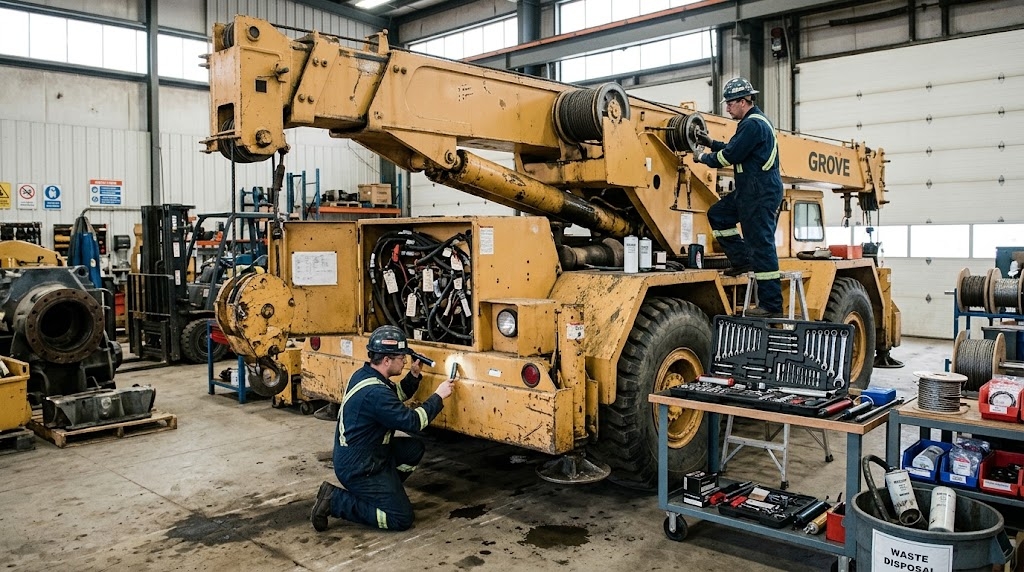
You have put years into your Grove mobile crane. The machine still picks loads and swings them where they need to go. But the shop visits are getting closer together. A hydraulic line weeps. The controls feel less crisp. A gauge reads oddly on cold mornings. Eventually you face the question: keep patching, or upgrade with purpose.
Upgrading is not a cosmetic exercise. It targets reliability, operator safety, and functional performance where the crane has weakened. Thoughtful improvements can add real years to a working life. Reckless changes, though, can introduce problems the machine never had.
Perform a Hands-On Walkdown First
Before ordering a single part, give the crane a full physical inspection. Look at each boom section for cracks, pitting corrosion, deformed plating, and worn pin holes. Check the swing bearing, brakes, wire rope, sheaves, hook block, and every hydraulic hose run. Examine cylinder rods for scoring and external leakage. Trace the wiring harness, battery cables, ground straps, relays, and switches for damage or deterioration.
Aging machines often develop faults that seem mysterious but turn out to be simple. A single corroded ground can send instrument readings off. A tired connector can break a sensor circuit mid-cycle. A clogged hydraulic filter can starve an entire system of flow. Track down the actual cause before spending money on replacements. Separate immediate repairs from items that can be scheduled later.
Correct Safety-Critical Defects Before Anything Else
A cracked boom section is a repair, not an upgrade candidate. The same applies to worn brakes, fatigued load pins, damaged swing bearings, and compromised hook assemblies. These items demand proper attention before you invest in performance or comfort modifications using Grove parts.
Cosmetic appearance tells you very little about structural integrity. Hidden fatigue, cracked welds, and enlarged bores can develop gradually over years of service. Whenever a structural question arises, bring in qualified inspection personnel. A coat of paint and a quick trial lift do not constitute proof that the machine is safe.
Make the Controls More Predictable
Precision at the controls directly shapes productivity and reduces mechanical stress. Older Grove machines may use basic lever arrangements, first-generation joysticks, or elementary electronic control schemes. Worn valve spools and sloppy linkage geometry create vague, inconsistent movement. Operators compensate by overcorrecting, which adds time and accelerates wear on multiple systems.
A full control retrofit is rarely necessary. Fresh proportional valves, rebuilt joystick assemblies, clean signal wiring, and properly adjusted linkages can make an enormous difference. The target is predictable, proportional response throughout the operating range. When an operator can feather a load smoothly without fighting the controls, performance and safety both improve.
Bring Hydraulic Health Back
Hydraulic degradation creeps up on aging equipment. Leaking piston seals, worn pump components, obstructed filters, and chronically overheated fluid reduce power and efficiency. Excessive heat is the worst offender. It destroys seals, degrades oil, and accelerates wear on every wetted surface in the circuit.
Replacing fatigued cylinders with quality crane parts can recover lifting capacity that has slowly eroded. Cleaner hose routing eliminates abrasion hotspots. Upgraded filtration protects downstream pumps, motors, and valves at a modest cost. On machines equipped with variable displacement pumps, examine pilot lines, solenoid coils, and control pressure readings. A weak electrical signal can make a healthy pump appear lazy or unresponsive.
Give Close Attention to Rope, Sheaves, and the Hook Block
Wire rope condition deserves more scrutiny than it usually receives. Rope that appears serviceable on a visual pass may conceal internal wire breaks, crushed sections, or subsurface corrosion. Proactive rope replacement on a busy crane costs far less than a catastrophic failure during a lift.
Inspect every sheave for bearing looseness and groove distortion. Worn sheaves destroy rope at an accelerated rate. Examine the hook block assembly, swivel, safety latch, and all hardware. If the block shows significant wear, sourcing dependable crane parts for a rebuild or replacement is the safer course. All hoist components should track correctly and move freely. Small misalignment in one spot often drives larger problems downstream.
Upgrade Safety Instrumentation Thoughtfully
Many older cranes carry only basic overload protection from the factory. Installing current-generation load moment indicators, anti-two-block devices, boom angle sensors, and clearer operator displays adds a meaningful layer of awareness. This work is not about technology for its own sake. It gives the operator actionable information at the moment it matters most.
Dependable instrumentation helps prevent side loading, overtravel, and unstable rigging configurations. Always use compatible Grove parts or components designed for the specific machine platform when installing these systems. Mismatched electronics frequently produce phantom fault codes that waste diagnostic time. An incompatible sensor can generate more downtime than it eliminates.
Do Not Neglect the Electrical Backbone
Electrical maintenance often falls to the bottom of the list. Flickering lights, drifting gauges, intermittent alarms, and sporadic control faults are common complaints on older machines. Start with the basics: battery condition, alternator output, starter motor draw, ground path integrity, and the relay panel. Corroded terminals and brittle wire insulation account for a remarkable share of operational problems.
Older harness sections dry out and crack with age. Connectors lose their seals and admit moisture. Switch contacts arc and pit over time. Replacing a degraded harness segment or fitting sealed connectors often eliminates chronic, recurring issues. When integrating new safety devices, run fused circuits with clean routing and proper strain relief. Random splices turn a worthwhile upgrade into a future troubleshooting nightmare.
Improve the Working Environment in the Cab
An operator who is physically uncomfortable loses sharpness faster. Weak heating or cooling, excessive noise, degraded visibility, and a worn seat all contribute to fatigue during extended shifts. On a machine tasked with heavy lifting, diminished alertness carries real risk.
Targeted cab improvements deliver a practical return on investment. New window seals, clearer glazing, updated HVAC components, modern interior lighting, and a properly mounted seat all reduce daily strain. LED work lights are a strong practical upgrade — they draw less current while producing broader, brighter illumination. Just verify that the total electrical load remains within the alternator and battery capacity.
Extend the Life of the Boom and Frame
Grove structural designs are generally strong, but cumulative service hours accumulate fatigue damage. If the boom carries previous repair welds, confirm they were executed to proper standards using correct procedures and materials. Welds in high-load areas require qualified welders, approved consumables, and post-weld inspection. Pin bores, weld toes, bolted joints, and wear pads should fall into a regular inspection rotation.
Hard-to-access grease points can be fitted with remote fittings or automatic lubrication systems. This is not glamorous, but it directly protects moving interfaces from accelerated wear. Dry pins and bushings degrade rapidly under load. A disciplined lubrication routine saves labor and prevents structural damage that becomes expensive to correct.
Select Parts With Care
The market for Grove parts covers everything from current-production models to machines several decades old. Pricing, quality, and fitment accuracy vary widely across suppliers. For any component that bears rated load, source from established, reputable vendors. Request material test reports when appropriate. Verify every part number against the machine's serial number and factory build sheet.
Older models frequently carry superseded part numbers that no longer match current catalogs. The number printed in a vintage manual may not correspond to what the crane actually requires. "Close enough" is an unacceptable standard on load-bearing components. Measure carefully, compare dimensions, and confirm compatibility before committing to an order.
Match Every Modification to the Specific Machine
No single upgrade package suits every crane. A Grove rough terrain unit may need different interventions than an older all-terrain model. Boom length, capacity class, counterweight configuration, tire size, and engine emissions tier all influence what makes sense.
Swapping a hydraulic pump requires matching flow capacity, operating pressure, and electronic control signals. Updating electrical modules may demand calibration sequences or model-specific software revisions. If any modification could alter the crane's rated capacity, secure an engineering review before proceeding. A lifting machine is only as dependable as the weakest component in the load path.
Record the Work and Test Methodically
After completing upgrades, build a complete file. Retain every invoice, part number, installation note, inspection report, and test result. Quality crane parts paired with thorough documentation make future troubleshooting far more efficient. Strong records also support resale value — prospective buyers want evidence of disciplined maintenance.
Testing must follow a deliberate sequence. Begin with no-load function checks across all motions. Listen for abnormal noise, watch for leaks, observe response times, and track operating temperatures. Validate safety limit switches under controlled conditions. If any capacity-related component changed, verify the crane against published load charts. Then return it to normal service and watch carefully. Small problems surface quickly during real operating conditions.
Understand When Upgrading Has Reached Its Limit
Older Grove cranes can remain productive for many years with disciplined maintenance and well-chosen upgrades. Improvements should target known weak points, strengthen reliability, and protect everyone involved in the work. Start with an honest inspection. Prioritize structural integrity, hydraulic function, and safety systems. Source quality Grove parts that match the machine precisely. Document thoroughly. Test carefully.
At some point, however, the economics change. If repairs keep multiplying and upgrades produce diminishing returns, replacement may be the more rational path. The purpose is not to rescue an old machine out of sentiment. It is to keep it operating safely, predictably, and affordably for as long as the numbers make sense.

