


How Weather Can Affect a Boat's Condition
A boat may spend only a few hours underway, but it is exposed to environmental conditions throughout its life. Sunlight, rain, wind, humidity, saltwater, temperature changes, and severe storms can all influence how a vessel ages and how its systems perform.
For boat owners, understanding the relationship between weather and vessel condition is useful for both routine maintenance and inspections. Weather does not affect every boat in the same way. Construction materials, storage arrangements, operating environment, maintenance history, and exposure all play a role.
A boat that is regularly used in saltwater and left outdoors, for example, may experience different deterioration patterns from a vessel stored under cover in a dry environment.
Sun Exposure Can Affect More Than Appearance
Continuous exposure to sunlight can gradually affect exterior materials.
Ultraviolet radiation can contribute to fading, chalking, cracking, and deterioration of certain plastics, fabrics, sealants, coatings, and other exposed materials. Canvas covers, upholstery, hoses, instrument displays, and exterior fittings may all show signs of prolonged exposure.
The effects are not always purely cosmetic. A deteriorated seal or cracked flexible component can eventually allow water to enter areas that were previously protected.
Regular cleaning, appropriate protective products, and suitable covers can reduce unnecessary exposure, but maintenance practices should be appropriate for the particular material.
Rain and Water Intrusion
Rainwater can enter a vessel through damaged seals, hatches, windows, deck fittings, vents, and other openings.
A small leak may not immediately produce obvious damage. Water can travel behind panels, beneath flooring, or into enclosed spaces before becoming visible. Repeated moisture exposure can contribute to corrosion, deterioration of certain materials, electrical problems, and other conditions.
After periods of heavy rainfall, owners should pay attention to unexpected water accumulation and investigate new or recurring leaks rather than simply removing the water.
Wind Can Cause Physical Damage
Strong winds can affect a boat even when it is securely stored.
A vessel kept at a dock may experience increased movement, while a boat on a trailer or in storage can be exposed to wind loads affecting covers, fittings, supports, and other equipment.
Loose canvas, poorly secured equipment, damaged lines, and unsecured objects can become sources of damage during periods of strong wind.
After a significant weather event, a walk-around inspection can help identify changes that may not have been present beforehand.
Waves and Rough Water Can Stress Components
Weather conditions can change the forces experienced by a vessel while underway.
Rough water can subject the hull, deck, fittings, steering components, propulsion system, and interior equipment to repeated movement and impact. The effect depends on the vessel's design, operating conditions, speed, loading, and severity of the sea state.
If a boat has experienced unusually rough conditions, owners may notice new vibration, leaks, damaged fittings, unusual sounds, or other changes afterward.
Such symptoms deserve attention, particularly when they represent a departure from the vessel's normal behavior.
Saltwater Accelerates Corrosion Concerns
Boats operating in marine environments can be exposed to salt and moisture that contribute to corrosion of susceptible materials.
Corrosion can affect fasteners, electrical connections, fittings, machinery, tanks, structural components, and other metal parts. Areas that remain wet or are difficult to access may be especially challenging to monitor.
Routine rinsing and appropriate maintenance can help reduce exposure, but corrosion should still be monitored over time.
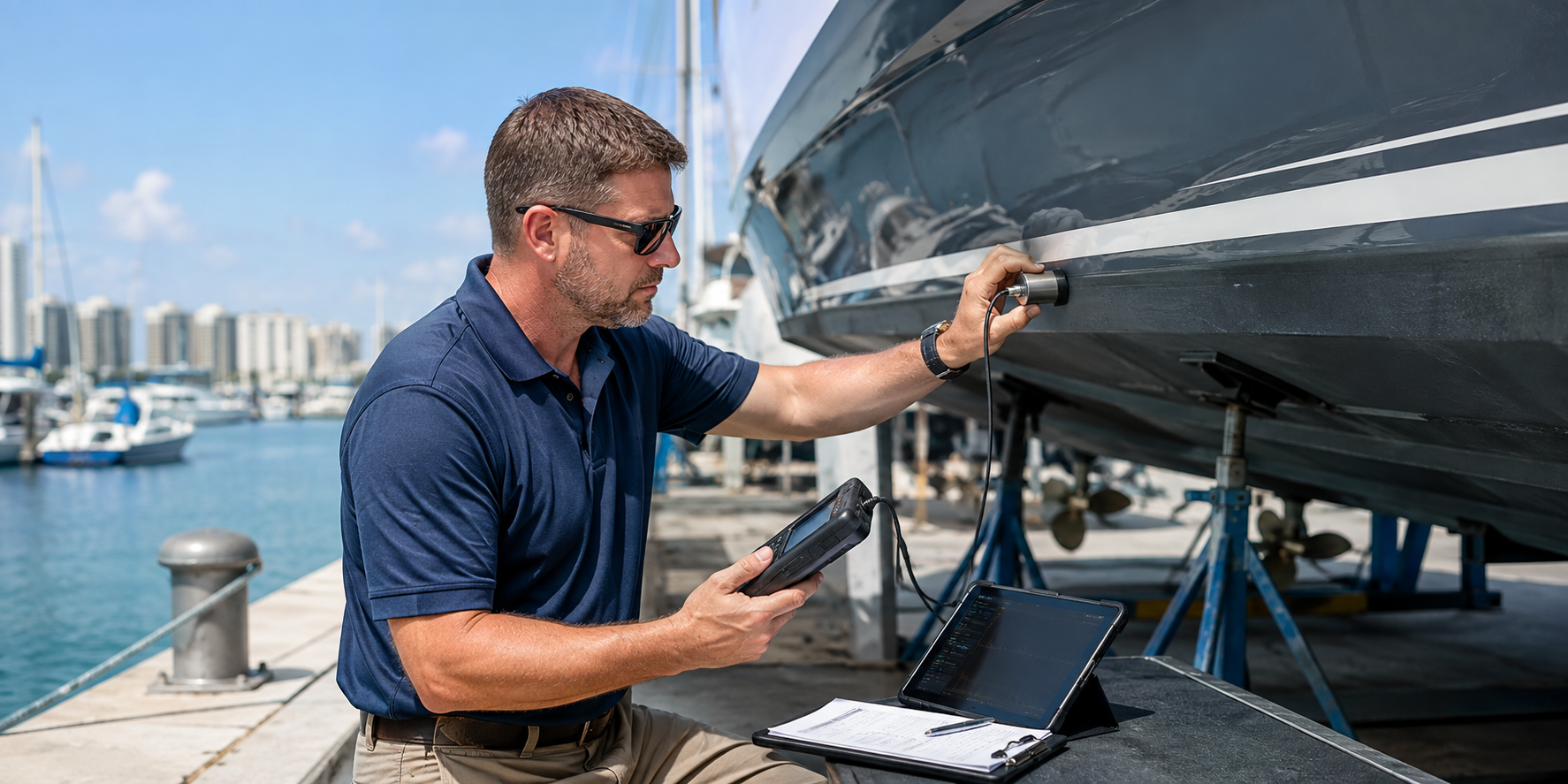
When structural metal thickness is a concern, visual inspection alone may not provide enough information. Depending on the vessel and inspection objective, specialized methods such as ultrasonic thickness measurement may be appropriate.
Humidity Can Affect Interior Spaces
High humidity can create conditions favorable to condensation and moisture accumulation, particularly in poorly ventilated areas.
Cabins, lockers, engine spaces, storage compartments, and other enclosed areas may experience different moisture conditions from the exterior of the vessel.
Persistent moisture can contribute to odors, corrosion, deterioration of materials, and electrical problems. It can also make it more difficult to determine whether water came from condensation, a leak, or another source.
Good ventilation and appropriate storage practices can help, but recurring moisture should be investigated rather than treated only as an inconvenience.
Temperature Changes Affect Materials
Boats are exposed to temperature changes throughout the year. Materials expand and contract at different rates, and repeated changes can place stress on certain seals, joints, coatings, and components.
Extreme heat can also affect batteries, electronics, plastics, adhesives, and other equipment, while very cold conditions may create different concerns involving water systems and materials.
The actual effect depends heavily on the vessel's construction and the environment in which it is stored and operated.
Storms Can Change a Vessel's Condition Quickly
Severe storms deserve particular attention because they can produce several damaging conditions at once.
High winds, heavy rain, waves, flooding, debris, and impact can affect different parts of a vessel during a single event. A boat may suffer obvious damage such as a cracked windshield or damaged hull, but less visible problems can also occur.
After a major storm, an inspection should not focus only on what looks damaged from a distance. Bilge spaces, electrical systems, machinery areas, structural components, and other relevant locations may need to be examined depending on what happened.
If the vessel experienced flooding, grounding, collision, or significant impact during the event, a more detailed assessment may be appropriate before normal operation resumes.
Weather History Can Add Important Context
Weather information can become particularly useful when investigating vessel damage.
Suppose a boat develops unusual structural damage after a severe weather event. Understanding the conditions the vessel experienced can help provide context for the physical evidence.
Weather information can include wind conditions, precipitation, temperature, storm activity, and other relevant environmental factors. However, weather information should not be treated as proof of a particular cause by itself.
The condition of the vessel, photographs, maintenance history, witness accounts, electronic information, and other available evidence may also need to be considered.
Weather Exposure and Boat Storage
How a boat is stored can significantly influence its exposure to environmental conditions.
Covered storage can reduce direct sunlight and rainfall, while indoor storage may provide additional protection from certain environmental effects. Boats kept in the water have different exposure patterns from vessels stored on trailers or stands.
No storage method eliminates maintenance requirements. Instead, each arrangement creates different areas that should be monitored.
Owners should periodically inspect covers, supports, ventilation, drainage, seals, and exposed components to make sure the storage environment is not creating additional problems.
What to Look For After Severe Weather
After unusually severe weather conditions, a basic inspection can begin with a careful walk-around.
Look for:
- New cracks or impact marks
- Damaged rails, fittings, or hardware
- Broken or displaced covers
- Unexpected water in interior or bilge areas
- Corrosion or exposed electrical connections
- Damaged hoses or flexible components
- Unusual engine or machinery conditions
- Changes in steering or propulsion behavior
- Damaged windows, hatches, or seals
- Signs of grounding, collision, or flooding
Photographs can also be useful for documenting the vessel's condition after an event, particularly when the damage is significant or a later comparison may be necessary.
When a Detailed Inspection Is Appropriate
A routine owner check is useful for identifying obvious changes, but it has limitations.
If a boat has experienced substantial storm damage, flooding, grounding, collision, fire, or unexplained mechanical problems, a more detailed inspection may be necessary. The appropriate scope depends on the vessel, the suspected damage, accessibility, available evidence, and the purpose of the assessment.
A professional marine inspection may involve visual examination, measurements, nondestructive testing, machinery assessment, or other techniques where appropriate.
The goal is not simply to identify everything that looks old. It is to document relevant conditions and determine whether additional examination is warranted.
Keeping Track of Weather-Related Changes
Maintaining photographs and service records can make it easier to understand how a vessel changes over time.
Owners may find it useful to photograph important areas periodically, particularly after major storms or other unusual events. Recording repairs and maintenance can also provide a useful history of the vessel's condition.
Over time, this information can help distinguish long-standing conditions from more recent changes.
Conclusion
Weather is an unavoidable part of boat ownership, and repeated environmental exposure can influence the condition of a vessel's structure, machinery, electrical systems, fittings, and interior spaces.
Sunlight, rain, humidity, saltwater, wind, rough seas, temperature changes, and severe storms can all create different inspection considerations. The important point is to recognize changes in the vessel and investigate unusual conditions before they become more difficult to understand.
Routine maintenance and observation can help owners stay aware of their boat's condition. When a vessel has experienced significant weather-related damage or an unexplained change, a properly scoped marine inspection can provide a more detailed assessment of what happened and what further examination may be appropriate.

