


How a Hand Laser Welder Is Transforming Everyday Metal Welding
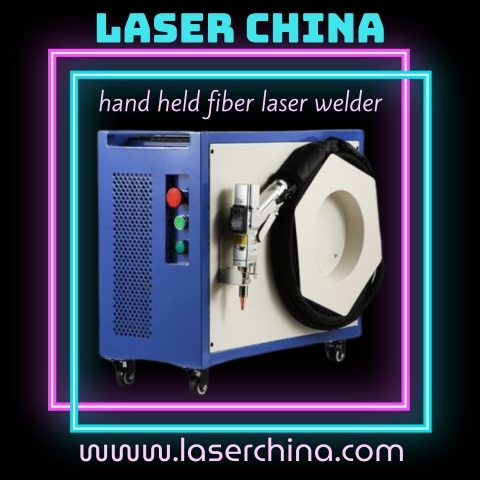
Metal fabrication continues to evolve as manufacturers look for welding methods that can deliver accuracy, consistency, and efficient production. A hand laser welder provides a practical solution for workshops and industrial environments where operators need greater control over the welding process. Unlike traditional welding methods that often require extensive preparation and finishing, laser welding uses a concentrated beam of light to create a controlled weld between metal surfaces.
As demand for cleaner and more precise production continues to grow, handheld laser welding systems are becoming an important option for businesses working with stainless steel, carbon steel, aluminum, galvanized materials, and other commonly used metals.
How Handheld Laser Welding Works
A hand laser welder directs a concentrated laser beam toward the area where two metal surfaces need to be joined. The energy from the beam heats the material locally, creating a molten area known as a weld pool. As the operator moves the welding head along the joint, the molten material cools and forms a solid connection.
The process requires careful control of factors such as laser power, welding speed, material thickness, focal position, and wire feeding when filler material is required. Correct adjustment of these parameters helps produce a stable and consistent weld.
Modern equipment is generally designed with digital controls that allow operators to adjust welding parameters according to the material and application. Once suitable settings have been established, the same configuration can be used for repeated production work.
Materials Suitable for a Hand Laser Welder
One of the reasons handheld laser welding has attracted attention is its ability to work with a variety of metals. Stainless steel is widely used in fabrication because of its corrosion resistance and clean appearance, making it a common material for laser welding applications.
Carbon steel is another frequently processed material. It is used in machinery, structural components, frames, brackets, and industrial equipment. Aluminum can also be processed with suitable laser welding equipment and carefully selected settings.
Other applications may involve galvanized steel, mild steel, and different metal alloys. However, every material behaves differently under laser energy, so operators should select appropriate parameters and conduct test welds before beginning regular production.
Applications Across Metal Fabrication
A hand laser welder can be used in many areas of modern manufacturing. Metal furniture manufacturers can use handheld systems for joining frames, panels, and decorative components. Kitchen equipment producers may use them for stainless steel fabrication where a neat weld is important.
Automotive workshops can also use laser welding for selected repair and fabrication tasks. Industrial machinery manufacturers may apply the process to housings, brackets, frames, enclosures, and other components.
The technology is also useful for customized fabrication. Workshops that frequently receive different orders can benefit from a handheld design because the operator can work directly on individual components without requiring a large fixed welding setup.
Welding Stainless Steel With a Hand Laser Welder
Stainless steel requires careful welding because excessive heat can affect its appearance and potentially influence the surrounding material. A controlled laser beam allows the operator to concentrate energy on a relatively small area.
For visible stainless steel products, weld appearance can be particularly important. Applications such as food-processing equipment, decorative panels, railings, cabinets, and commercial kitchen products often require clean and carefully controlled joints.
Before production, the operator should determine suitable power, speed, focus, shielding gas, and wire settings based on the thickness and grade of stainless steel. Proper preparation of the joint is also essential for consistent results.
Working With Aluminum and Other Metals
Aluminum presents different welding characteristics because of its thermal properties and reflective surface. A suitable hand laser welder can be configured for aluminum applications, but parameter selection becomes particularly important.
The thickness of the material, joint design, laser power, welding speed, and shielding conditions all influence the final weld. Operators should avoid assuming that settings used for stainless steel will produce the same results on aluminum.
Preparing Metal Before Welding
Good welding begins with proper preparation. Dirt, oil, rust, paint, moisture, and other contaminants can affect the welding process. Before using a hand laser welder, surfaces should be cleaned and positioned correctly.
The joint should have appropriate alignment, and gaps should be controlled according to the material and welding method. For applications requiring filler wire, the correct wire type and diameter should be selected.
A clean working area also makes it easier for operators to maintain a consistent welding path. Preparation may take only a short amount of time, but it can have a significant influence on the finished result.
Choosing the Appropriate Laser Power
Laser power should be selected according to the intended application rather than simply choosing the highest available power. Different thicknesses and materials require different energy levels.
Lower-power systems may be suitable for thinner sheet metal and lighter fabrication tasks, while higher-power equipment can be considered for thicker materials and more demanding production work.
Businesses should evaluate their typical material thickness, daily workload, required welding speed, and future production plans before selecting equipment. A properly matched system can provide more practical results than equipment selected solely on maximum power.
Operator Control and Production Consistency
Although handheld laser welding equipment can simplify many fabrication tasks, operator training remains important. The welding head must be held correctly, and movement speed needs to remain consistent throughout the joint.
Operators should understand how different settings affect penetration, weld width, appearance, and heat input. Regular practice with test pieces allows workers to become familiar with the equipment before working on finished products.
For production environments, documenting successful welding parameters can also help maintain consistency between different batches and operators.
Safety Considerations for Laser Welding
Laser welding requires appropriate safety procedures because high-powered laser equipment can present serious hazards. Operators should follow the manufacturer's safety instructions and use a suitable controlled working environment.
Appropriate laser safety equipment, protective eyewear where specified, suitable protective clothing, ventilation, and proper machine guarding should be part of the workplace setup. Operators should also receive training before using industrial laser welding equipment.
The welding process can generate fumes and particles depending on the material and any coatings present, so suitable extraction and ventilation should also be considered.
Integrating a Hand Laser Welder Into a Workshop
For businesses considering handheld laser welding, the installation process should begin with an assessment of existing production requirements. The workshop should have an appropriate electrical supply, ventilation, safety arrangements, and sufficient workspace.
Training should be included in the implementation plan. A well-trained operator can understand machine controls, material preparation, parameter selection, and safe operating procedures more effectively.
Supporting Modern Manufacturing
The growing interest in laser welding reflects a broader shift toward more controlled and efficient manufacturing processes. Customers increasingly expect fabricated products to have consistent weld quality and professional finishing.
A hand laser welder can fit into this changing production environment by providing a flexible approach to joining metal components. Its handheld format allows operators to work on different shapes and positions while adapting to changing fabrication requirements.
For small workshops, contract manufacturers, repair businesses, and larger production facilities, the technology can become part of a broader metalworking setup that includes cutting, cleaning, bending, marking, and finishing equipment.
Final Thoughts
A hand laser welder represents a modern approach to metal joining that combines concentrated laser energy with a flexible handheld working format. From stainless steel fabrication and aluminum processing to customized metalwork and industrial manufacturing, the technology can be applied to a wide range of projects.

